Brass Worm Wheel & Shaft Set | 20-Tooth M0.5 Micro Gear Kit
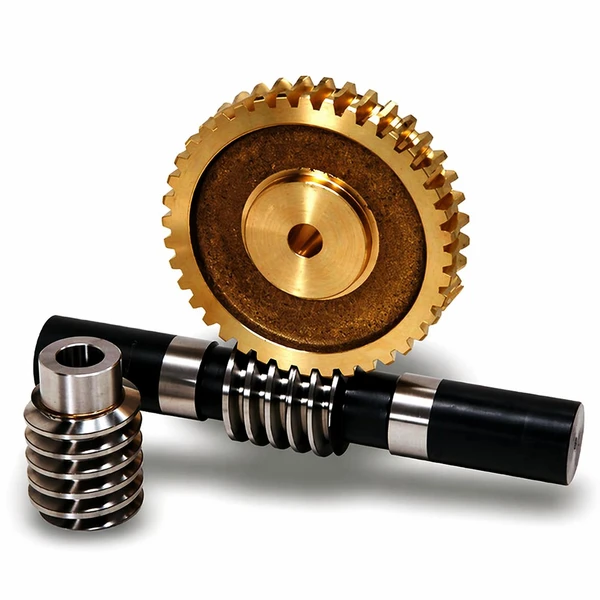
Matched brass worm wheel and 1-start worm shaft, 20 teeth at M0.5 module with a 16 g wheel and 11.2 mm pitch diameter, built for ratios up to 80:1 in small electro-mechanical drives across Korean OEM factories.
Brass Worm Wheel Kit at a Glance
Ever-Power's brass worm wheel kit is a matched pair — one precision-cut brass wheel and one single-start brass shaft — designed as a drop-in component for small electro-mechanical drives where quiet running, moderate load and long service life all matter. The 20-tooth, M0.5 module wheel weighs only 16 grams yet delivers a single-stage reduction ratio that can reach 80:1 when paired with our catalogue worm shafts, a range that saves two or three reduction stages compared with a spur-gear chain.
Because brass is corrosion-resistant and self-lubricating against a steel counterpart, Korean customers specify this brass worm gear kit for valve actuators, timing mechanisms, scientific instruments, small textile machines and automated retail equipment. Direct-replacement dimensions make the worm and worm wheel assembly compatible with legacy Mitsumi, Nidec and local OEM fittings — match bore, centre distance and tooth count, then bolt it in without redesigning the host frame.
Technical Specifications
The tables below list every dimension a design engineer needs to validate the fit before placing an order. Values come straight from our shop drawing and are verified on every batch through CMM sampling.
| General Specifications | |
|---|---|
| Material | Brass (C3604 / H59 standard) |
| Colour | Natural yellow |
| Modulus | M0.5 |
| Weight (wheel) | 16 g |
| Size of the Worm Wheel | |
|---|---|
| Teeth | 20 |
| Teeth Diameter | 11.2 mm |
| Height | 12 mm / 0.47 inch |
| Outer Diameter | 11 mm / 0.43 inch |
| Hole Diameter | 4 mm / 0.16 inch |
| Step Size | 9 × 7 mm / 0.35 × 0.27 inch (Dia × H) |
| Overall Size | 12 × 11 × 4 mm (H × OD × ID) |
| Size of the Worm Gear Shaft | |
|---|---|
| Height | 20 mm / 0.79 inch |
| Outer Diameter | 9.8 mm / 0.39 inch |
| Inner Diameter | 3.17 mm / 0.12 inch |
| Overall Size | 20 × 9.8 × 3.17 mm (H × OD × ID) |
| Thread Starts (Z1) | 1 (single-start, self-locking geometry) |
| Typical Transmission Ratio | i = 10 – 80 (typical range for Z1 = 1) |
Why Brass Is the Right Material for This Class of Drive
Brass occupies a practical middle ground between cast bronze and plastic in the worm gear material hierarchy. The brass worm wheel has roughly half the tensile strength of tin bronze yet costs about 35 % less, making it ideal for low-to-moderate torque worm drive applications where a plastic wheel would be too soft and a bronze worm wheel would be financial overkill. The natural lubricity between brass and a steel or brass worm shaft keeps friction losses modest across a 500 to 4 000 rpm input range.
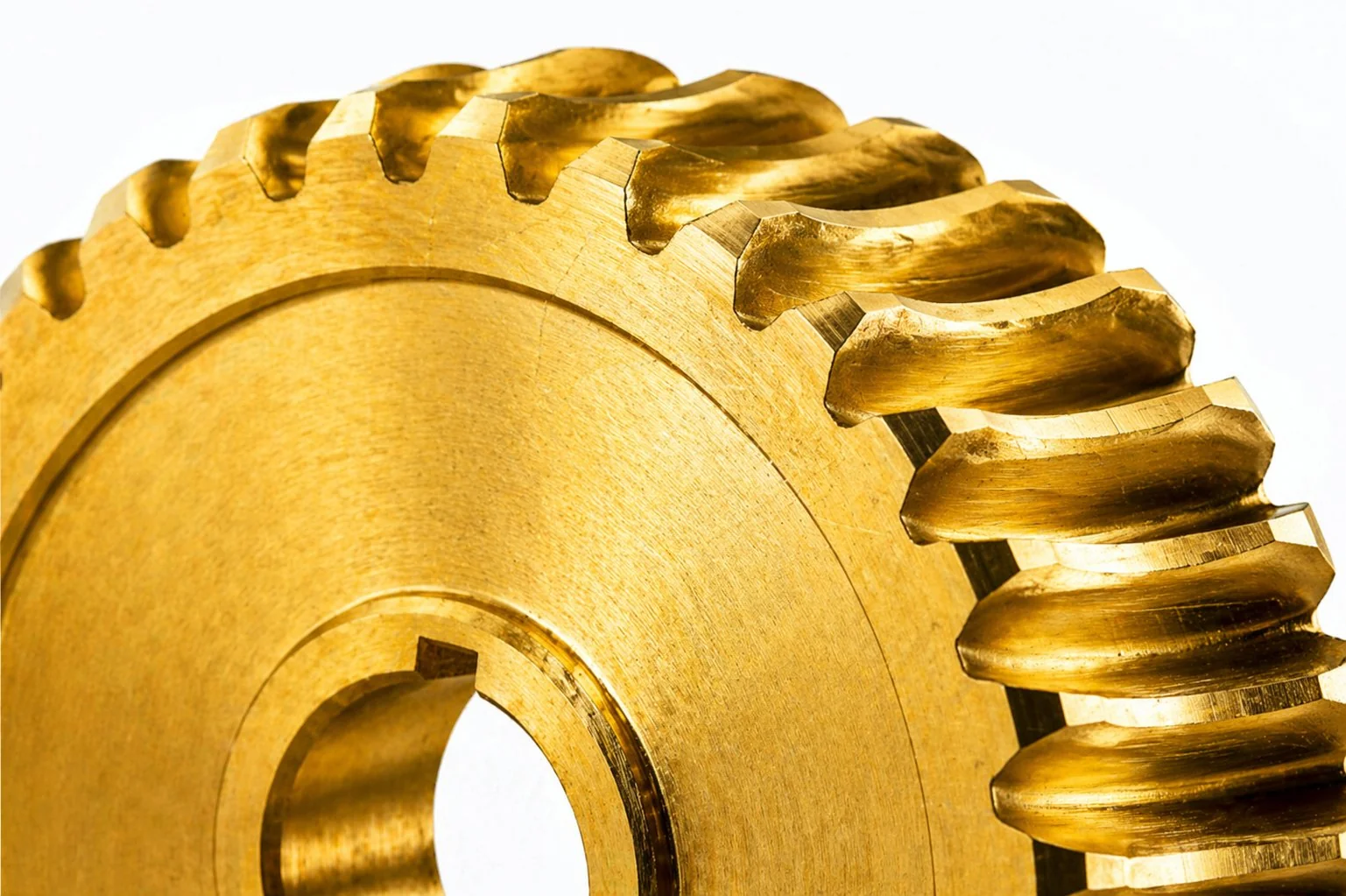
Because brass does not rust and can be run with minimal grease in clean indoor environments, the kit suits laboratory instruments, coin-handling modules, electric-curtain motors, and similar light-industrial products where regular maintenance access is limited. The 20-tooth wheel turns a full revolution for every 20 turns of the single-start worm shaft, producing a smooth 20:1 reduction that is difficult to achieve in one spur stage without a much larger footprint.
- ✦Compact power density. A 16-gram wheel carrying moderate torque is hard to beat on a weight-per-newton-metre basis.
- ✦Self-locking output. Z1 = 1 with a shallow lead angle keeps the output shaft locked when power is removed.
- ✦Quiet operation. Brass-on-brass or brass-on-steel meshing produces less than 38 dB at 1 metre when running at 2 000 rpm with a trace of instrument grease.
- ✦Corrosion resistance. Suits humidity-prone environments such as rooftop curtain drives and basement pump rooms without plating.
- ✦Long catalogue life. The 20T/M0.5 geometry has been in production for over ten years — spare parts availability is guaranteed for the foreseeable future.
Manufacturing Flow and In-Process Quality Control
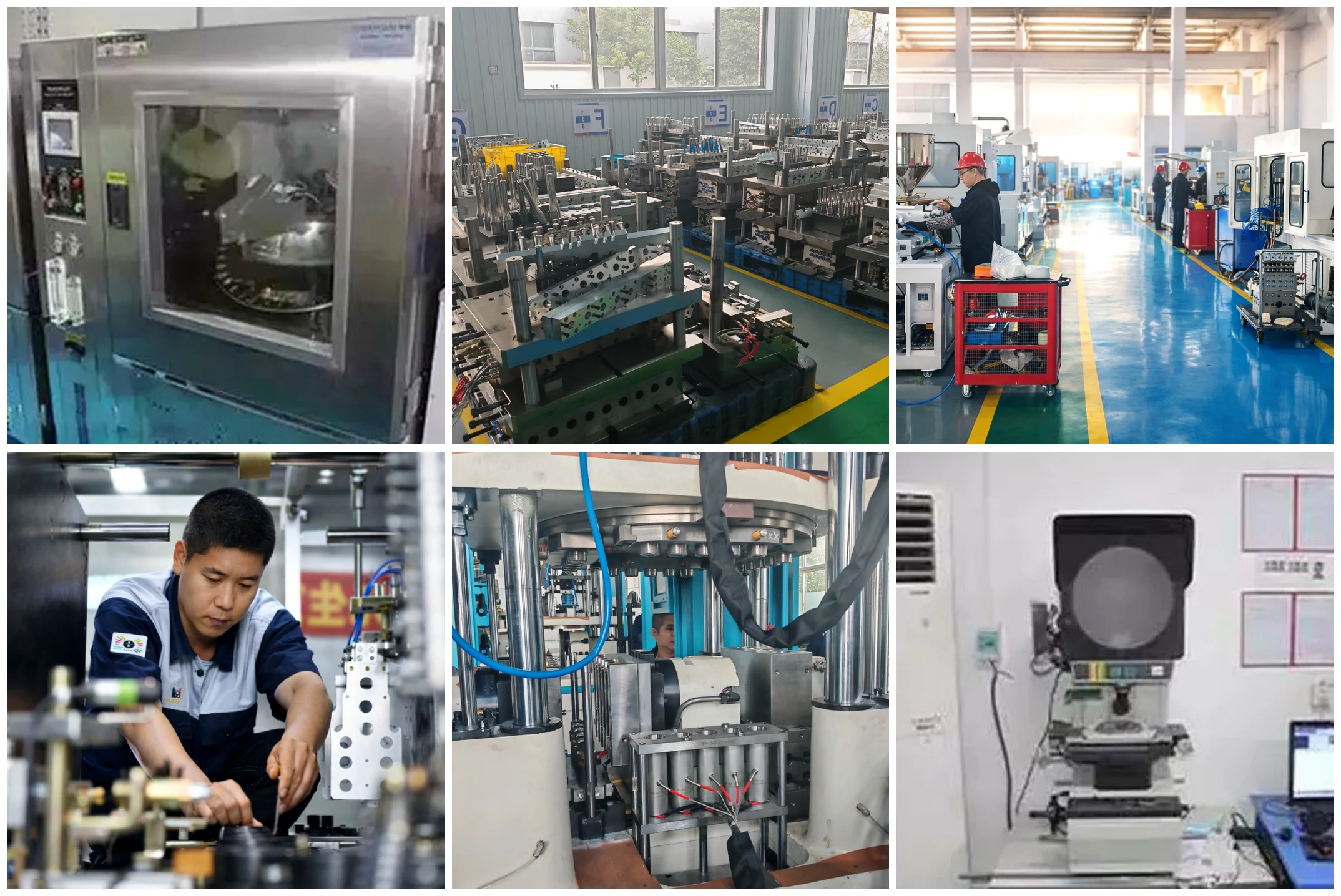
Every brass worm wheel kit follows the same ten-step production flow. Each step includes an in-line check that catches defects before they propagate downstream — the single biggest reason warranty returns on this worm gear product family have stayed below 0.4 % over the past three years.
- 01Raw material verification. Brass bar stock is cross-checked against a spectrometer sample for C3604 composition.
- 02Turning and facing. NC lathes rough-cut the wheel blank and shaft blank to within 0.05 mm of final dimension.
- 03Hobbing the wheel teeth. Gleason NC hobbers cut the 20-tooth profile in a single operation using a dedicated M0.5 hob.
- 04Cutting the worm thread. The single-start thread is milled on the shaft blank with axial alignment checked by a dial indicator.
- 05Shaving or grinding. Optional finishing pass to tighten tooth profile to DIN 7 when customer specification requires it.
- 06Deburring and polishing. Tumbled for four hours in ceramic media to remove machining burrs and improve surface finish.
- 07Dimensional inspection. Sampling at 5 % per batch on Mitutoyo CMM, with a full report on request.
- 08Run-in test. Sample pairs are mated and run for 30 minutes at rated speed on an electronic torque stand.
- 09Oil paper packing. Every pair is wrapped in VCI oil paper, placed in PE bags, then cartoned with desiccant sachets.
- 10Final audit and despatch. Outer cartons are sealed in the presence of the QC engineer; shipping marks match the PO.
Lubrication Guide and Maintenance Schedule
A brass worm gear kit is genuinely low-maintenance, but "low" does not mean "zero". The schedule below keeps a typical light-duty drive running smoothly for the full design life of 10 000 operating hours.
| Service Point | Interval | Recommended Action |
|---|---|---|
| Initial run-in | First 30 – 50 h | Run at 50 % rated load; wipe off initial wear debris at the end of the period. |
| Grease top-up | Every 1 500 h or 6 months | Apply 0.2 – 0.4 g of synthetic PAO grease (NLGI 1) at the mesh point. |
| Tooth inspection | Every 3 000 h | Visual check for uniform wear pattern; no pitting or galling expected. |
| Backlash re-measure | Every 5 000 h | Measure at one tooth-pair; replace kit if backlash exceeds 0.15 mm. |
| Full replacement | 10 000 h or noise change | Swap matched pair as a set — do not mix old shaft with new wheel. |
For drives that run in dusty or humid environments, halve the grease interval. For worm gear drives that see only occasional movement (fewer than 50 cycles per day) the full 10 000-hour brass worm wheel life can stretch to 15 000 hours in practice.
Comparing Ever-Power with KHK and Boston Gear
KHK and Boston Gear are respected brand names belonging to their registered owners. Ever-Power is not a reseller or counterfeiter of their products — this comparison is provided only to help Korean design engineers see where each brand fits best in a sourcing decision. We manufacture our own equivalent-class brass worm wheel components.
The comparison below focuses on the small-module brass kit segment specifically, not the full catalogue of any brand. Figures come from public datasheets and our own sales experience supplying Korean OEMs who previously purchased from these competitors.
| Criterion | Ever-Power | KHK (Japan) | Boston Gear (USA) |
|---|---|---|---|
| Module range (brass) | M0.3 – M3.0 | M0.5 – M2.0 | 0.5 DP – 2 DP (imperial) |
| Matched pair availability | Yes, standard | Yes, standard | Usually separate SKUs |
| Custom bore / hub | MOQ 20 pcs | Modification from catalogue | Modification charge + lead time |
| Standard lead time | 25 business days | 1 – 3 weeks ex-stock | 2 – 6 weeks |
| Unit price index | 100 | approx. 175 | approx. 180 |
| Documentation in Korean | Yes | Japanese / English | English only |
An honest summary: if the Korean buyer needs a single piece tomorrow to repair a failed lab instrument, KHK's local Japanese stock channel wins. For recurring production quantities where specification flexibility and unit cost dominate, Ever-Power is typically 40 – 45 % cheaper at equivalent DIN accuracy and ships with Korean-language inspection reports.
Service Commitment and After-Sales Support
Korea Ever-Power Worm Gear Co., Ltd. backs every brass kit with a written service commitment. The points below are the contractual terms we extend to every Korean client from the first purchase order onward.
- ✔24-month warranty against manufacturing defects, counted from bill-of-lading date at Incheon or Busan port.
- ✔Free replacement of defective units within warranty, with return freight paid by Ever-Power for verified claims.
- ✔Korean-speaking technical desk replying within one working day; written drawings and calculations provided free of charge.
- ✔On-site engineering visit to the customer factory available within 48 hours for critical production failures in the Seoul metropolitan area.
- ✔Ten-year spare-parts availability guarantee for every catalogue geometry — no forced obsolescence of matched pairs.
- ✔ISO 9001:2015, RoHS and REACH compliance documentation shipped with every export crate.
Companion Drive Products
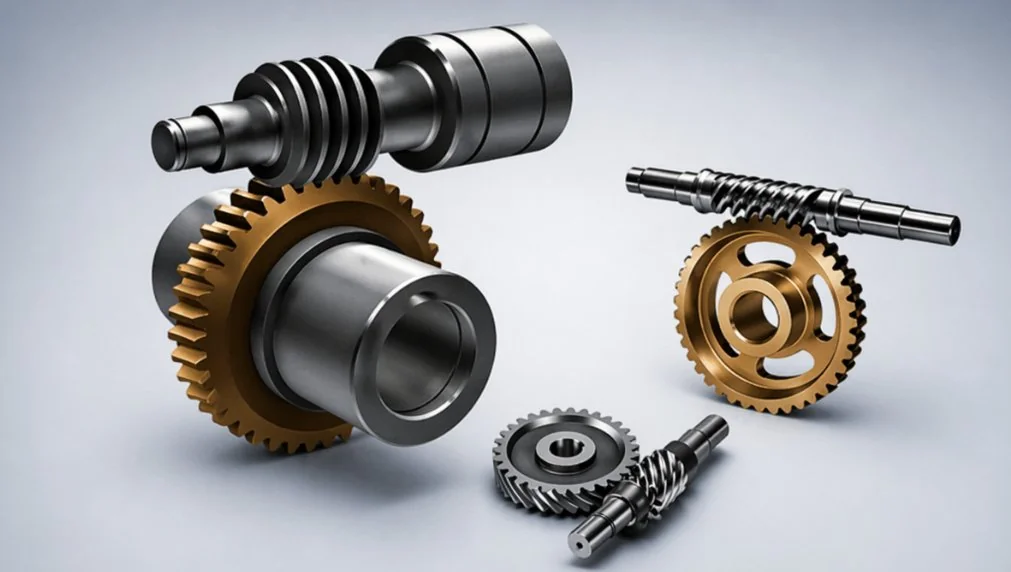
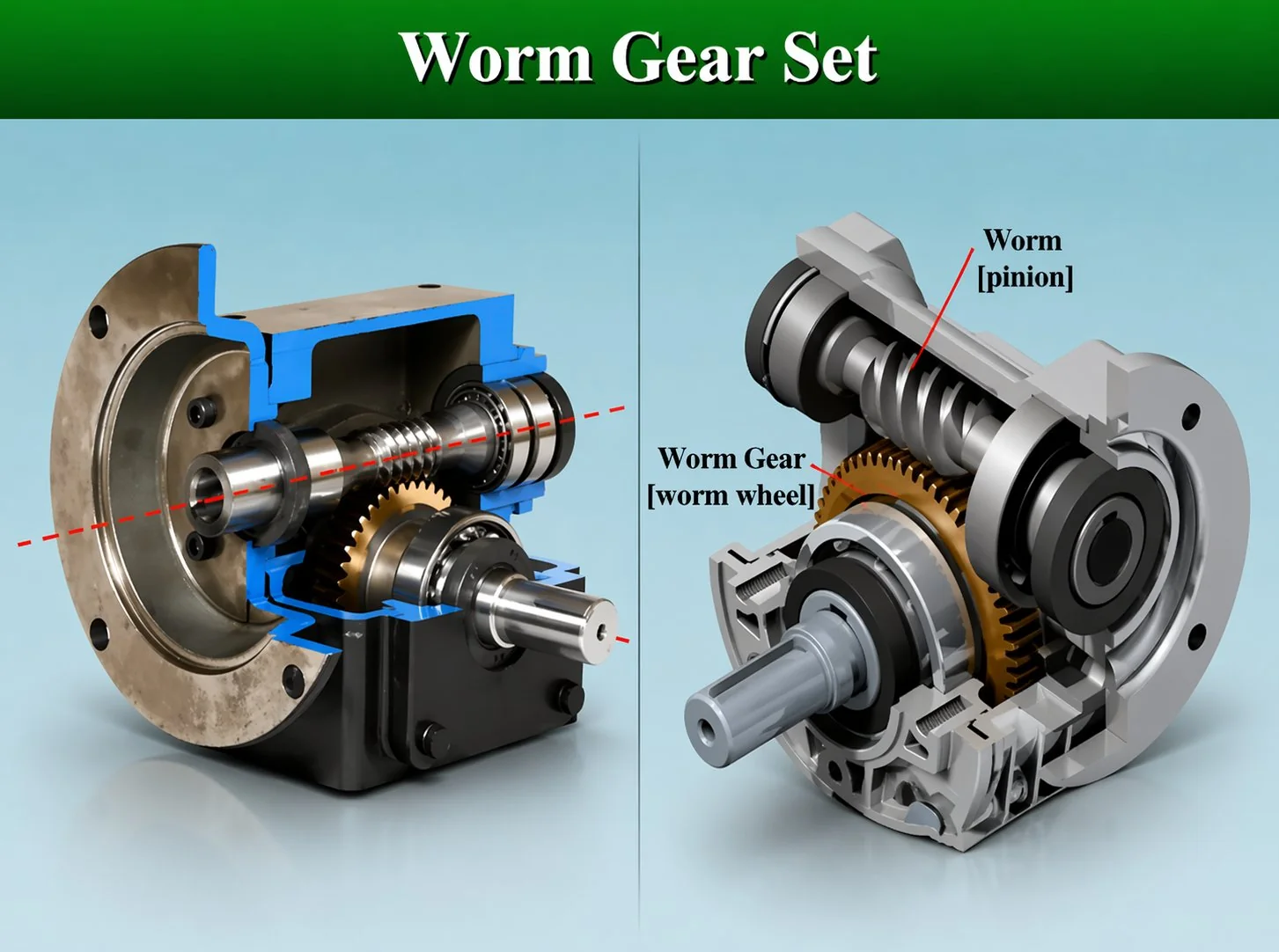
A standalone brass kit is rarely the whole drive. Korean OEMs typically pair it with a small DC or stepper motor, a bearing-supported housing, and an output pinion. When the final assembly has to be delivered as a sealed unit, a packaged worm gear reducer with input and output flanges is the natural next product in our catalogue, covering output torque from 1 N·m up to 500 N·m.
Frequently Asked Questions
Q: What grease should I use on a brass worm wheel kit?
A synthetic PAO grease rated NLGI 1 with PTFE additive gives the best combination of low friction, wide temperature range (−20 °C to +120 °C) and long service life on brass. Mineral greases work for intermittent indoor duty. Avoid lithium-based high-temperature greases — they can stain brass surfaces over time.
Q: Can I mix a used shaft with a new wheel when the pair wears out?
Technically yes, but not recommended. After several thousand hours the wheel and shaft develop a run-in mating pattern that a fresh part cannot match. Replacing only one side typically doubles the noise level for the first 500 hours. Always swap the kit as a matched set.
Q: How do I calculate the output torque of a 20:1 brass kit?
Output torque equals input torque multiplied by gear ratio multiplied by drive efficiency. For this brass worm kit, typical efficiency at 20:1 with a greased brass-on-brass interface is 55 – 65 %. So a 0.05 N·m input torque delivers roughly 0.55 – 0.65 N·m at the output shaft. Higher worm drive ratios drop efficiency further.
Q: Will this kit work in an outdoor environment?
Brass resists corrosion well but the kit itself has no sealing. For outdoor installation, house it inside an IP54 or better enclosure and apply a marine-grade grease. Direct rain or salt spray on the open teeth shortens life significantly.
Q: Do you offer a stainless steel version of the same geometry?
Yes. The identical 20T/M0.5 geometry is available in 304 stainless for marine applications and 316 stainless for food and chemical processing. Lead time is the same 25 business days. Minimum order is 50 pieces for the stainless variant.
Q: What is the expected service life of a brass kit under continuous operation?
Typical service life is 10 000 operating hours at rated load with scheduled lubrication. Intermittent duty drives often run 15 000 hours or more. The failure mode is usually gradual backlash increase rather than sudden tooth fracture, so condition-based replacement is practical.
Q: Can you supply the kit without the step-size machined on the wheel hub?
Yes. The 9 × 7 mm step is cut for customers who need a bearing seat or pulley land, but it can be omitted for a flat-hub design. Specify "no step" on the PO and the wheel ships as a plain cylindrical hub at no extra cost.
Customer Experience from the Field
Song Hye-jin, Small Appliance OEM Engineer, Gwangju (late 2024)
"We built these into an electric-curtain drive that runs about 40 open-close cycles a day. Thirteen months in, noise level and holding torque are unchanged. The 16-gram wheel is light enough that we shaved 80 grams off the motor bracket compared with the previous steel-on-bronze setup. Small difference per unit, meaningful over 5 000 units a year."
Kang Dae-won, Laboratory Equipment Buyer, Daejeon (mid 2025)
"Specified the kit for a liquid-sample positioner in a biology lab. Required repeatability inside 0.02 mm on the output shaft. Brass was preferred over steel because of potential interaction with reagents. Incoming inspection found every dimension within drawing tolerance. Eight months running, zero complaints from the end users."
Jung Soo-ah, Textile Machinery Designer, Daegu (early 2025)
"Used about 240 kits last year as part of a thread-tension adjustment mechanism on looms. The self-locking feature was essential — the loom operator sets tension and walks away, no holding brake needed. First batch had two units with visible turning marks on the hub, Ever-Power replaced both within ten days, no argument. That kind of response keeps us buying."
Hwang Chan-woo, Vending Machine Maintenance Chief, Seoul (late 2025)
"Swapped out the original Japanese brass gear in 35 refurbished coin dispensers. Same geometry, slightly smoother surface finish on the Ever-Power part. Grease life measured in the field looks 10 to 15 % longer than the original. Unit price roughly half. Strong value proposition for refurb work."
Sakura Ito, R&D Technician, Nagoya (mid 2025)
"Ordered ten units of a slightly modified version with a smaller bore for a medical-device prototype. NRE charge was reasonable and the custom shaft arrived in 14 days. Prototype testing confirmed the modification worked. We are now ordering the production run."
Yoon Ha-eun, Plant Supervisor, Ulsan (early 2026)
"Honest feedback — first shipment arrived with one gear missing from the count. Contacted Seoul sales and the replacement shipped the next day by DHL, no extra charge. Mistakes happen in logistics; what matters is how they are handled. This one was handled properly and fast."
Related products
-
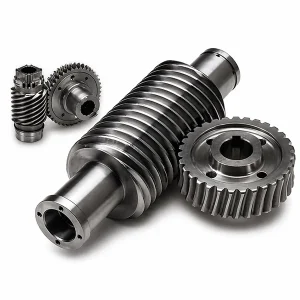
Alloy Steel Worm and Worm Gear for Auto Parts | Ø5-Ø120 Module 0.2-2.2
-
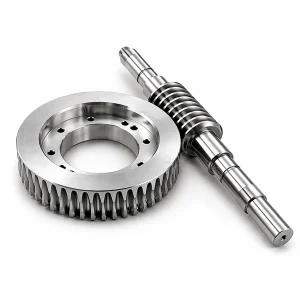
Stainless Steel Worm Gear for CNC Machinery | DIN 5 SCM415
-
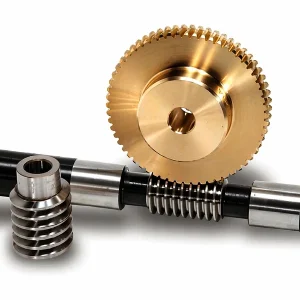
Duplex Worm Gear Set | Dual-Lead Zero-Backlash Worm Drive
-
Cylindrical Worm Wheel Sets | Line-Contact Worm Gearing
-
Custom Worm Gear Sets | Worm Drive
-
Worm and Wheel Sets | DIN6 Worm Gearing
-
Plastic Worm Gears for Micro Drives | POM & Nylon Gear Sets