Korea Ever-Power · Guide d'ingénierie d'application
Vis sans fin et roue dentée pour entraînements de pont roulant et de palans
Un engrenage à vis sans fin défaillant sur une grue entraîne la chute de sa charge. Toute personne se trouvant sous une poutre, une bobine ou un moule suspendu dépend du verrouillage automatique de cet engrenage. La classification des groupes de service par éléments finis (FEM) permet d'adapter cet engrenage aux exigences de la durée de vie de la grue ; un mauvais choix de groupe peut conduire à des dépenses excessives ou à une protection insuffisante.
Tous les engrenages à vis sans fin des ponts roulants et palans doivent être à démarrage unique, à verrouillage automatique puissant (angle d'hélice de 2 à 5 degrés) et comporter un frein mécanique indépendant pour le maintien. Cette spécification est basée sur la classification des groupes de service FEM (ISO 4301), qui établit une correspondance entre l'intensité d'utilisation du pont roulant, le facteur de service, la nuance de matériau, l'intervalle d'inspection et la durée de vie nominale. Le groupe FEM 1Bm (pontage d'atelier, 200 heures par an) requiert un facteur de service SF 1,5 et des matériaux standard. Le groupe FEM 4m (pontage de poche de coulée d'acier, 4 000 heures par an) requiert un facteur de service SF 2,5, du bronze coulé par centrifugation et des intervalles d'inspection de 6 mois. Le facteur de choc d'arrêt d'urgence pour tous les entraînements de palans de pont roulant est de 2,5 à 3 fois le couple nominal ; cet événement transitoire unique constitue souvent la contrainte de dimensionnement déterminante, et non le couple de levage en régime permanent. Les ponts roulants maritimes et portuaires doivent également répondre à des exigences de résistance à la corrosion (roue en bronze d'aluminium, vis sans fin en acier inoxydable ou zinguée) en plus des spécifications mécaniques.
Pourquoi les palans de grue dépendent-ils du verrouillage automatique par engrenage à vis sans fin ?
Tous les ponts roulants, portiques, grues à flèche et palans mobiles qui soulèvent une charge au-dessus du sol partagent une exigence de sécurité impérative : la charge ne doit pas tomber en cas de coupure de courant. Cette exigence a guidé le choix des systèmes d’entraînement des palans depuis plus d’un siècle, et le système à vis sans fin demeure la solution dominante car il assure un autoblocage mécanique de par sa géométrie intrinsèque, et non par un composant rapporté.
Le principe physique est simple : une charge suspendue exerce un couple gravitationnel constant sur l’arbre du tambour de levage. Si le train d’engrenages entre le moteur et le tambour permet une rotation inverse (entraînement inverse), la charge accélère vers le bas. Un train d’engrenages à vis sans fin à un seul pas, dont l’angle d’hélice est inférieur à l’angle de frottement, ne peut physiquement pas tourner en sens inverse : le frottement au niveau du contact des dents excède la composante motrice de la force gravitationnelle, et le système se bloque.
Ce verrou géométrique est indépendant de l'alimentation électrique, de l'état du système de commande et du fonctionnement du frein. Il reste opérationnel même en cas de défaillance de tous les autres systèmes de sécurité ; c'est pourquoi les normes relatives aux grues (EN 13001, ISO 4301, règles FEM) le considèrent comme le mécanisme de maintien principal et n'exigent un frein mécanique supplémentaire qu'à titre de sécurité.
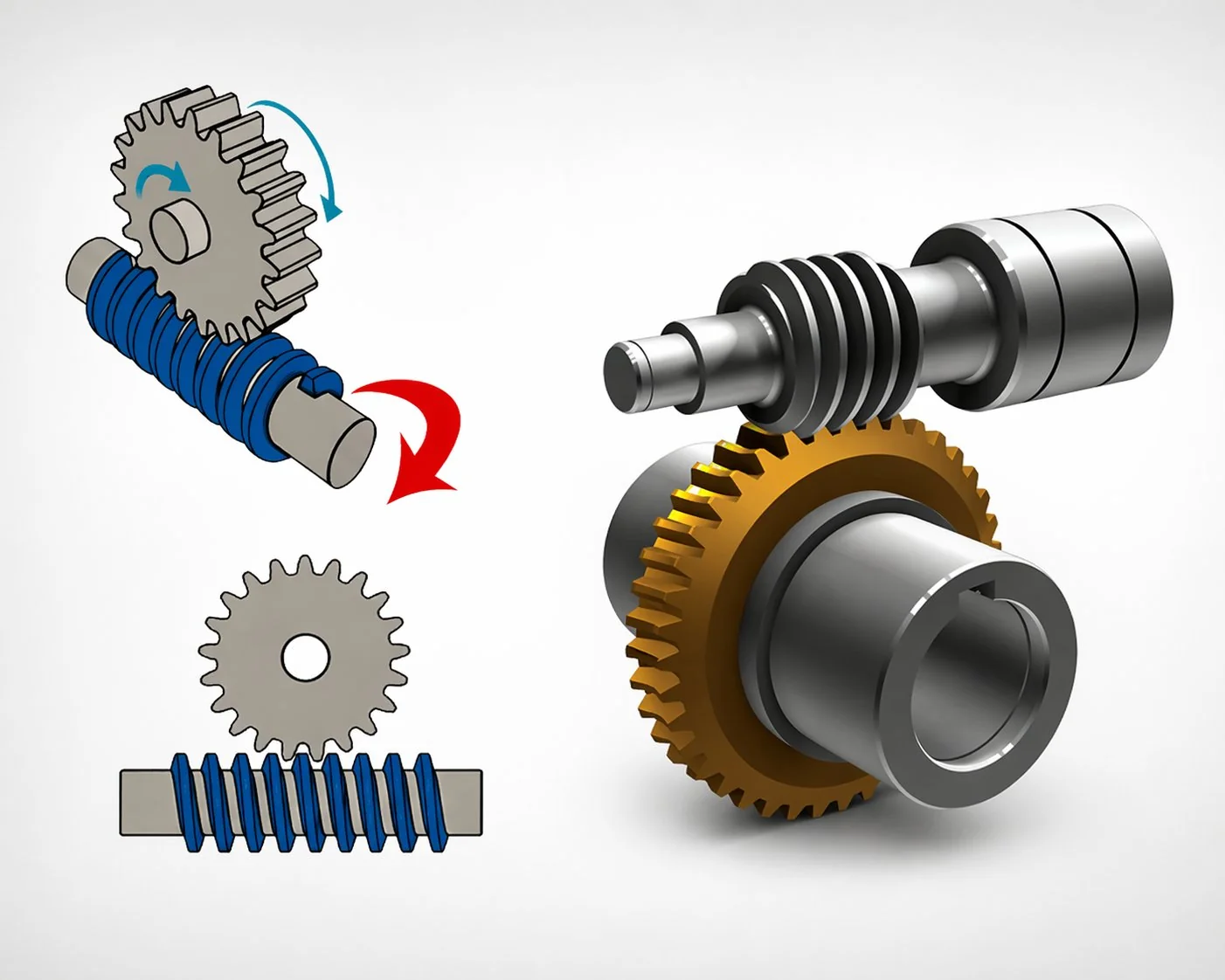
Les engrenages hélicoïdaux offrent un rendement supérieur à 95 %, mais ne sont pas autobloquants ; tout palan à engrenages hélicoïdaux repose entièrement sur un frein à commande électrique comme unique mécanisme de maintien. Les trains épicycloïdaux sont également non autobloquants. L’engrenage à vis sans fin, avec un rendement de 40 à 55 %, est l’option la moins performante, mais c’est la seule dont la géométrie empêche la chute de la charge. Pour les grues, cet avantage en matière de sécurité compense largement la perte de rendement, car les conséquences d’une défaillance (chute de la charge, risque mortel) sont bien plus graves que le coût énergétique.
Groupe de travail FEM — Correspondance entre l'utilisation des grues et les spécifications des engrenages à vis sans fin
Le système de classification de la Fédération Européenne de la Fabrication (FEM), intégré à la norme ISO 4301, répartit les ponts roulants en groupes de service selon deux critères : le nombre total de cycles de fonctionnement sur la durée de vie nominale du pont roulant et le spectre de charge (la proportion de levages effectués à la charge de travail admissible ou à proximité, par rapport aux charges légères). Le groupe de service détermine directement le coefficient de service, la nuance de matériau et le calendrier d’inspection du réducteur à vis sans fin du treuil.
Le tableau ci-dessous associe les groupes de tâches FEM aux paramètres de spécification des paires d'engrenages à vis sans fin. Cet outil de sélection permet de relier l'application de la grue à la commande de la paire d'engrenages.
Le passage du groupe 1Bm au groupe 5m double le coefficient de service (de 1,5 à 3,0), remplace le bronze coulé par gravité par du bronze coulé par centrifugation, remplace la vis sans fin en acier cémenté par de l'acier trempé à cœur et réduit l'intervalle d'inspection d'annuel à mensuel. Chaque étape reflète une augmentation réelle des charges de fatigue cumulées : une grue de parc à ferraille de 5m subit plus de cycles de charge en un mois qu'une grue d'atelier de 1Bm en un an. Le couple vis sans fin/engrenage de chaque groupe doit être proportionnellement plus robuste.
L'erreur de spécification la plus fréquente lors de l'acquisition de grues consiste à appliquer un coefficient de service léger à une grue de capacité moyenne ou élevée. Une grue d'usine fonctionnant en deux équipes par jour avec des levages fréquents proches de sa charge maximale d'utilisation n'est pas une grue de 1h du matin ; sa capacité de levage est d'au moins 2 m, voire 3 m. Sous-dimensionner le groupe de service d'un ou deux niveaux signifie que le dimensionnement de la paire d'engrenages à vis sans fin est inférieur de 25 à 50 % à la résistance à la fatigue réelle. La paire réussit facilement les tests de mise en service (les paires neuves présentent toujours une marge), mais subit une usure accélérée après 18 à 36 mois, l'endommagement cumulé par fatigue atteignant alors les limites de dimensionnement.
Choc d'arrêt d'urgence — la perturbation transitoire qui détermine souvent le dimensionnement
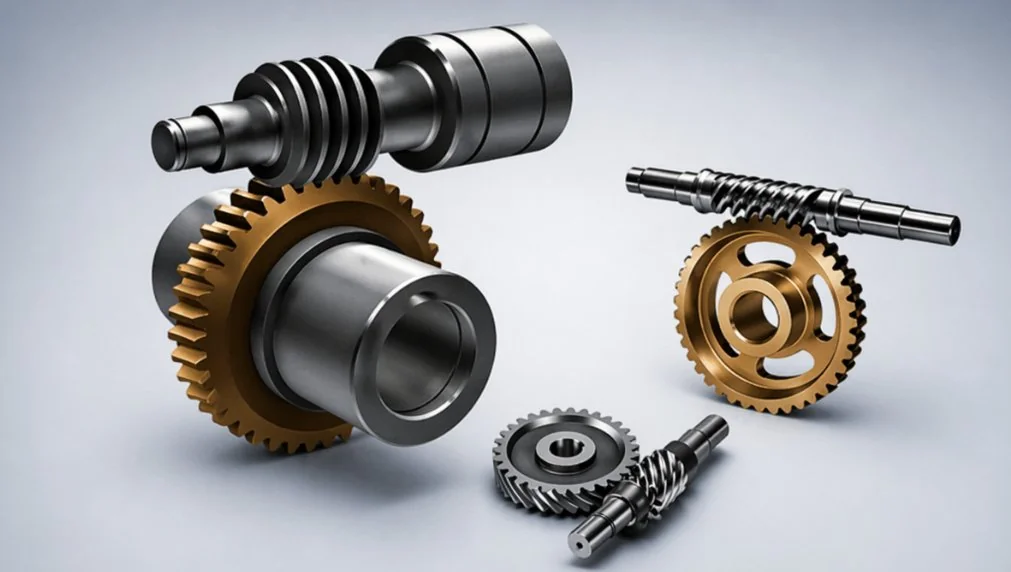
Le couple de levage en régime permanent n'est pas le pire cas pour un engrenage à vis sans fin de palan de grue. Le pire cas est l'arrêt d'urgence : la grue abaisse une charge à pleine vitesse, l'opérateur appuie sur le bouton d'arrêt d'urgence, le frein moteur s'enclenche et la masse en rotation du tambour de levage, de l'accouplement et de l'arbre à vis sans fin décélère de sa vitesse maximale à l'arrêt complet en 0,5 à 1,5 seconde.
Le pic de couple lors de cette décélération est calculé à partir de l'inertie de rotation et du taux de décélération : T_choc = J_total × (ω / t_arrêt) + T_gravité, où J_total est le moment d'inertie de toutes les pièces en rotation, ω la vitesse angulaire au moment du freinage, t_arrêt la durée du freinage et T_gravité le couple gravitationnel constant exercé par la charge suspendue. Pour les systèmes de levage de ponts roulants classiques, le facteur de choc lors d'un arrêt d'urgence est de 2,5 à 3 fois supérieur au couple de levage en régime permanent.
Exemple fonctionnel. Pont roulant de 10 tonnes, diamètre du tambour 400 mm, rapport de réduction de la vis sans fin 50:1, rendement 45 %. Couple de levage Tlift = (10 000 × 9,81 × 0,4) / (2 × 50 × 0,45) = 871 N·m. Facteur d'arrêt d'urgence Ke = 2,5. Couple de choc Tshock = 871 × 2,5 = 2 178 N·m. Groupe d'éléments finis 3m, facteur de sécurité (SF) = 2,25. Couple requis Trequired = 2 178 × 2,25 = 4 900 N·m. La vis sans fin doit être dimensionnée pour un couple supérieur à 4 900 N·m, soit environ 5,6 fois le couple de levage en régime permanent de 871 N·m. Si l'on se base uniquement sur le couple en régime permanent (en choisissant une paire d'écrous d'une capacité nominale de 1 200 N·m, par exemple), la paire serait sollicitée à 408 % de sa capacité nominale lors de chaque freinage d'urgence. Elle résisterait aux premiers freinages, mais des fissures apparaîtraient au niveau des dents après 2 à 4 ans d'utilisation intensive.
Un chantier naval coréen a remplacé un engrenage à vis sans fin de levage vieux de 20 ans sur un portique de 15 tonnes utilisé pour l'assemblage des sections de coque. L'engrenage d'origine était une conception japonaise non standard : module 6,5, entraxe de 182 mm, profil ZN, à un seul filet. Aucun fournisseur de catalogue ne disposait de ces dimensions. Le chantier naval a d'abord tenté de trouver un remplacement « assez proche » : module 6, entraxe de 180 mm, profil ZI. L'analyse dimensionnelle a montré que le substitut pouvait s'engrèner, mais le test de contact sur un montage d'essai a révélé une couverture de seulement 28 %, concentrée au niveau des extrémités des dents : la différence de profil (ZN contre ZI) décalait la ligne de contact par rapport au centre du flanc. Le chantier naval a alors commandé un engrenage sur mesure aux dimensions non standard d'origine : module 6,5, entraxe de 182 mm, profil ZN, rectifié. Coût : 4 200 USD pour l'engrenage sur mesure contre 1 100 USD pour le substitut de catalogue « assez proche ». Délai de livraison : 6 semaines. La paire sur mesure installée présente une couverture de contact de 72 %. Cette leçon s'applique à tout remplacement d'engrenage à vis sans fin sur une grue ancienne : une similarité dimensionnelle nominale ne garantit pas l'interchangeabilité fonctionnelle. Les profils (ZA, ZN, ZI, ZK) doivent correspondre exactement et la surface de contact doit être vérifiée avant la remise en service de la grue avec une charge suspendue au-dessus des opérateurs.
Matériaux et traitement thermique des engrenages à vis sans fin des palans de grue
L'utilisation d'un palan sur une grue diffère de celle d'un convoyeur ou d'un appareil d'emballage sur un point crucial : lors d'un arrêt d'urgence, le choc sollicite la racine de la dent en flexion avec une impulsion qui accumule les dommages par fatigue 5 à 10 fois plus rapidement qu'une charge continue en régime permanent de même couple moyen. Le choix des matériaux doit privilégier la résistance aux chocs et la résistance à la fatigue à la capacité de charge statique.
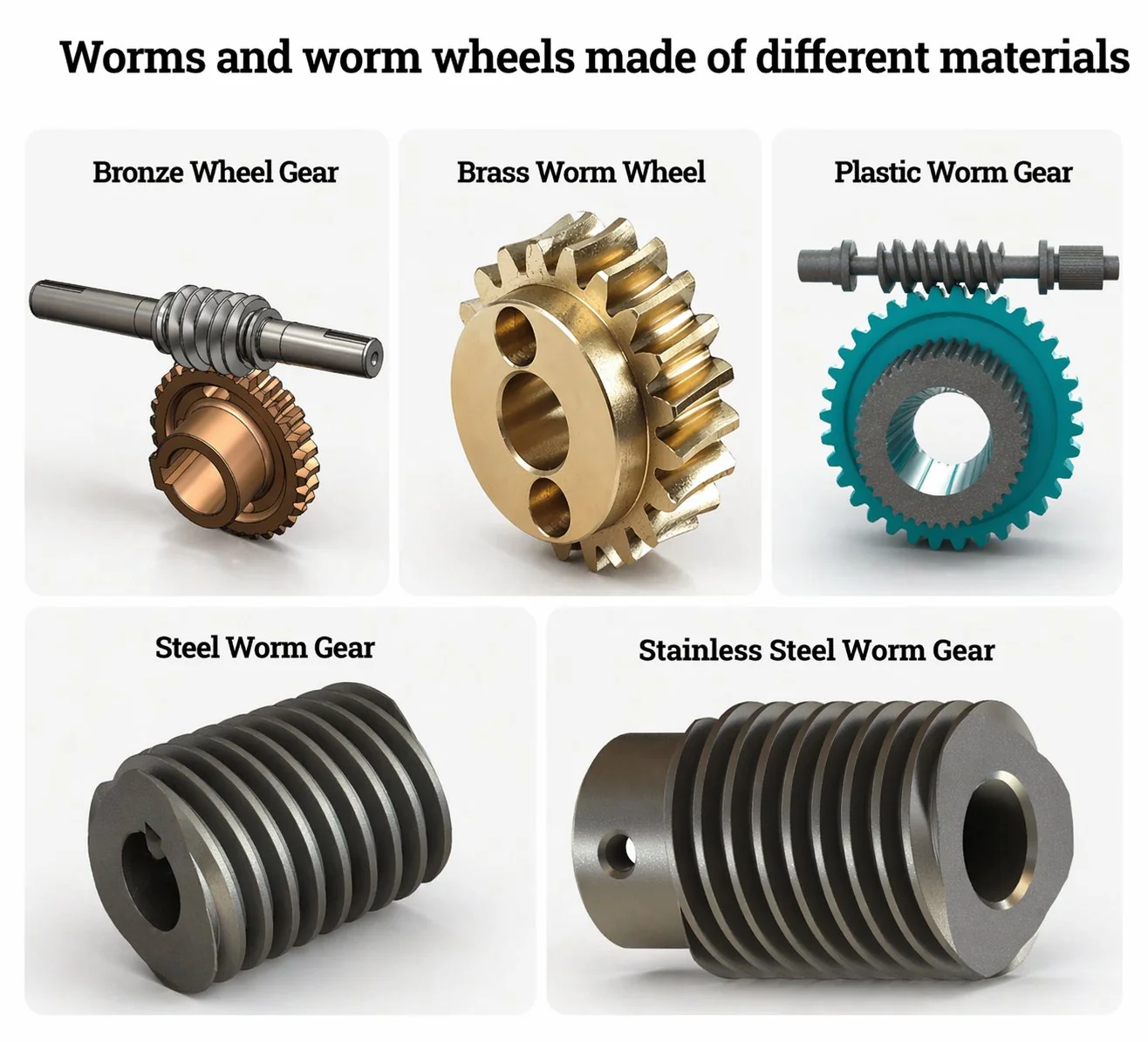
Ver: Acier 16MnCr5 cémenté (dureté Rockwell C 58-62 en surface, 30-35 à cœur). La couche superficielle dure résiste à la corrosion par piqûres ; le cœur plus tendre absorbe les chocs sans rupture fragile.
Roue: Bronze phosphoreux CuSn12Ni coulé par gravité. Convient pour un nombre de cycles faible à modéré.
Finition: Rectification par ver à mine Ra 0,8 µm ; rectification par roue à fraiser Ra 1,6 µm.
Ver: Acier cémenté 16MnCr5 (3m) ou trempé à cœur 42CrMo4, dureté HRC 28-34 (4m). La trempe à cœur assure une dureté uniforme, sans interface cémentée susceptible de s'écailler sous l'effet de chocs répétés.
Roue: CuSn12Ni coulé par centrifugation. La coulée par centrifugation produit un matériau plus dense et sans porosité, avec une résistance à la fatigue de 15 à 25 % supérieure à celle obtenue par coulée par gravité.
Finition: Rectification par rectification de la vis sans fin Ra 0,4 µm ; roue taillée puis rodée.
Ver: Acier cémenté zingué (port intérieur) ou acier inoxydable AISI 316L (côtier/offshore).
Roue: Bronze d'aluminium CuAl10Fe5Ni5 : absence de dézincification au brouillard salin, résistance à la corrosion supérieure au bronze phosphoreux. Taux d'usure légèrement inférieur à celui du CuSn12Ni, au prix d'un coefficient de frottement légèrement supérieur.
Finition: Rectifié par la méthode des vers Ra 0,4 µm ; toutes les fixations sont en acier inoxydable A4.
Trois cas de spécifications de paires d'engrenages à vis sans fin pour palans de grue
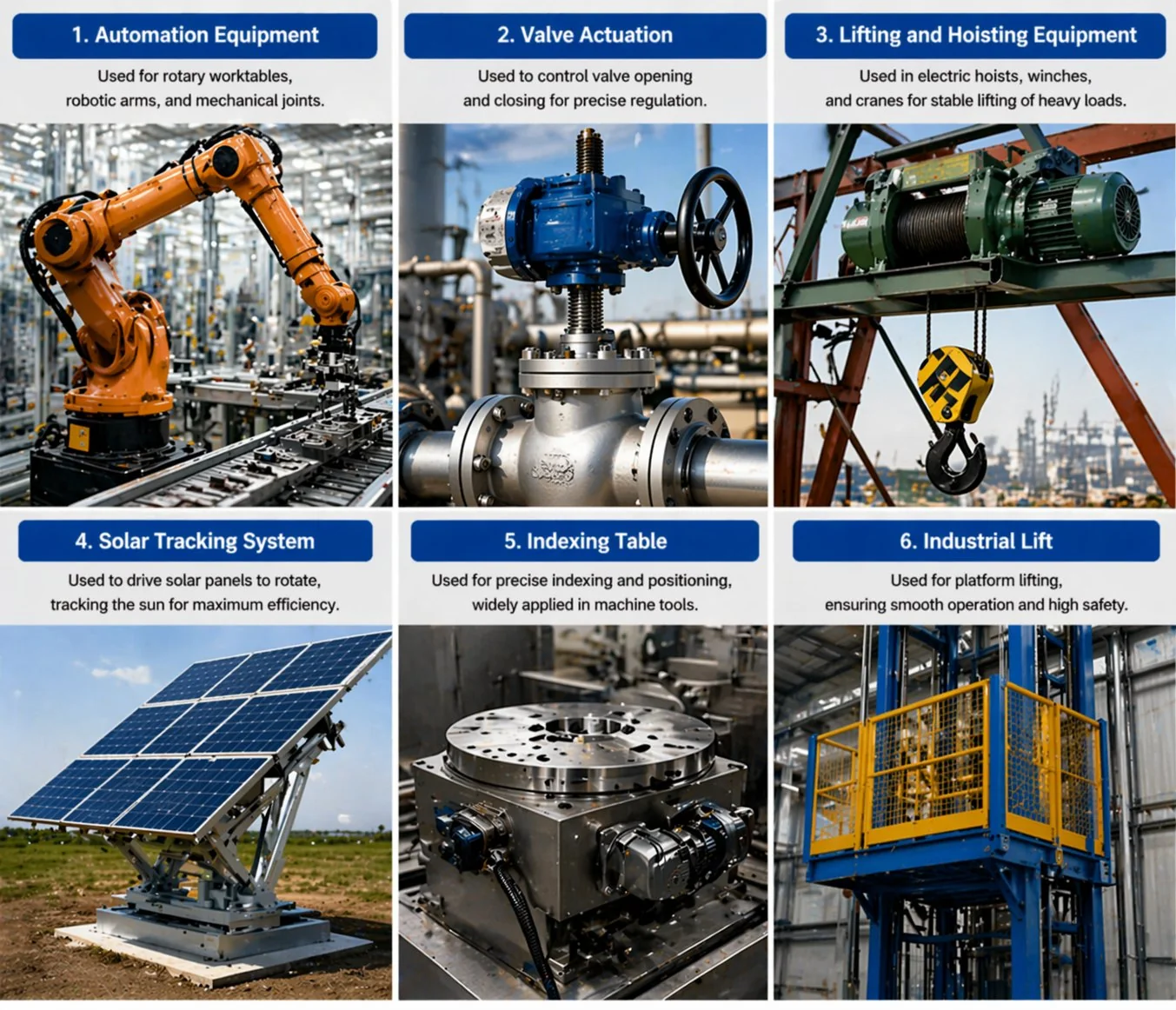
Les trois cas présentés ci-dessous couvrent l'ensemble des charges admissibles selon la méthode des éléments finis (MEF), allant des grues d'usine classiques aux portiques portuaires de grande capacité. Chaque cas illustre comment la classification des groupes de charge MEF influence tous les paramètres de spécification, du coefficient de service et du matériau jusqu'à l'intervalle d'inspection et la planification du remplacement.
Les spécifications sont réelles, les chiffres sont représentatifs des achats effectifs et les enseignements s'appliquent aux marchés de la fabrication et de la maintenance des grues en Corée, au Japon et en Asie du Sud-Est.
Cas 1 — Usine automobile coréenne : pont roulant de 8 tonnes, FEM 3m
Une usine d'emboutissage automobile coréenne a spécifié des engrenages à vis sans fin pour quatre ponts roulants bipoutres de 8 tonnes, utilisés pour le changement d'outillage. Cycle de service : 15 à 20 levages par poste, deux postes par jour, 300 jours ouvrables par an. La plupart des levages se font à 60 à 80 % de la CMU (les outillages d'emboutissage pèsent de 5 à 6,5 tonnes). Classification par éléments finis : 3m (lourd) basée sur environ 2 500 heures de fonctionnement annuelles et un spectre de charge concentré au-dessus de 60 % de la CMU. Diamètre du tambour de levage : 350 mm, rapport de réduction : 50:1, rendement de l'engrenage à vis sans fin : 44 %. Énergie de levage : Tlift = (8 000 × 9,81 × 0,35) / (2 × 50 × 0,44) = 624 N·m. Facteur d'arrêt d'urgence Ke = 2,5. Énergie de choc : Tshock = 1 560 N·m. SF (FEM 3m) = 2,25. T_required = 3 510 N·m. Spécifications : vis sans fin monobloc, module 6, entraxe 160 mm, couple nominal 3 800 N·m. Matériaux : vis sans fin en acier 16MnCr5 cémenté, rectifiée Ra 0,4 µm, roue en CuSn12Ni coulée par centrifugation. Frein électromagnétique à ressort indépendant sur l’arbre d’entrée haute vitesse. Contrôle : mesure du jeu et vérification de la surface de contact tous les 6 mois. Durée de vie : 6,5 ans en moyenne pour la roue en fonctionnement sur 2 équipes, dépassant les 5 ans prévus. La vis sans fin a résisté à deux changements de roue.
Cas 2 — Manutentionnaire de conteneurs portuaire japonais : portique de 40 tonnes, FEM 4m, corrosion marine
Une autorité portuaire japonaise a spécifié les engrenages à vis sans fin pour deux portiques de manutention de conteneurs de 40 tonnes, opérant en milieu côtier et exposés aux embruns. Classification par éléments finis : 4 m (très lourd) — 18 heures de fonctionnement par jour, 350 jours par an, presque toutes les opérations de levage à 80 à 100 % de la charge maximale d'utilisation (les conteneurs de 20 pieds chargés pèsent de 24 à 30 tonnes). Diamètre du tambour de levage : 600 mm, rapport : 60:1, rendement de l'engrenage à vis sans fin : 42 %. Énergie de levage (Tlift) : (40 000 × 9,81 × 0,6) / (2 × 60 × 0,42) : 4 672 N·m. Énergie d'accélération (Ke) : 3,0 (freinage dynamique important lors de l'empilage des conteneurs). Énergie de choc (Tshock) : 14 016 N·m. Coefficient de sécurité (FEM 4 m) : 2,5. Couple requis : 35 040 N·m. Cette valeur dépasse largement la capacité d’un engrenage à simple paire, ce qui est résolu par un système à double engrenage à vis sans fin (deux paires se partageant la charge via un train d’engrenages de sortie commun, chaque paire supportant la moitié du couple, soit 17 520 N·m). Chaque paire : module 10, entraxe de 250 mm, capacité de 18 000 N·m. Matériaux : vis sans fin zinguée et cémentée (protection contre le brouillard salin selon la norme ISO 12944 C4), roue en bronze d’aluminium CuAl10Fe5Ni5 (risque de dézincification nul). Toute la visserie est en acier inoxydable A4. Contrôle : mesure du jeu trimestrielle, contrôle visuel mensuel de l’étanchéité, vérification annuelle du profil de contact. réducteur à vis sans fin robuste des options incluant une protection anticorrosion de qualité marine pour les applications de grues portuaires et côtières.
Cas 3 — Chantier de construction vietnamien : grue à tour de 6 tonnes, FEM 2m, optimisation des coûts
Un fabricant vietnamien d'engins de chantier a spécifié des engrenages à vis sans fin pour une flotte de 30 grues à tour d'une capacité de levage maximale de 6 tonnes, destinées à la construction de bâtiments résidentiels. Classification par éléments finis : 2 m (modérée) — 8 à 10 levages par heure en période de construction active, mais seulement 200 à 250 jours ouvrables par an, la plupart des levages étant bien inférieurs à la capacité de levage maximale (godets à béton de 2 à 3 tonnes, paquets d'armatures de 1 à 2 tonnes, levages à pleine capacité maximale rares). Énergie de levage à la capacité de levage maximale : (6 000 × 9,81 × 0,30) / (2 × 40 × 0,46) = 480 N·m. Ke = 2,5. Énergie de choc = 1 200 N·m. SF (éléments finis 2 m) = 2,0. Énergie requise = 2 400 N·m. Spécifications : vis sans fin monobloc, module 5, entraxe de 125 mm, couple nominal de 2 600 N·m. Matériau : vis sans fin standard en acier cémenté 16MnCr5, roue en CuSn12Ni coulée par gravité (optimisation des coûts — le moulage par centrifugation n’est pas requis pour une portée de 2 m). Coût par paire : 380 USD. Pour un parc de 30 grues, l’économie réalisée par rapport aux spécifications avec roues moulées par centrifugation (estimée à 580 USD par paire) s’élève à 6 000 USD, un avantage non négligeable sur un marché de la construction sensible aux prix. Inspection : annuelle, en même temps que la certification annuelle des grues. Durée de vie cible : 4 ans par roue (correspondant au cycle de location typique de 4 ans d’une grue). Résultats obtenus : 4,2 ans en moyenne sur l’ensemble du parc, l’objectif étant atteint avec une légère marge.
Foire aux questions
Q : Un engrenage à vis sans fin de levage de grue peut-il utiliser une vis sans fin à 2 étages ?
Pratiquement jamais pour le mécanisme de levage. Une vis sans fin à deux spires, avec des valeurs de q typiques, produit un angle d'hélice de 10 à 12 degrés, bien supérieur à l'angle de frottement et donc non verrouillable. La charge tomberait en cas de défaillance du frein. Certains fabricants de grues utilisent des paires de vis sans fin à deux ou trois spires pour les entraînements de translation et de translation transversale (mouvement horizontal) de la grue, lorsqu'il n'y a pas de problème de sécurité lié à la charge suspendue et que le rendement supérieur permet de réduire la taille du moteur. Mais le mécanisme de levage — qui maintient la charge contre la gravité — est systématiquement à un seul spire avec un autobloquant puissant. Cette règle ne comporte aucune exception dans les normes de grues du monde entier.
Q : À quelle fréquence faut-il inspecter un engrenage à vis sans fin de levage de grue ?
Le tableau des groupes de service FEM ci-dessus précise la fréquence des inspections : annuelle pour les grues 1Bm et 1Am, semestrielle pour les grues 2m et 3m, trimestrielle pour la grue 4m et mensuelle pour la grue 5m. L’inspection minimale comprend la mesure du jeu (à comparer au certificat de livraison), un contrôle visuel de l’étanchéité (absence de suintement de graisse) et une comparaison avec le niveau sonore de référence. Pour les grues de classe FEM supérieure à 3m, il convient d’effectuer une vérification de la surface de contact à l’aide d’un marqueur tous les six mois. Ce contrôle est la seule méthode fiable pour détecter la corrosion des flancs de dents avant que le jeu ne devienne mesurable, offrant ainsi un délai d’alerte de 6 à 12 mois avant que le remplacement ne devienne urgent.
Q : Quelle est la relation entre la charge maximale d'utilisation (SWL) et le couple nominal d'un engrenage à vis sans fin ?
La charge maximale d'utilisation (CMU) est la charge maximale que la grue est autorisée à soulever. Le couple nominal de l'engrenage à vis sans fin doit être supérieur au couple produit à la CMU après application du coefficient de choc d'arrêt d'urgence et du coefficient de service. La relation typique est : T_nominal (paire) = CMU × g × D_tambour / (2 × i × η) × K_e × SF. Pour la plupart des ponts roulants avec des diamètres et rapports de tambour standard, le couple nominal requis est environ 4 à 6 fois supérieur au couple de levage en régime permanent à la CMU. Ce rapport explique pourquoi les engrenages à vis sans fin des grues semblent « surdimensionnés » par rapport aux applications de convoyeurs ou de mélangeurs à couple en régime permanent identique : la différence est entièrement due aux coefficients de sécurité d'arrêt d'urgence et de service imposés par les applications de grues.
Q : Quel type de frein est requis en plus du système d'autoblocage à vis sans fin ?
Tous les systèmes de levage de ponts roulants nécessitent un frein à disque ou à tambour, à ressort et à commande électrique, sur l'arbre moteur (côté haute vitesse). Ce frein s'enclenche automatiquement en cas de coupure de courant et fournit un couple de maintien indépendant du blocage par vis sans fin. Il est conçu pour supporter la charge maximale d'utilisation (CMU) majorée d'une marge de sécurité (généralement 1,5 à 2 fois le couple statique gravitationnel sur l'arbre moteur). Le blocage par vis sans fin et le frein mécanique forment un système de maintien à deux niveaux : en cas de défaillance de l'un, l'autre empêche la chute de la charge. Certains ponts roulants à haute criticité (FEM 4m et plus) ajoutent un troisième niveau – un cliquet ou une roue libre sur l'arbre du tambour – assurant ainsi une triple redondance. Cette approche à trois niveaux est courante sur les ponts roulants pour poches de coulée de métal en fusion, où la chute d'une charge peut avoir des conséquences catastrophiques.
Q : Comment déterminer le groupe de service FEM approprié pour une grue spécifique ?
Deux données sont nécessaires : le nombre total de cycles de levage sur la durée de vie nominale du pont roulant (généralement de 10 à 25 ans) et la classe de spectre de charge (proportion de levages proches de la charge maximale d'utilisation par rapport aux charges légères). Les normes ISO 4301 et le livret 2 de la méthode des éléments finis (MEF) fournissent les tableaux de classification. En pratique : les ponts roulants d'atelier effectuant moins de 50 levages par semaine ont une classe de 1Bm ; ceux d'usine effectuant de 50 à 200 levages par semaine, de 1Am à 2m ; ceux de production effectuant de 200 à 1 000 levages par semaine, de 3m ; et ceux de process fonctionnant en continu sur plusieurs équipes, de 4m à 5m. Si le pont roulant est utilisé sur une ligne de production et fonctionne quotidiennement, sa classe de 2m est d'au moins 2m, quelle que soit la légèreté des levages individuels. Consultez la documentation du fabricant pour connaître la classification MEF officielle ; elle figure généralement sur la plaque signalétique du pont roulant.
Q : Puis-je remplacer un engrenage à vis sans fin de palan de grue par un engrenage hélicoïdal pour améliorer son rendement ?
C'est techniquement possible, mais cela modifie fondamentalement l'architecture de sécurité. Un engrenage hélicoïdal ne se bloque pas automatiquement : le frein devient le seul dispositif de maintien. La plupart des normes relatives aux grues l'acceptent (de nombreuses grues modernes à grande vitesse utilisent des engrenages hélicoïdaux avec des freins haute performance), mais la maintenance est modifiée : le frein doit être inspecté beaucoup plus fréquemment. Pour les grues existantes conçues avec un système d'engrenages à vis sans fin à blocage automatique, le passage à un système hélicoïdal sans analyse de sécurité préalable et sans mise à niveau du système de freinage est déconseillé.
Les engrenages à vis sans fin des grues et des palans fonctionnent selon le cadre de sécurité le plus rigoureux de toutes les applications d'engrenages industriels. La classification par éléments finis (FEM) établit un lien entre la durée de vie réelle de la grue (ses heures de fonctionnement, son spectre de charge et son nombre de cycles) et le facteur de service, la nuance de matériau et l'intervalle d'inspection de l'engrenage. Le facteur de choc d'arrêt d'urgence (2,5 à 3 fois le couple en régime permanent) est souvent la contrainte déterminant la taille minimale du bâti ; se baser uniquement sur le couple de levage en régime permanent sous-estime la capacité de l'engrenage d'un facteur 4 à 6. Le choix du matériau dépend du groupe de service : bronze coulé par gravité pour les applications légères, bronze coulé par centrifugation pour les applications lourdes et bronze d'aluminium pour les environnements marins. La fréquence d'inspection passe d'annuelle à mensuelle à mesure que le groupe de service augmente. La règle universelle, applicable à tous les groupes de service, est que les engrenages à vis sans fin des palans de grues doivent être à démarrage unique, à autobloquant puissant et être équipés d'un frein mécanique séparé. L'autobloquant géométrique est suffisant ; le frein apporte la redondance exigée par les normes de sécurité.
Pour les fabricants de grues et les équipes de maintenance qui spécifient les paires d'engrenages à vis sans fin pour palans, notre bureau d'études vérifie la classification du groupe de service par éléments finis et effectue le calcul des chocs d'arrêt d'urgence en fonction des paramètres de votre grue. Catalogue standard ensembles d'engrenages à vis sans fin en bronze phosphoreux Nous couvrons les entraxes de 80 à 250 mm en configuration monopoint, avec documentation complète de contrôle DIN 3974. Des combinaisons de matériaux sur mesure (bronze d'aluminium, acier inoxydable, acier trempé à cœur) et des paires de remplacement non standard sont disponibles sous 4 à 6 semaines. Soumettez une demande. Spécifications du mécanisme d'entraînement du palan de grue avec votre charge maximale d'utilisation (SWL), le diamètre du tambour et la classification du groupe FEM.
Spécifier les paires d'engrenages à vis sans fin pour les applications de grue ou de palan ?
Veuillez nous indiquer la charge maximale d'utilisation de la grue, le diamètre du tambour de levage, le rapport de réduction, le groupe de service FEM et l'environnement (intérieur, extérieur, côtier, marin). Nous calculerons le couple de choc d'arrêt d'urgence, vous recommanderons la combinaison de matériaux FEM appropriée et vous fournirons un devis pour les options standard et sur mesure, généralement sous 24 heures ouvrables.
Demande de spécifications pour le mécanisme d'entraînement d'une grue →
modifié par cxm