Korea Ever-Power · Anwendungsleitfaden
Schnecke und Schneckenrad für Krankenhausbetten und medizinische Lagerung
Ein Patient nach einer Operation liegt auf einem elektrisch verstellbaren Krankenhausbett in 15-Grad-Trendelenburg-Lagerung. Die Pflegekraft verlässt den Raum, die Stromzufuhr wird für den Transport unterbrochen – und das Einzige, was den 90 kg schweren Patienten daran hindert, nach vorne zu rutschen, ist die selbstsichernde Geometrie von vier kleinen Schneckenradpaaren in den Aktuatoren des Bettgestells. In der Medizintechnik ist das Schneckenradpaar gleichzeitig Bewegungskomponente, Sicherheitsverriegelung und geräuschempfindliches Bauteil, das sich in unmittelbarer Nähe eines schlafenden Patienten befindet.
Medizinische Positionierungsgeräte – Krankenhausbetten, OP-Tische, Untersuchungsstühle, Patientenlifter und Rehabilitationsgeräte – erfordern Schneckengetriebe, die drei Anforderungen gleichzeitig erfüllen, die in keiner anderen Anwendung vereint sind: Geräuschpegel unter 45 dB(A) am Patienten (leiser als ein Flüstern), absolute Selbsthemmungssicherheit bei Stromausfall (Patientensicherheit) und Materialverträglichkeit mit medizinischen Reinigungsmitteln (wiederholte chemische Desinfektion ohne Beschädigung von Gehäuse oder Dichtung). Die Norm IEC 60601-1 regelt die elektrische Sicherheit des Antriebssystems; ISO 10993 die Biokompatibilität aller Materialien, die durch Schmierstoffleckage oder Partikelbildung mit dem Patienten in Kontakt kommen könnten. Die Konformitätstabelle ordnet diese Normen spezifischen Konstruktionsparametern für Schneckengetriebe zu: Oberflächenrauheit Ra 0,2 bis 0,4 µm für geringe Geräuschentwicklung, MC-Nylon- oder POM-Laufräder zur Vibrationsdämpfung, lebensmittel- oder pharmazeutisch zugelassenes Fett (mindestens NSF H1) und abgedichtete Gehäuse, die der täglichen Reinigung mit Desinfektionsmitteln auf Basis von quaternären Ammonium- oder Peressigsäuren ohne Beschädigung der Dichtung standhalten.
Warum medizinische Positionierungsgeräte Schneckengetriebe verwenden
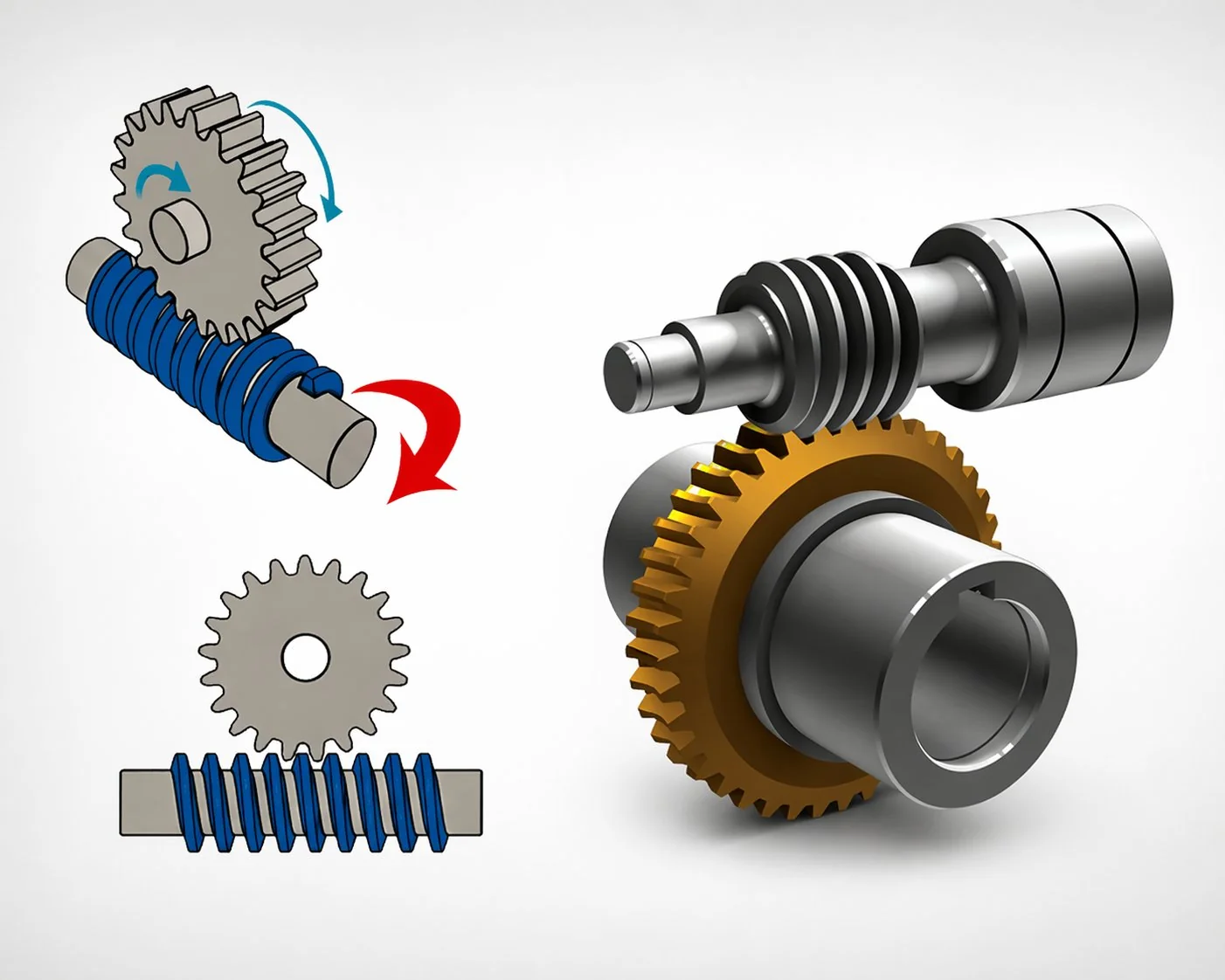
Ein modernes, elektrisch betriebenes Krankenhausbett verfügt über vier bis sechs Linearantriebe: Kopf- und Fußverstellung, Kniegelenksverstellung, Höhenverstellung, Trendelenburg-/Anti-Trendelenburg-Lagerung und Seitenneigung. Jeder Antrieb wandelt die Drehstromleistung eines Motors über eine Gewindespindel in eine lineare Bewegung des Bettsegments um. Das Schneckengetriebe zwischen Motor und Gewindespindel sorgt sowohl für die Drehzahlreduzierung als auch für die Positionsstabilisierung durch Selbsthemmung.
Wird die Stromversorgung unterbrochen – sei es absichtlich während des Patiententransports oder versehentlich durch einen Stromausfall –, muss jeder Aktor seine Position beibehalten. Ein Patient in 15-Grad-Trendelenburg-Lagerung mit einem Gewicht von 90 kg erzeugt eine Gleitkraft von 230 N. Das Schneckengetriebe muss dieser Kraft dauerhaft und ohne Kriechen widerstehen.
Intensivpatienten schlafen in einem Umkreis von 0,5 Metern um die Bettantriebe. Die WHO empfiehlt einen Krankenhauslärmpegel von unter 35 dB(A) nachts. Die Geräuschbilanz der Antriebe erlaubt 40 bis 45 dB(A) während der Verstellung – der Spielraum über dem Hintergrundgeräusch beträgt somit nur 5 bis 10 dB(A). Dies ist die leiseste Anwendung eines Schneckengetriebes in der gesamten Branche.
Krankenhausbetten werden täglich mit aggressiven chemischen Desinfektionsmitteln – quaternären Ammoniumverbindungen, Peressigsäure oder Wasserstoffperoxid – desinfiziert. Das Gehäuse und die Dichtungen des Aktuators müssen während der zehnjährigen Nutzungsdauer des Bettes 3.000 bis 5.000 Desinfektionszyklen ohne Versprödung, Rissbildung oder Dichtungsversagen überstehen.
Medizinische Lärm- und Biokompatibilitätsanforderungen – Berührungspunkte mit IEC 60601 und ISO 10993
Normen für Medizinprodukte legen die Parameter von Schneckengetrieben nicht direkt fest, sondern beschreiben das Verhalten des gesamten Produkts (Geräusch, Sicherheit, Biokompatibilität). Die Anforderungen an das Produkt selbst wirken sich jedoch auf die Konstruktion spezifischer Schneckengetriebe aus. Die folgende Konformitätstabelle übersetzt die Normen für Medizinprodukte in konkrete Spezifikationen für Schneckengetriebe.
Diese Tabelle dient als Spezifikationsbrücke zwischen dem Medizinprodukteingenieur (der in IEC 60601 und ISO 10993 denkt) und dem Lieferanten von Schneckenradpaaren (der in Modul, Achsabstand und Materialgüte denkt).
Die Konformitätstabelle zeigt, dass die medizinische Spezifikation ein simultanes Optimierungsproblem darstellt: Die Anforderungen an die Geräuschentwicklung sprechen für Kunststoffräder und eine feine Oberflächengüte; die Anforderungen an die Selbsthemmung erfordern einen geringen Anstellwinkel und einen hohen Q-Wert; die Anforderungen an die Biokompatibilität schränken die Wahl des Schmierstoffs ein; und die Anforderungen an die Desinfektionsbeständigkeit schränken das Dichtungsmaterial ein. Jeder Parameter muss alle Randbedingungen gleichzeitig erfüllen – eine Konstruktion, die fünf von sechs Anforderungen erfüllt, aber eine nicht, ist nicht konform und darf nicht ausgeliefert werden.
Extrem leises Aktuatordesign – Kunststoff-Schneckenräder für den Betrieb am Bett
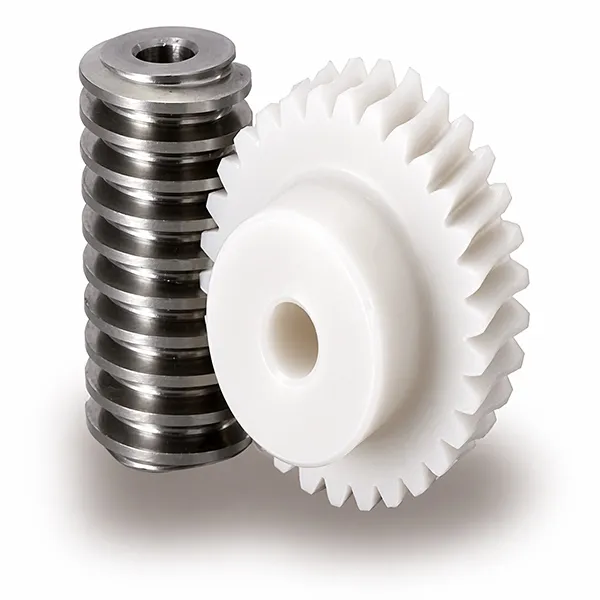
Der Geräuschgrenzwert von 45 dB(A) am Patientenbett ist die anspruchsvollste Geräuschvorgabe für Schneckengetriebe – strenger als die Grenzwerte von 52–58 dB(A) für Premium-Aufzüge (Artikel A07), Rolltreppen in Kaufhäusern (Artikel A08) oder fahrerlose Transportsysteme (AGV) in Krankenhäusern (Artikel A05). Mit einem Schneckenrad aus Bronze ist die Einhaltung dieses Grenzwerts praktisch unmöglich: Selbst ein geläpptes Bronzerad mit einer Oberflächenrauheit von Ra 0,2 µm erzeugt bei den für Bettantriebe typischen Drehzahlen (5 bis 15 U/min) einen Geräuschpegel von 50 bis 55 dB(A).

Kunststoff-Schneckenräder – MC Nylon (gegossenes Polyamid 6) oder POM (Acetal) – erreichen einen Schalldruckpegel von 38 bis 45 dB(A) durch drei Mechanismen: Die Materialdämpfung absorbiert die Schwingungsenergie des Zahneingriffs, anstatt sie als Schall abzustrahlen; der niedrigere Elastizitätsmodul des Kunststoffs erzeugt ein breiteres Kontaktband, das die Last über eine größere Zahnfläche verteilt (wodurch die Anregung des Punktkontakts reduziert wird); und der Kunststoff-Stahl-Kontakt weist eine geringere Reibungskoeffizientenvariation auf, was zu einer gleichmäßigeren Rotation mit weniger Mikro-Stick-Slip-Ereignissen führt.
MC-Nylon versus POM für medizinische Aktuatoren. MC-Nylon ist das bevorzugte Material für Schneckenräder in Krankenhausbetten, da es eine etwas bessere Vibrationsdämpfung als POM bietet (2 bis 3 dB(A) leiser bei gleicher Drehzahl) und bei den für Bettantriebe typischen geringen Lasten (5 bis 30 Nm Drehmoment) trockenlaufen kann. POM bietet eine bessere Dimensionsstabilität (geringere Feuchtigkeitsaufnahme) und wird bevorzugt für OP-Tische eingesetzt, bei denen der Antrieb Flüssigkeitsspritzern ausgesetzt sein kann, die MC-Nylon zum Aufquellen bringen würden. Beide Materialien erzeugen keine Metallpartikel – ein wichtiger Aspekt für Bettantriebe, die in der Nähe von Wundverbänden eingesetzt werden.
Ein koreanischer Hersteller von Krankenhausbetten reichte Schneckenradpaare von zwei Lieferanten zu einem Geräuschvergleichstest ein. Lieferant A: Stahlschnecke, geschliffen (Ra 0,4 µm), Laufrad aus MC-Nylon, Modul 1,5, Achsabstand 30 mm. Lieferant B: Stahlschnecke, gewälzt (Ra 1,2 µm), Laufrad aus POM, gleicher Modul und gleicher Achsabstand. Beide Paare erfüllten die Anforderungen an Drehmoment und Selbsthemmung. Geräuschmessung bei 10 U/min Ausgangsdrehzahl, gemessen in 0,5 m Entfernung: Lieferant A maß 41 dB(A). Lieferant B maß 49 dB(A). Der Unterschied von 8 dB(A) ist ausschließlich auf die Oberflächenbeschaffenheit der Schnecke zurückzuführen – Ra 0,4 µm gegenüber Ra 1,2 µm. Mit 49 dB(A) überschritt das Paar von Lieferant B den Grenzwert von 45 dB(A) am Patientenbett und fiel beim Abnahmetest durch. Lieferant B bot an, die Schnecken gegen einen Aufpreis von 1,80 USD pro Schnecke auf Ra 0,4 µm nachzuschleifen. Die nachgeschliffenen Schnecken erreichten einen Schalldruckpegel von 42 dB(A) – innerhalb der Spezifikation. Fazit: Bei medizinischen Aktuatoren ist die Oberflächengüte der Schnecken keine wünschenswerte Qualitätsverbesserung, sondern ein entscheidender Parameter für die Einhaltung der Spezifikationen. Ein Unterschied von 0,8 µm in der Oberflächenrauheit (Ra 1,2 gegenüber Ra 0,4) entschied über den Unterschied zwischen einem Fehlerpegel von 49 dB(A) und einem Bestehen von 41 dB(A). Die Kosten für die Einhaltung der Spezifikationen beliefen sich auf 1,80 USD pro Schnecke.
Drei medizinische Geräte-Schneckengetriebepaar-Spezifikationsgehäuse
Fallbeispiel 1 – Koreanischer Krankenhausbettenhersteller: Intensivbett mit 5 Aktuatoren, Zielwert 42 dB(A).
Ein koreanischer Krankenhausbettenhersteller spezifizierte Schneckengetriebepaare für ein Premium-Intensivbett mit fünf motorbetriebenen Aktuatoren (Kopfneigung 0–70°, Fußneigung 0–35°, Kniegelenkwinkel 0–30°, Höhe 400–800 mm, Trendelenburg-Lagerung ±15°). Maximales Patientengewicht: 200 kg. Motor pro Aktuator: 24 V DC, 80 W. Steigung der Gewindespindel: 6 mm. Erforderliches Schneckengetriebeübersetzungsverhältnis: 20:1. Drehmoment bei maximalem Patientengewicht und maximalem Neigungswinkel: 18 Nm. Geräuschpegel-Zielwert: 42 dB(A) in 0,5 m Entfernung vom Bettrahmen während der Kopfneigungsverstellung (der lauteste Aktuator aufgrund der höchsten Belastung und des größten Verfahrwegs). Schneckengetriebepaar: eingängig, Modul 1, Achsabstand 25 mm, q = 14, Steigungswinkel 2,6°, Schneckenschliff Ra 0,4 µm, MC-Nylon-Laufrad. Schmierfett: NSF H1-konformes Silikonfett. Dichtung: EPDM-O-Ring mit Beständigkeit gegen quaternäre Ammoniumverbindungen. Gehäuse: Verzinkter Stahl mit medizinischer Pulverbeschichtung. Geräuschpegel: 41 dB(A) bei maximaler Last – innerhalb des Zielbereichs. Selbsthemmungstest: 150 % Nennlast (300 kg), 4 Stunden statische Haltezeit bei 15° Trendelenburg-Lagerung, kein Kriechen. Kosten pro Schneckenradpaar: 12 USD. Kosten für ein 5-Stellantrieb-Bettset: 60 USD. Produktionsvolumen: 3.000 Betten pro Jahr (15.000 Schneckenradpaare jährlich). Austauschintervall für MC-Nylon-Räder: 5 Jahre im Krankenhausbetrieb (ca. 15.000 Verstellzyklen über 5 Jahre – vernachlässigbar gering hinsichtlich der Materialermüdung, nähert sich aber der Feuchtigkeitsaufnahmegrenze von MC-Nylon in feuchten Stationsumgebungen).
Fall 2 – Japanischer OP-Tisch: 250 kg Tragkraft, spritzwassergeschützt, POM-Rollen
Ein japanischer Hersteller von OP-Tischen spezifizierte Schneckengetriebepaare für einen 6-Aktuator-Tisch mit elektrischer Höhenverstellung, Trendelenburg-Lagerung, Seitenneigung, Rückenlehne, Beinteilen und Nierenbrücke. Die maximale Patientengewichtskapazität beträgt 250 kg (einschließlich OP-Abdecktuch und -Instrumente). Die OP-Umgebung stellte eine besondere Herausforderung dar: OP-Flüssigkeiten (Blut, Kochsalzlösung, Desinfektionsmittel) konnten auf die Tischbasis spritzen, wo die Aktuatoren untergebracht sind. POM wurde gegenüber MC-Nylon bevorzugt, da POM weniger als 0,2 % Feuchtigkeit aufnimmt (gegenüber 2 bis 3 % bei MC-Nylon) und somit auch bei wiederholtem Kontakt mit Flüssigkeiten formstabil bleibt. Schneckengetriebepaar: eingängig, Modul 1,5, Achsabstand 30 mm, q = 12, Schneckenschliff Ra 0,3 µm, POM-Rad. Schmierfett: pharmazeutisches, PTFE-verdicktes Fluorsilikon (kompatibel mit OP-Reinigungsmitteln, einschließlich Peressigsäure). Dichtung: FKM (Viton) O-Ring – FKM ist beständig gegen Peressigsäure, Wasserstoffperoxid und Glutaraldehyd, die Standard-Nitril- und EPDM-Dichtungen innerhalb von 6 Monaten zerstören. Geräuschpegel: 44 dB(A) in 0,5 m Entfernung – etwas über dem Zielwert für Intensivbetten, aber akzeptabel für Operationssäle, in denen der Hintergrundgeräuschpegel durch Anästhesiegeräte (Beatmungsgeräte, Monitore) 45 bis 55 dB(A) beträgt. Preis pro Paar: 22 USD (FKM-Dichtung und pharmazeutisches Fett verursachen einen deutlichen Aufpreis gegenüber den Spezifikationen für Krankenhausbetten). leises Schneckengetriebe Optionen für medizinische Aktuatoranwendungen, die extrem niedrige Geräuschentwicklung und chemische Beständigkeit erfordern.
Fall 3 – Vietnamesischer Rehabilitations-Kipptisch: 150 kg, kostensensibel, Bronze akzeptabel
Ein vietnamesischer Hersteller von Rehabilitationsgeräten spezifizierte Schneckengetriebe für einen motorisierten Kipptisch, der in der Physiotherapie für Patienten nach Schlaganfall und Rückenmarksverletzungen eingesetzt wird. Der Kipptisch lässt sich von der Horizontalen (0°) bis nahezu zur Vertikalen (80°) drehen, während der Patient fixiert ist. Der Antrieb erfolgt über einen Kurbelmechanismus. Die maximale Patientenbelastung beträgt 150 kg. Der Motor hat eine Leistung von 24 V DC und 200 W. Das erforderliche Drehmoment am Schneckengetriebe beträgt 65 Nm (Patientengewicht bei maximalem Hebelarm). Die Kippgeschwindigkeit liegt bei 2° pro Sekunde (langsame, kontrollierte Bewegung ist für die Patientensicherheit unerlässlich). Da die Umgebung der Rehabilitationsklinik weniger geräuschempfindlich war als eine Intensivstation – der Geräuschpegel der Trainingsgeräte lag zwischen 55 und 65 dB(A) –, war ein Schneckenrad aus Bronze mit 52 dB(A) ausreichend. Das Schneckengetriebe ist eingängig, Modul 2, Achsabstand 40 mm, besteht aus einer Phosphorbronze-CuSn12Ni-Schnecke und hat eine Oberflächenrauheit von Ra 0,6 µm. Standard-Lithiumkomplexfett (nicht NSF H1 – der Aktuator ist vollständig im Tischfuß eingeschlossen und hat keinen Patientenkontakt). Standard-Nitrildichtung (in Reha-Kliniken werden keine aggressiven Desinfektionsmittel verwendet – nur Standard-Alkoholreinigung). Kosten pro Paar: 28 USD. Die Spezifikation zeigt, dass nicht alle Medizinprodukte die vollständige Konformitätstabelle benötigen – der Anforderungsgrad hängt von der klinischen Umgebung, der Nähe zum Patienten und dem Desinfektionsverfahren ab.
Häufig gestellte Fragen
F: Benötigt das Schneckengetriebe selbst eine IEC 60601-Zertifizierung?
Nein – IEC 60601 zertifiziert das komplette Medizinprodukt (z. B. das Krankenhausbett oder den OP-Tisch als Fertigprodukt), nicht einzelne Komponenten. Das Schneckenradpaar ist eine Unterkomponente, die zur Konformität des Produkts beiträgt. Der Lieferant des Schneckenradpaares muss jedoch Dokumente bereitstellen, die die Zertifizierung des Geräteherstellers unterstützen: Geräuschmessdaten bei festgelegten Drehzahlen und Lasten, Ergebnisse von Selbsthemmungstests bei 150 % der Nennlast, Materialzertifikate für Schnecke und Rad sowie Sicherheitsdatenblätter für Schmierstoffe, die den NSF-H1- oder pharmazeutischen Standard bestätigen. Kann ein Gerätehersteller diese Dokumente nicht vom Schneckenradpaar-Lieferanten erhalten, muss er alle Tests selbst durchführen – was den Zertifizierungsprozess verteuert und verlängert.
F: Wie lange ist die Lebensdauer eines Kunststoff-Schneckenrades in einem Krankenhausbettantrieb?
Die Aktuatoren von Krankenhausbetten werden nur geringfügig beansprucht: typischerweise 20 bis 50 Positionsverstellungen pro Tag, à 5 bis 15 Sekunden. Über eine Lebensdauer von 10 Jahren beträgt die Gesamtbetriebszeit etwa 200 bis 500 Stunden – weit unterhalb der Ermüdungsgrenze von Kunststoffrädern. Der limitierende Faktor ist die Materialalterung: MC-Nylon absorbiert Feuchtigkeit aus der feuchten Raumluft (2 bis 3 Gewichtsprozent), wodurch sich der Raddurchmesser allmählich vergrößert und der Maschenabstand verringert. Nach 5 bis 7 Jahren bei typischer Krankenhausfeuchtigkeit (50 bis 70 % relative Luftfeuchtigkeit) kann die Dimensionsänderung den Geräuschpegel um 3 bis 5 dB(A) und die Stromaufnahme des Motors um 10 bis 15 Prozent erhöhen. POM absorbiert vernachlässigbare Feuchtigkeit und zeigt dieses Alterungsverhalten nicht, ist aber pro Rad etwa 20 Prozent teurer. Für Betten mit einer angestrebten Lebensdauer von 10 Jahren ist POM die sicherere Langzeitwahl. Für Betten mit einem Austauschzyklus von 5 bis 7 Jahren ist MC-Nylon ausreichend und kostengünstiger.
F: Kann ein Schneckengetriebe in einem Krankenhausbett ohne Schmierung laufen?
MC-Nylon- und POM-Schneckenräder können bei den für Krankenhausbettantriebe typischen leichten Lasten (5 bis 30 Nm Drehmoment) trocken (ohne Fett) gegen eine geschliffene Stahlschnecke laufen. Der Trockenlauf schließt jegliches Risiko von Schmierstoffverlusten aus und vereinfacht die Biokompatibilitätsprüfung. Allerdings erhöht der Trockenlauf den Geräuschpegel um 3 bis 5 dB(A) im Vergleich zum Betrieb mit Fett (der Fettfilm dämpft Mikrovibrationen) und den Reibungskoeffizienten (wodurch der Wirkungsgrad um 5 bis 10 Prozentpunkte sinkt). Die meisten Krankenhausbettenhersteller verwenden einen dünnen Film NSF-H1-Fett, um einen möglichst geringen Geräuschpegel zu erzielen – das Biokompatibilitätsrisiko wird durch das abgedichtete Gehäuse minimiert, anstatt vollständig auf Fett zu verzichten. Bei Geräten, deren Gehäuse nicht vollständig abgedichtet werden kann (z. B. einige Patientenlifter mit freiliegenden Mechanismen), ist der Trockenlauf mit einem Kunststoffrad die sicherere Lösung.
F: Was passiert, wenn sich das Schneckengetriebe in einem Krankenhausbett nicht selbst verriegelt?
Das Bettsegment driftet aus seiner eingestellten Position – das Kopfteil senkt sich langsam ab, die Trendelenburg-Lagerung gleicht sich allmählich aus oder die Höhe verringert sich langsam. Für einen wachen Patienten ist dies unangenehm und beunruhigend. Für einen sedierten oder bewusstlosen Intensivpatienten kann es medizinisch gefährlich sein: Eine Abdrift des Kopfteils während der Überdruckbeatmung verändert die Atemwegsgeometrie, und eine Höhenveränderung kann zu Spannungen im intravenösen Zugang führen. Die Norm IEC 60601-2-52 verlangt vom Betthersteller den Nachweis, dass alle motorisierten Positionierungsfunktionen ihre eingestellte Position bei Stromausfall für die Dauer des typischen klinischen Einsatzes (mindestens 8 Stunden) beibehalten. Das Schneckengetriebe ist der primäre Mechanismus zur Erfüllung dieser Anforderung. Die Selbsthemmung muss mit dem Schmiermittel mit dem niedrigsten Reibungskoeffizienten, bei der ungünstigsten Temperatur (höchste Temperatur reduziert die Schmierfettviskosität und Reibung) und mit 150 % des Nennpatientengewichts überprüft werden, um eine Sicherheitsreserve für schwere Patienten und auf dem Bett platzierte medizinische Geräte zu gewährleisten.
F: Werden Schneckengetriebe in Elektrorollstühlen und Patientenliftern verwendet?
Ja, in bestimmten Anwendungsbereichen. Aktuatoren für die Sitzneigung und -verstellung von Elektrorollstühlen verwenden häufig Schneckengetriebe, aus demselben Grund wie Krankenhausbetten: Die Selbsthemmung hält den Sitzwinkel ohne separate Bremse. Deckenlifter für Patienten nutzen Schneckengetriebe im Hubmechanismus zur Selbsthemmung beim Patiententransfer (der Patient darf nicht absteigen, wenn der Motor während des Hubvorgangs stoppt). Stehhilfen und Aufstehhilfen verwenden Schneckengetriebe in den Knie- und Hüftaktuatoren. In allen Fällen entsprechen die Spezifikationen für Schneckengetriebe denselben Anforderungen: Geräuschpegel unter 45 bis 50 dB(A), Selbsthemmung bei 150 % Nennlast und abgedichtetes Gehäuse mit geeignetem Schmierstoff. Die Achsabstände sind kleiner (20 bis 35 mm) und die Drehmomente niedriger (5 bis 25 Nm) als bei Aktuatoren von Krankenhausbetten, da diese Geräte nur eine einzelne Extremität oder ein Körpersegment des Patienten tragen und nicht das gesamte Patientengewicht auf einem geneigten Bettsegment.
Medizinische Positionierungsgeräte – Krankenhausbetten, OP-Tische, Rehabilitationsgeräte, Patientenlifter und Elektrorollstühle – erfordern Schneckengetriebe, die gleichzeitig die strengsten Geräuschvorgaben der Branche (unter 45 dB(A) am Patientenbett), absolute Selbsthemmungssicherheit bei Stromausfall (Patientensicherheit gemäß IEC 60601) und Materialverträglichkeit mit aggressiven medizinischen Desinfektionsmitteln (EPDM- oder FKM-Dichtungen, die 3.000 bis 5.000 chemische Reinigungszyklen überstehen) erfüllen. Die Konformitätstabelle schließt die Lücke zwischen Normen für Medizinprodukte und Spezifikationen für Schneckengetriebe – sie übersetzt die Anforderungen der IEC 60601 und ISO 10993 in die Auswahl von Oberflächenbeschaffenheit, Laufradmaterial, Schmierfett und Dichtungsmaterial. Kunststoff-Schneckenräder (MC-Nylon für geringste Geräuschentwicklung, POM für Flüssigkeitsbeständigkeit) sind Standard für medizinische Aktuatoren, da Bronze den Grenzwert von 45 dB(A) am Patientenbett unabhängig von der Oberflächenqualität nicht einhält.
Für Hersteller von Krankenhausbetten und Medizingeräten prüft unsere Entwicklungsabteilung die Konformität Ihrer Geräteanforderungen hinsichtlich Geräuschentwicklung, Selbstverriegelung und Biokompatibilität. Standardkatalog kompakte Schneckengetriebesätze Lieferung in medizinischen Ausführungen mit 20 bis 40 mm Achsabstand, wahlweise mit MC-Nylon- oder POM-Laufrädern, NSF-H1-Fett und EPDM- oder FKM-Dichtungen. Bitte reichen Sie eine Anfrage ein. Spezifikation für medizinische Aktuatoren unter Berücksichtigung Ihres Geräuschziels, der maximalen Patientengewichtskapazität und des Desinfektionsprotokolls.
Spezifizierung von Schneckenradpaaren für medizinische Positionierungsgeräte?
Bitte senden Sie uns Ihre Zielvorgabe für den Geräuschpegel (dB(A) in der Entfernung), die maximale Patientenbelastung, die Anzahl der Aktuatoren, die Art der klinischen Umgebung (Intensivstation, OP, Rehabilitation) und die verwendeten Desinfektionsmittel. Wir ermitteln die Konformitätsanforderungen und empfehlen Ihnen das passende Material, die Oberflächenbeschaffenheit und die Dichtungslösung.
Herausgeber: Cxm