कोरिया एवर-पावर · अनुप्रयोग इंजीनियरिंग गाइड
फूड मिक्सर और आटा गूंथने वाली मशीनों के लिए वर्म और वर्म व्हील
300 लीटर क्षमता वाली एक सर्पिल आटा गूंथने वाली मशीन 60 आरपीएम पर 60 किलोग्राम हाइड्रेटेड गेहूं के आटे को घुमाती है, जिससे एजिटेटर शाफ्ट पर 380 N·m के बराबर चिपचिपा प्रतिरोध उत्पन्न होता है। मोटर को 12 मिनट के मिश्रण चक्र के दौरान बिना रुके, अधिक गर्म हुए या आटे को दूषित किए बिना लगातार इस प्रतिरोध को पार करना होता है। मोटर और एजिटेटर के बीच लगा वर्म गियर युग्म टॉर्क को कई गुना बढ़ाता है, गति को कम करता है और सबसे महत्वपूर्ण बात यह है कि खाद्य-ग्रेड सामग्री के अनुरूप उत्पाद को मानव उपभोग के लिए सुरक्षित रखता है।
खाद्य मिक्सर और आटा गूंथने वाली मशीनें किसी भी प्रसंस्करण उद्योग में सबसे अधिक टॉर्क और सबसे कम गति वाले वर्म गियर अनुप्रयोग हैं — उत्पाद के चिपचिपे प्रतिरोध द्वारा संचालित, 100 से 2,000 N·m के आउटपुट टॉर्क पर 20 से 80 RPM की आउटपुट गति। चिपचिपा भार टॉर्क तीन चरों पर निर्भर करता है: उत्पाद की चिपचिपाहट (पानी जैसी पतली सॉस 0.01 Pa·s बनाम गाढ़ा ब्रेड का आटा 50+ Pa·s), एजिटेटर का घूर्णन आयतन और घूर्णी गति। चिपचिपा भार कैलकुलेटर T = k × µ × V × n इन इनपुट को आवश्यक आउटपुट टॉर्क में परिवर्तित करता है। खाद्य-ग्रेड अनुपालन के लिए NSF H1 पंजीकृत स्नेहक (आकस्मिक संपर्क से सुरक्षित), स्टेनलेस स्टील या खाद्य-सुरक्षित कांस्य सामग्री, दैनिक उच्च दबाव धुलाई के लिए IP65 या IP69K सीलबंद हाउसिंग और खाद्य अम्लों और सफाई रसायनों दोनों के प्रति प्रतिरोधी सील सामग्री (EPDM या PTFE) की आवश्यकता होती है। फूड मिक्सर में वर्म गियर पेयर उन कुछ अनुप्रयोगों में से एक है जहां यांत्रिक विशिष्टता (उच्च टॉर्क, कम गति) और नियामक विशिष्टता (खाद्य सुरक्षा, धुलाई के बाद टिकाऊपन) दोनों एक साथ अपनी चरम सीमा पर होती हैं।
खाद्य मिक्सर में वर्म गियर पेयर का उपयोग क्यों किया जाता है?
औद्योगिक खाद्य मिक्सर — स्पाइरल नीडर, प्लेनेटरी मिक्सर, रिबन ब्लेंडर, पैडल मिक्सर और मीट ग्राइंडर — की एक सामान्य यांत्रिक आवश्यकता होती है: बहुत कम गति पर बहुत अधिक टॉर्क। 200 लीटर क्षमता वाले प्लेनेटरी मिक्सर को 40 आरपीएम पर ब्रेड का आटा फेंटने के लिए एजिटेटर पर 500+ N·m टॉर्क की आवश्यकता होती है। 1,450 आरपीएम मोटर से, इसके लिए 36:1 का अनुपात और लगभग उतना ही टॉर्क गुणन आवश्यक है — जो एक ही वर्म गियर चरण में प्राप्त किया जा सकता है।
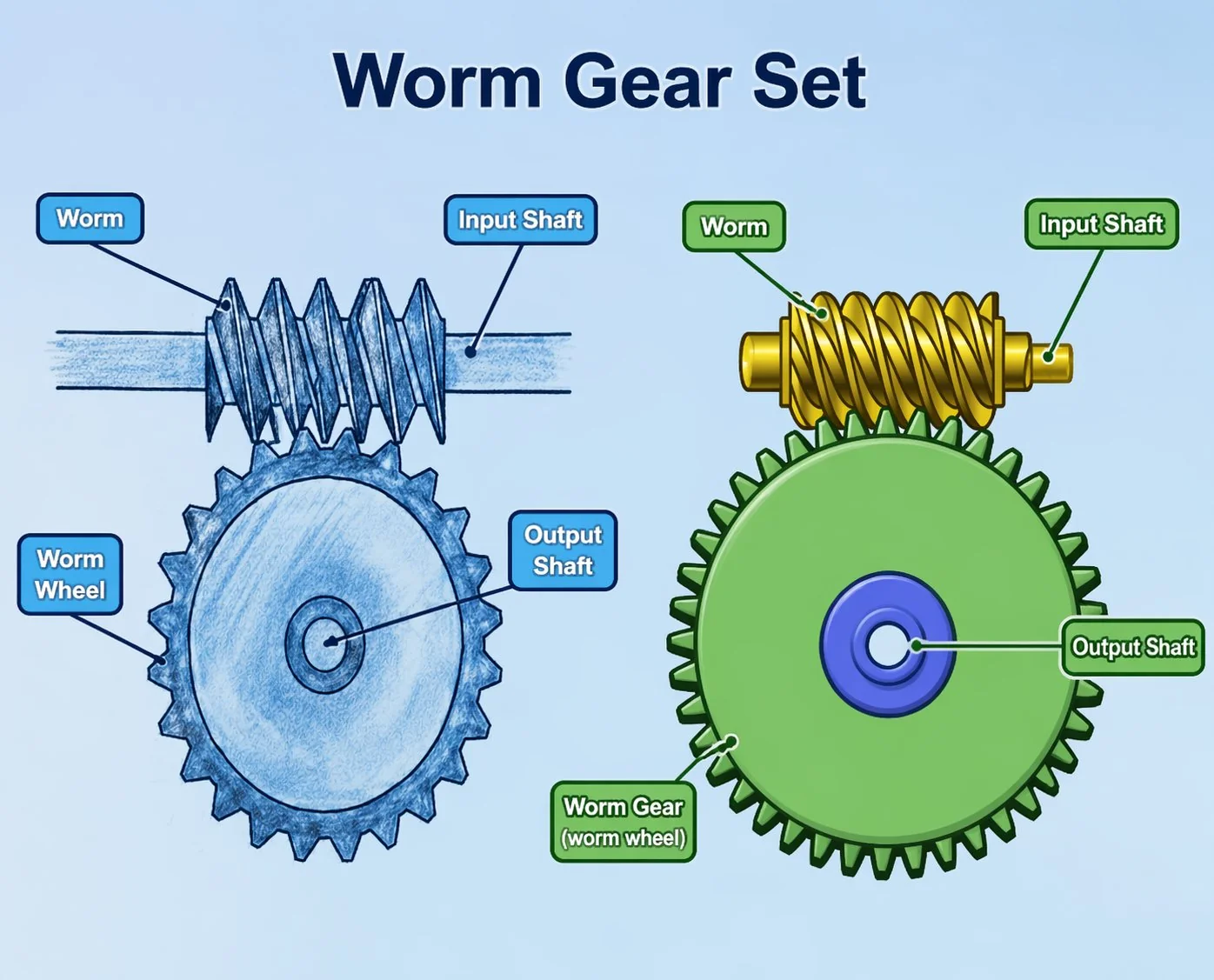
वर्म पेयर का 90-डिग्री मोटर ओरिएंटेशन मोटर को मिक्सर बाउल के पीछे क्षैतिज रूप से रखता है, जबकि एजिटेटर शाफ्ट बाउल में लंबवत नीचे की ओर इंगित करता है - एक प्राकृतिक ज्यामितीय फिट जिसे इनलाइन गियर प्रकार अतिरिक्त समकोण कपलिंग के बिना दोहरा नहीं सकते हैं।
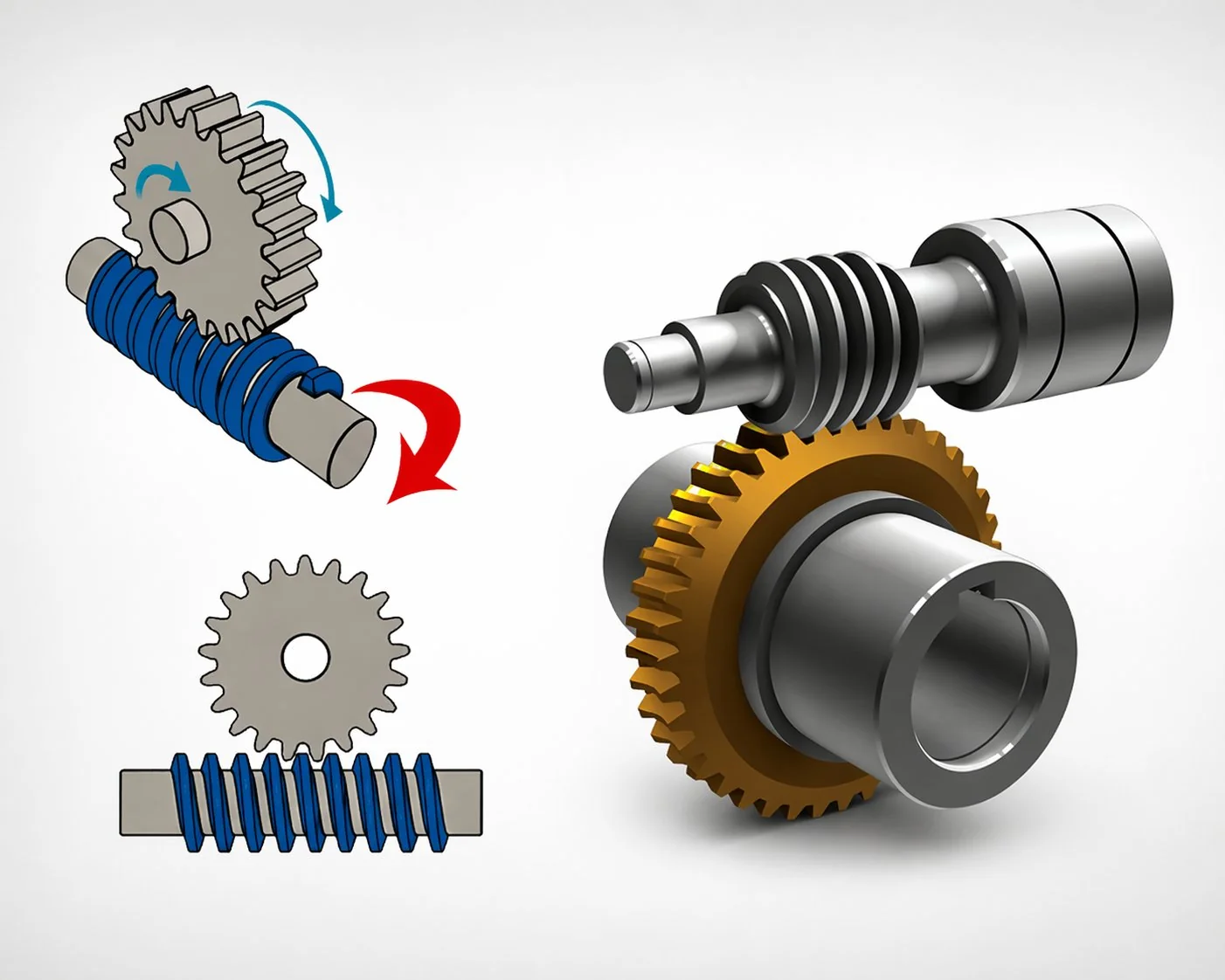
30:1 से 60:1 के अनुपात वाला एक सिंगल वर्म गियर स्टेज 1.5 से 15 किलोवाट के मोटरों से 100 से 2,000 एन·मी आउटपुट प्रदान करता है - जो मल्टी-स्टेज ट्रांसमिशन के बिना अधिकांश खाद्य मिश्रण अनुप्रयोगों की चिपचिपी भार सीमा से मेल खाता है।
जब ऑपरेटर मिक्सर गार्ड खोलता है या बाउल उठाता है, तो मोटर बंद हो जाती है और एजिटेटर को अपनी जगह पर स्थिर रहना चाहिए। सेल्फ-लॉकिंग वर्म गियर जोड़े एजिटेटर को अपने आप चलने या भारी आटे के जमने से पीछे की ओर धकेलने से रोकते हैं - यह EN 12041 (फूड मिक्सर) के तहत एक सुरक्षा आवश्यकता है।
वर्म गियर हाउसिंग को चिकनी बाहरी सतहों, दरारों से रहित और ढलानदार आकृतियों के साथ डिज़ाइन किया जा सकता है जो उच्च दबाव वाले धुलाई के दौरान पानी को बहा ले जाती हैं - यह HACCP के स्वच्छ डिज़ाइन सिद्धांतों का समर्थन करता है। कई फ्लैंज और कूलिंग फिन्स वाले इनलाइन गियरबॉक्स बैक्टीरिया को पनपने देने वाले खाद्य अवशेषों को इकट्ठा करते हैं।
श्यानता भार टॉर्क कैलकुलेटर — उत्पाद की श्यानता से आउटपुट टॉर्क तक
खाद्य मिक्सर के वर्म गियर युग्म पर लगने वाला टॉर्क मुख्य रूप से मिश्रण किए जा रहे उत्पाद के श्यान प्रतिरोध पर निर्भर करता है। पतले तरल पदार्थ (सॉस, पेय पदार्थ) न्यूनतम प्रतिरोध उत्पन्न करते हैं; जबकि गाढ़े पेस्ट और आटे अत्यधिक प्रतिरोध उत्पन्न करते हैं। उत्पाद की श्यानता, एजिटेटर के घूर्णन आयतन और घूर्णी गति का उपयोग करके एक सरल अनुभवजन्य सूत्र द्वारा श्यान भार टॉर्क का अनुमान लगाया जा सकता है।
नीचे दी गई तालिका सामान्य खाद्य उत्पादों और मिक्सर आकारों के लिए प्रतिनिधि श्यानता टॉर्क मान दर्शाती है। यह संदर्भ खाद्य उपकरण डिजाइनरों को विस्तृत एजिटेटर सीएफडी विश्लेषण करने से पहले वर्म गियर जोड़ी टॉर्क आवश्यकता का अनुमान लगाने में मदद करता है।
स्पाइरल एजिटेटर (k = 1.5) के साथ 60 RPM आउटपुट पर टॉर्क मान, जिसमें K_start = 2.0 और SF = 1.5 शामिल हैं। वास्तविक मान एजिटेटर की ज्यामिति, भरने के स्तर और उत्पाद के तापमान के अनुसार भिन्न होते हैं।
तालिका से टॉर्क की मांग में 100 गुना तक का अंतर स्पष्ट होता है — एक छोटे मिक्सर में पतली चटनी (8 N·m) से लेकर एक बड़े मिक्सर में गाढ़ी मोची (3,000+ N·m) तक। यह अंतर बताता है कि खाद्य मिक्सर के वर्म गियर युग्मों की केंद्र दूरी 50 मिमी (सॉस ब्लेंडर) से लेकर 250 मिमी (औद्योगिक आटा गूंथने वाली मशीनें) तक क्यों होती है। सही फ्रेम आकार चुनने के लिए उत्पाद की चिपचिपाहट और मिक्सर की मात्रा जानना आवश्यक है — केवल मोटर की शक्ति ही नहीं। एक सॉस ब्लेंडर को चलाने वाली 5.5 kW की मोटर और एक आटा गूंथने वाली मशीन को चलाने वाली 5.5 kW की मोटर के लिए पूरी तरह से अलग-अलग वर्म गियर युग्मों की आवश्यकता होती है क्योंकि चिपचिपाहट भार प्रोफाइल अलग-अलग होते हैं।
खाद्य-योग्य सामग्री और स्नेहक विनिर्देश
खाद्य प्रसंस्करण उपकरणों को खाद्य संपर्क सामग्री विनियमों का पालन करना आवश्यक है - भले ही वर्म गियर का जोड़ा एक सीलबंद आवरण में बंद हो जो सीधे भोजन के संपर्क में न आता हो। जोखिम का मुख्य कारण सील से रिसाव है: यदि संचालन के दौरान ग्रीस या तेल सील से रिसता है, तो यह खाद्य उत्पाद के संपर्क में आ सकता है। विनियम (FDA 21 CFR 178.3570, EU विनियमन 1935/2004) यह अनिवार्य करते हैं कि भोजन के संपर्क में आने वाले किसी भी स्नेहक को NSF H1 पंजीकृत (आकस्मिक संपर्क से सुरक्षित) होना चाहिए।
स्नेहक के अलावा, वर्म और व्हील की सामग्री गैर-विषाक्त, गैर-एलर्जेनिक और दैनिक धुलाई में उपयोग किए जाने वाले खाद्य अम्लों (साइट्रिक, एसिटिक, लैक्टिक) और सफाई रसायनों (कास्टिक सोडा, परएसिटिक एसिड, क्लोरिनेटेड घोल) के प्रति प्रतिरोधी होनी चाहिए।
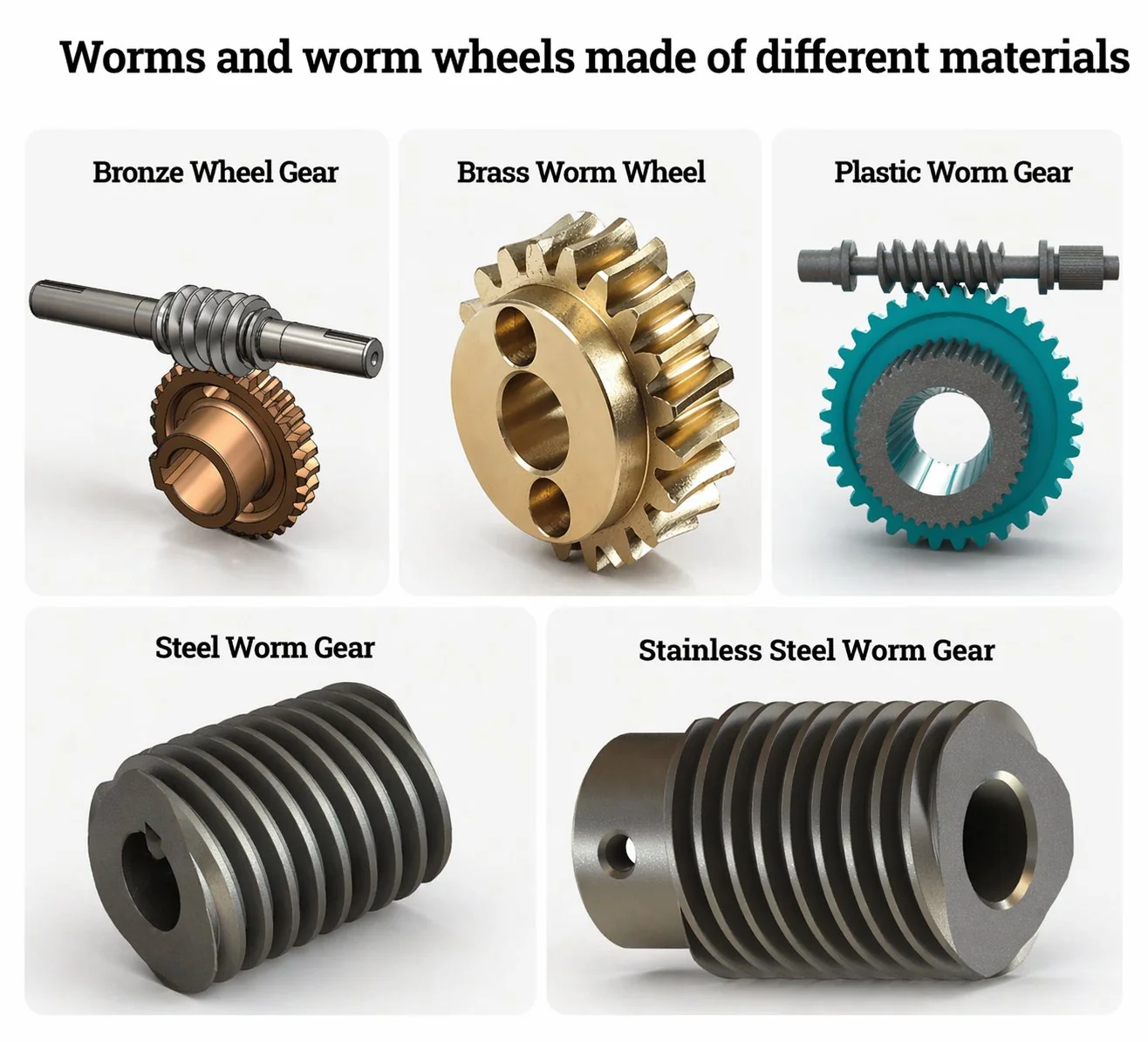
कीड़ा: एआईएसआई 304 स्टेनलेस स्टील या जस्ता-प्लेटेड कार्बन स्टील।
पहिया: फॉस्फोर ब्रॉन्ज़ CuSn12Ni (खाद्य-सुरक्षित, गैर-विषाक्त)।
ग्रीस: एनएसएफ एच1 सिंथेटिक पीएजी या सिलिकॉन-आधारित।
मुहर: ईपीडीएम लिप सील, आईपी65।
के लिए: बंद उपकरण आवरण सीधे छींटे पड़ने वाले क्षेत्र में नहीं होना चाहिए। बेकरी, सूखे सामान, सामान्य खाद्य प्रसंस्करण।
कीड़ा: एआईएसआई 316एल स्टेनलेस स्टील।
पहिया: एल्युमिनियम ब्रॉन्ज़ CuAl10Fe5Ni5 (क्लोरीनयुक्त क्लीनर के प्रति बेहतर प्रतिरोध)।
ग्रीस: एनएसएफ एच1 पीटीएफई-मोटा फ्लोरोसिलिकॉन।
मुहर: पीटीएफई लिप सील, आईपी69के (डीआईएन 31653 के अनुसार उच्च दबाव वाले गर्म धुलाई के लिए उपयुक्त)।
के लिए: मांस, डेयरी उत्पाद, समुद्री भोजन - उच्च जोखिम वाले एचएसीसीपी क्षेत्र जहां प्रतिदिन कास्टिक धुलाई की जाती है।
कोरिया की एक किमची निर्माण कंपनी ने मसाला पेस्ट को मिलाने के लिए तीन 200-लीटर पैडल मिक्सर चालू किए। वर्म गियर पेयर को मानक औद्योगिक ग्रेड का बताया गया था - मिनरल ईपी ग्रीस के साथ कार्बन स्टील वर्म, फॉस्फोर ब्रॉन्ज व्हील और नाइट्राइल लिप सील। यांत्रिक रूप से विनिर्देश पर्याप्त था (टॉर्क और अनुपात चिपचिपे भार के अनुरूप थे)। चार महीने के भीतर, तीन में से दो पेयर के आउटपुट शाफ्ट सील से ग्रीस रिसने लगा - 2 प्रतिशत सोडियम हाइड्रोक्साइड घोल के साथ 65 डिग्री सेल्सियस पर दैनिक गर्म धुलाई के कारण नाइट्राइल सील खराब हो गई थीं। उत्पादन के दौरान रिसने वाला ग्रीस किमची मसाला पेस्ट के संपर्क में आ गया, जिससे बैच को वापस मंगाने और खाद्य सुरक्षा ऑडिट करने की आवश्यकता पड़ी। वापस मंगाने की लागत 85,000 अमेरिकी डॉलर से अधिक थी। मूल कारण वर्म गियर पेयर का यांत्रिक प्रदर्शन नहीं था - बल्कि सील और स्नेहक का विनिर्देश था। प्रतिस्थापन विनिर्देश: एआईएसआई 304 वर्म, फॉस्फोर ब्रॉन्ज व्हील (अपरिवर्तित), एनएसएफ एच1 सिलिकॉन ग्रीस, कास्टिक धुलाई के लिए उपयुक्त ईपीडीएम सील। प्रति जोड़ी लागत में वृद्धि: 62 अमेरिकी डॉलर (180 अमेरिकी डॉलर से बढ़कर 242 अमेरिकी डॉलर)। तीनों जोड़ियों पर 62 अमेरिकी डॉलर का यह अपग्रेड (कुल 186 अमेरिकी डॉलर) 85,000 अमेरिकी डॉलर के रिकॉल को रोक सकता था। सबक: खाद्य प्रसंस्करण में, सील और लुब्रिकेंट विनिर्देशन कोई मामूली अपग्रेड नहीं है - यह खाद्य सुरक्षा अनुपालन की एक अनिवार्य आवश्यकता है जिसके परिणामस्वरूप रिकॉल के रूप में भारी वित्तीय नुकसान हो सकता है।
तीन खाद्य मिक्सर वर्म गियर जोड़ी विनिर्देशन मामले
केस 1 — कोरियाई किमची फैक्ट्री: 200 लीटर का पैडल मिक्सर, कास्टिक वॉशडाउन वातावरण
एक कोरियाई किमची निर्माता ने तीन 200-लीटर पैडल मिक्सर के लिए वर्म गियर जोड़े निर्दिष्ट किए, जो मसाला पेस्ट (गोचुगारू, लहसुन, अदरक, फिश सॉस - चिपचिपाहट लगभग 15 Pa·s) को मिलाते हैं। एजिटेटर की गति: 40 RPM। एजिटेटर ज्यामिति कारक k = 1.8 (पैडल प्रकार)। T_viscous = 1.8 × 15 × 200 × 40 = 216,000 N·mm = 216 N·m। K_start = 2.0 (ठंडा पेस्ट अधिक गाढ़ा होता है)। SF = 1.5। T_required = 216 × 2.0 × 1.5 = 648 N·m। मोटर: 5.5 kW, 1,450 RPM। अनुपात: 36:1। वर्म गियर पेयर (रिकॉल के बाद संशोधित विनिर्देश): सिंगल-स्टार्ट, मॉड्यूल 5, सेंटर डिस्टेंस 125 मिमी, AISI 304 वर्म ग्राउंड Ra 0.6 µm, फॉस्फोर ब्रॉन्ज़ CuSn12Ni व्हील। ग्रीस: NSF H1 सिलिकॉन-आधारित, EPDM सील, IP65। रेटेड टॉर्क: 820 N·m — 648 N·m से ऊपर पर्याप्त मार्जिन। दैनिक धुलाई: 65 डिग्री सेल्सियस, 2 प्रतिशत NaOH, 30 बार दबाव। EPDM सील निर्धारित प्रतिस्थापन से पहले 2.5 वर्ष तक चली (नाइट्राइल के लिए 4 महीने की तुलना में)। प्रति पेयर लागत: 242 USD। वार्षिक उत्पादन: 2,400 टन किमची — 242 USD का पेयर 15,000 से 25,000 USD मूल्य के उत्पाद बैचों की सुरक्षा करता है।
मामला 2 — जापानी मोची निर्माता: 100 लीटर का गूंधने वाला यंत्र, अत्यधिक चिपचिपाहट, ऊष्मीय चुनौती
जापान के एक वागाशी (पारंपरिक मिठाई) निर्माता ने 100 लीटर क्षमता वाले गर्म आटा गूंथने वाले यंत्र के लिए वर्म गियर जोड़े निर्दिष्ट किए, जिससे मोची (चिपचिपा चावल का केक, जिसकी श्यानता 60 से 80 डिग्री सेल्सियस के मिश्रण तापमान पर 100 से 200+ Pa·s होती है) का उत्पादन होता है। यह खाद्य मिश्रण के सबसे चुनौतीपूर्ण अनुप्रयोगों में से एक था: अत्यधिक श्यानता और उच्च तापमान का संयोजन। एजिटेटर की गति: 25 RPM (मोची की संरचना को टूटने से बचाने के लिए धीमी)। k = 2.2 (सिग्मा-ब्लेड आटा गूंथने वाला यंत्र)। µ = 150 Pa·s पर T_viscous: 2.2 × 150 × 100 × 25 = 825,000 N·mm = 825 N·m। K_start = 2.5 (ठंडा मोची द्रव्यमान लगभग ठोस होता है)। SF = 2.0 (अत्यधिक श्यानता सीमा)। T_required = 825 × 2.5 × 2.0 = 4,125 N·m. यह मानक केंद्र दूरी पर एकल वर्म गियर जोड़ी की क्षमता से अधिक था — जिसे 250 मिमी केंद्र दूरी वाली 4,500 N·m रेटेड जोड़ी के साथ हल किया गया। मोटर: 11 kW. अनुपात: 58:1. वर्म: AISI 316L स्टेनलेस स्टील (मोचिको चावल से प्राप्त खाद्य अम्ल)। व्हील: सेंट्रीफ्यूगल-कास्ट फॉस्फोर ब्रॉन्ज (ठंडे-स्टार्ट टॉर्क स्पाइक्स के लिए प्रभाव प्रतिरोध)। NSF H1 PAG सिंथेटिक के साथ ऑयल-बाथ लुब्रिकेशन — ग्रीस के बजाय ऑयल बाथ का उपयोग किया गया क्योंकि 80 डिग्री सेल्सियस उत्पाद तापमान गियर हाउसिंग में गर्मी विकीर्ण करता है, जिससे हाउसिंग का तापमान लगातार 65 से 75 डिग्री सेल्सियस तक बढ़ जाता है। ब्राउज़ करें फ़ूड ग्रेड वर्म गियर रिड्यूसर उच्च श्यानता वाले खाद्य पदार्थों के प्रसंस्करण अनुप्रयोगों के लिए विकल्प।
केस 3 — वियतनामी नूडल फैक्ट्री: 300 लीटर आटा मिक्सर, लागत-प्रतिस्पर्धी, उच्च उत्पादन क्षमता
एक वियतनामी इंस्टेंट नूडल निर्माता ने दो शिफ्टों में लगातार गेहूं के नूडल का आटा तैयार करने वाले 8 एक जैसे 300-लीटर स्पाइरल आटा मिक्सरों के लिए वर्म गियर जोड़े निर्दिष्ट किए। आटे की श्यानता: 30 से 50 Pa·s। एजिटेटर की गति: 60 RPM। k = 1.5 (स्पाइरल हुक)। µ = 40 Pa·s (मध्य-श्रेणी) पर T_viscous: 1.5 × 40 × 300 × 60 = 1,080,000 N·mm = 1,080 N·m। K_start = 1.8 (शुरुआत में आटे-पानी का मिश्रण शुद्ध आटे की तुलना में कम गाढ़ा होता है)। SF = 1.5। T_required = 1,080 × 1.8 × 1.5 = 2,916 N·m। मोटर: 15 kW। अनुपात: 24:1। वर्म गियर पेयर: सिंगल-स्टार्ट, मॉड्यूल 8, सेंटर डिस्टेंस 200 मिमी, रेटेड 3,200 N·m। सामग्री: जिंक-प्लेटेड कार्बन स्टील वर्म (किफायती), फॉस्फोर ब्रॉन्ज व्हील। ग्रीस: NSF H1 लिथियम कॉम्प्लेक्स। सील: EPDM, IP65। जिंक-प्लेटेड स्पेसिफिकेशन (स्टेनलेस स्टील के बजाय) इसलिए स्वीकार्य था क्योंकि मिक्सर हाउसिंग पूरी तरह से बंद थी और इसमें भोजन के छींटे पड़ने का कोई सीधा क्षेत्र नहीं था, और धुलाई के लिए केवल गर्म पानी का उपयोग किया जाता था (कोई कास्टिक रसायन नहीं - ड्राई नूडल उत्पादन लाइन में जैविक संदूषण का ऐसा कोई जोखिम नहीं है जिसके लिए कास्टिक सफाई की आवश्यकता हो)। प्रति पेयर लागत: 165 USD। 8 यूनिट के लिए वॉल्यूम मूल्य: 148 USD प्रति यूनिट। प्रति मिक्सर वार्षिक उत्पादन: 4,800 टन नूडल आटा - वर्म गियर पेयर की लागत इससे गुजरने वाले उत्पाद मूल्य के 0.003 प्रतिशत से भी कम है।
अक्सर पूछे जाने वाले प्रश्नों
प्रश्न: क्या सभी फूड मिक्सर वर्म गियर पेयर के लिए NSF H1 लुब्रिकेंट अनिवार्य है?
जब भी लुब्रिकेंट का भोजन के संपर्क में आने का कोई रास्ता हो—चाहे मशीन के जीवनकाल में सील लीकेज के कारण ही क्यों न हो—तो NSF H1 आवश्यक है। यदि वर्म गियर हाउसिंग मिक्सर फ्रेम के भीतर पूरी तरह से बंद है और गियर हाउसिंग तथा खाद्य क्षेत्र के बीच कोई सीधा या अप्रत्यक्ष मार्ग नहीं है (HACCP जोखिम मूल्यांकन द्वारा सत्यापित), तो NSF H2 (गैर-खाद्य-संपर्क) लुब्रिकेंट स्वीकार्य हो सकता है। हालांकि, अधिकांश खाद्य सुरक्षा लेखा परीक्षक और प्रमुख खाद्य निर्माता उत्पादन क्षेत्र में सभी लुब्रिकेंट के लिए NSF H1 को अनिवार्य मानते हैं, चाहे वह बंद हो या नहीं—सील की खराबी से अप्रत्याशित संपर्क मार्ग बनने का जोखिम लागत अंतर के कारण अस्वीकार्य माना जाता है। NSF H1 ग्रीस की कीमत मानक औद्योगिक ग्रीस की तुलना में प्रति किलोग्राम लगभग 2 से 4 गुना अधिक होती है, लेकिन प्रति वर्म गियर जोड़ी की मात्रा (50 से 200 ग्राम) के कारण कुल लागत अंतर नगण्य हो जाता है: आमतौर पर प्रति जोड़ी भरने में 3 से 8 अमेरिकी डॉलर का अंतर होता है।
प्रश्न: रोजाना धुलाई करने से वर्म गियर पेयर की सर्विस लाइफ पर क्या असर पड़ता है?
रोजाना उच्च दबाव वाले धुलाई (30 से 80 बार, 60 से 85 डिग्री सेल्सियस, अक्सर कास्टिक या क्लोरीनयुक्त घोल के साथ) से गियर हाउसिंग सील पर गियर के दांतों की तुलना में कहीं अधिक दबाव पड़ता है। मानक नाइट्राइल सील रोजाना कास्टिक धुलाई के 6 से 12 महीनों के बाद फट जाती हैं और अपनी लोच खो देती हैं। EPDM सील 2 से 3 साल तक कास्टिक घोल का प्रतिरोध करती हैं। PTFE सील लगभग सभी खाद्य सफाई एजेंटों का अनिश्चित काल तक प्रतिरोध करती हैं, लेकिन इनकी गतिशील सीलिंग क्षमता कम होती है। अनुशंसित तरीका: मानक धुलाई के लिए EPDM सील को 2 साल के अंतराल पर बदलें; उच्च तीव्रता वाली धुलाई (मांस, डेयरी) के लिए PTFE सील का वार्षिक दृश्य निरीक्षण करें। सील बदलने को एक निर्धारित रखरखाव लागत के रूप में बजट में शामिल करें - यह सील खराब होने के परिणामस्वरूप ग्रीस के खाद्य क्षेत्र में जाने के नुकसान से कहीं अधिक सस्ता है।
प्रश्न: क्या शोर कम करने के लिए फूड मिक्सर के वर्म गियर पेयर में प्लास्टिक के पहिये का उपयोग किया जा सकता है?
छोटे फूड मिक्सर (काउंटर-टॉप बेकरी मिक्सर, 50 लीटर से कम क्षमता वाले सॉस ब्लेंडर) में प्लास्टिक के पहिये (एमसी नायलॉन, पीओएम) का उपयोग किया जाता है, जहाँ टॉर्क 30 एन·मी से कम होता है और शोर एक महत्वपूर्ण कारक होता है (जैसे कि ओपन-किचन रेस्टोरेंट)। 50 लीटर से अधिक क्षमता वाले औद्योगिक फूड मिक्सर में, टॉर्क की आवश्यकता आमतौर पर प्लास्टिक के पहियों की भार वहन क्षमता से अधिक होती है — 300+ एन·मी के टॉर्क पर ब्रेड का आटा कुछ ही मिनटों में प्लास्टिक के पहिये को तोड़ सकता है। इसलिए औद्योगिक फूड मिक्सर में केवल फॉस्फोर ब्रॉन्ज या एल्युमिनियम ब्रॉन्ज के पहियों का ही उपयोग किया जाता है। शोर का अंतर (ब्रॉन्ज प्लास्टिक की तुलना में 8 से 12 dB अधिक शोर करता है) उन कारखानों में स्वीकार्य है जहाँ अन्य उत्पादन उपकरणों से पृष्ठभूमि शोर 70 से 85 dB(A) होता है।
प्रश्न: मैं किसी ऐसे खाद्य पदार्थ की श्यानता का अनुमान कैसे लगाऊं जिसे मैंने पहले कभी नहीं मिलाया है?
खाद्य पदार्थों की श्यानता के लिए प्रकाशित डेटाबेस (जैसे स्टेफ़े की "खाद्य प्रक्रिया अभियांत्रिकी में रियोलॉजिकल विधियाँ") सामान्य खाद्य उत्पादों के लिए संदर्भ मान प्रदान करते हैं। अनुमान लगाने के लिए एक आसान तरीका: यदि उत्पाद पानी की तरह आसानी से बहता है, तो µ 1 Pa·s से कम होता है। यदि यह शहद की तरह धीरे-धीरे बहता है, तो µ 2 से 10 Pa·s होता है। यदि यह मेयोनेज़ की तरह थोड़े समय के लिए अपना आकार बनाए रखता है, तो µ 10 से 50 Pa·s होता है। यदि यह सख्त ब्रेड के आटे या मोची की तरह स्थायी रूप से अपना आकार बनाए रखता है, तो µ 50 से 200+ Pa·s होता है। ध्यान दें कि अधिकांश खाद्य उत्पाद नॉन-न्यूटनियन होते हैं (श्यानता अपरूपण दर के साथ बदलती है), इसलिए टॉर्क कैलकुलेटर में उपयोग की जाने वाली "श्यानता" एजिटेटर अपरूपण दर पर आभासी श्यानता होती है - कोई एक निश्चित संख्या नहीं। महत्वपूर्ण अनुप्रयोगों के लिए, वर्म गियर पेयर विनिर्देश को अंतिम रूप देने से पहले लक्षित एजिटेटर RPM पर रोटेशनल विस्कोमीटर से उत्पाद की श्यानता मापें।
प्रश्न: फूड मिक्सर के वर्म गियर पेयर की सामान्य सेवा अवधि कितनी होती है?
खाद्य मिक्सर आमतौर पर प्रतिदिन 4 से 10 घंटे तक चलते हैं, जिनमें रुक-रुक कर मिश्रण चक्र होते हैं (प्रति बैच 10 से 20 मिनट, प्रतिदिन 10 से 30 बैच)। प्रति वर्ष 2,000 से 3,500 घंटे के उपयोग पर, सही विनिर्देशों वाले वर्म गियर पेयर का कांस्य पहिया 4 से 8 वर्ष तक चलता है, जिसके बाद बैकलैश बढ़ने के कारण इसे बदलने की आवश्यकता होती है। स्टील वर्म (स्टेनलेस या प्लेटेड) 10 से 15 वर्ष या उससे अधिक समय तक चलता है। खाद्य अनुप्रयोगों में, जीवन को सीमित करने वाला कारक अक्सर गियर के दांतों के घिसने के बजाय धुलाई के कारण सील का क्षरण होता है - गियर के दांत अच्छी स्थिति में होने पर भी सील को हर 2 से 3 वर्ष में बदलने की आवश्यकता हो सकती है। सील को नियमित रखरखाव के रूप में बदलने की योजना बनाने से पूरे वर्म गियर पेयर असेंबली का व्यावहारिक सेवा जीवन बढ़ जाता है।
खाद्य मिक्सर और आटा गूंथने वाली मशीन के वर्म गियर जोड़े अत्यधिक यांत्रिक मांग (100 से 3,000+ N·m श्यान भार) और सख्त खाद्य सुरक्षा अनुपालन (NSF H1 स्नेहक, खाद्य-सुरक्षित सामग्री, धुलाई-प्रतिरोधी सील) के संगम पर काम करते हैं। श्यान भार कैलकुलेटर — T = k × µ × V × n — उत्पाद की श्यानता, मिक्सर की मात्रा और एजिटेटर की गति को आवश्यक आउटपुट टॉर्क में परिवर्तित करता है, जिससे खाद्य प्रौद्योगिकीविद् के उत्पाद विनिर्देश और गियर इंजीनियर की टॉर्क रेटिंग के बीच का अंतर कम हो जाता है। खाद्य-ग्रेड सामग्री और स्नेहक विनिर्देश वैकल्पिक अपग्रेड नहीं हैं — ये खाद्य सुरक्षा अनुपालन आवश्यकताएं हैं, जिनका पालन न करने पर भारी वित्तीय नुकसान हो सकता है। खाद्य-ग्रेड विनिर्देश के लिए अतिरिक्त लागत (आमतौर पर मानक औद्योगिक से 30 से 60 प्रतिशत अधिक) मिक्सर के माध्यम से संसाधित खाद्य उत्पाद के मूल्य और संदूषण के कारण होने वाले नुकसान की तुलना में नगण्य है।
खाद्य उपकरण निर्माताओं के लिए जो मिक्सर वर्म गियर पेयर निर्दिष्ट करते हैं, हमारा इंजीनियरिंग डेस्क श्यान भार की गणना करता है और परिणाम को सही खाद्य-ग्रेड सामग्री पैकेज से मिलाता है। मानक कैटलॉग खाद्य-ग्रेड वर्म गियर सेट 50 से 250 मिमी केंद्र दूरी वाले एनएसएफ एच1 ग्रीस, स्टेनलेस या जिंक-प्लेटेड वर्म और ईपीडीएम सील पैकेज के साथ शिपिंग करें। एक आवेदन जमा करें। फ़ूड मिक्सर ड्राइव विनिर्देश उत्पाद के प्रकार, मिक्सर की मात्रा, एजिटेटर की गति और धुलाई प्रक्रिया के साथ।
खाद्य मिक्सर या गूंधने वाली मशीनों के लिए वर्म गियर जोड़े निर्दिष्ट करना?
कृपया उत्पाद का प्रकार (या चिपचिपाहट का अनुमान), मिक्सर की मात्रा, एजिटेटर की गति और प्रकार, धुलाई में उपयोग होने वाले रसायन और खाद्य सुरक्षा मानक (HACCP, FDA, EU) भेजें। हम चिपचिपा भार टॉर्क की गणना करेंगे और सही फ्रेम आकार, सामग्री और खाद्य-ग्रेड स्नेहक पैकेज की अनुशंसा करेंगे।
संपादक: सीएक्सएम