Kore Ever-Power · Uygulama Mühendisliği Kılavuzu
Tekstil Dokuma Tezgahları ve İplik Sarma Makineleri için Sonsuz Dişli ve Sonsuz Dişli Çarkı
Dakikada 1200 metre hızla çalışan bir iplik sarma makinesi, 45 dakika içinde konik bir bobine 2 kg'lık bir paket sarar. Eğer travers mekanizmasını çalıştıran sonsuz dişli çiftinin hızı %3 oranında değişirse, iplik gerilimi %4 ila %5 oranında dalgalanır; bu da sarılmış pakette sert ve yumuşak bantlar oluşturarak, dokuma tezgahında sonraki açma işlemi sırasında iplik kopmasına neden olur. Tekstil üretiminde, sonsuz dişli çiftinin çıkışındaki hız tutarlılığı doğrudan ipliğin ömrünü etkiler.
Tekstil makineleri – iplik sarma makineleri, dokuma tezgahları, iplik eğirme makineleri ve örme makineleri – travers tahrikleri, iplik açma ve alma mekanizmaları, kam tahrikleri ve bobin konumlandırması için sonsuz dişli çiftleri kullanır. En önemli şartname zorluğu iplik geriliminin tutarlılığıdır: Sonsuz dişli çifti, iplik gerilimi dalgalanmasını paket yoğunluğu değişimini ve sonraki aşamalarda kırılmayı önleyen %2 ila %3 aralığında tutmak için artı veya eksi %1,5'in altında hız değişimi sağlamalıdır. İplik gerilimi-hız eğrisi analizi bu ilişkiyi şu şekilde nicelendirir: ΔT/T = k × ΔV/V, burada k, düşük esneme özelliğine sahip sentetik iplikler için 1,2'den yüksek esneme özelliğine sahip doğal elyaflar için 1,8'e kadar değişir. Ra 0,4 µm'de taşlanmış sonsuz dişli çiftleri %1'in altında hız değişimi üretirken; Ra 1,6 µm'de dişli çiftleri, çoğu iplik türü için gerilim toleransını aşan %3 ila %5'lik bir değişim üretir. Tekstil sonsuz dişli çiftleri, herhangi bir sektördeki en küçük (modül 0,5 ila 1,5, merkez mesafesi 15 ila 40 mm) ve en hafif yüklü (0,5 ila 10 N·m) dişliler arasındadır; ancak fabrika başına birim sayısı en yüksektir: tek bir dokuma veya sarma fabrikasında 200 ila 1000 adet ayrı çift.
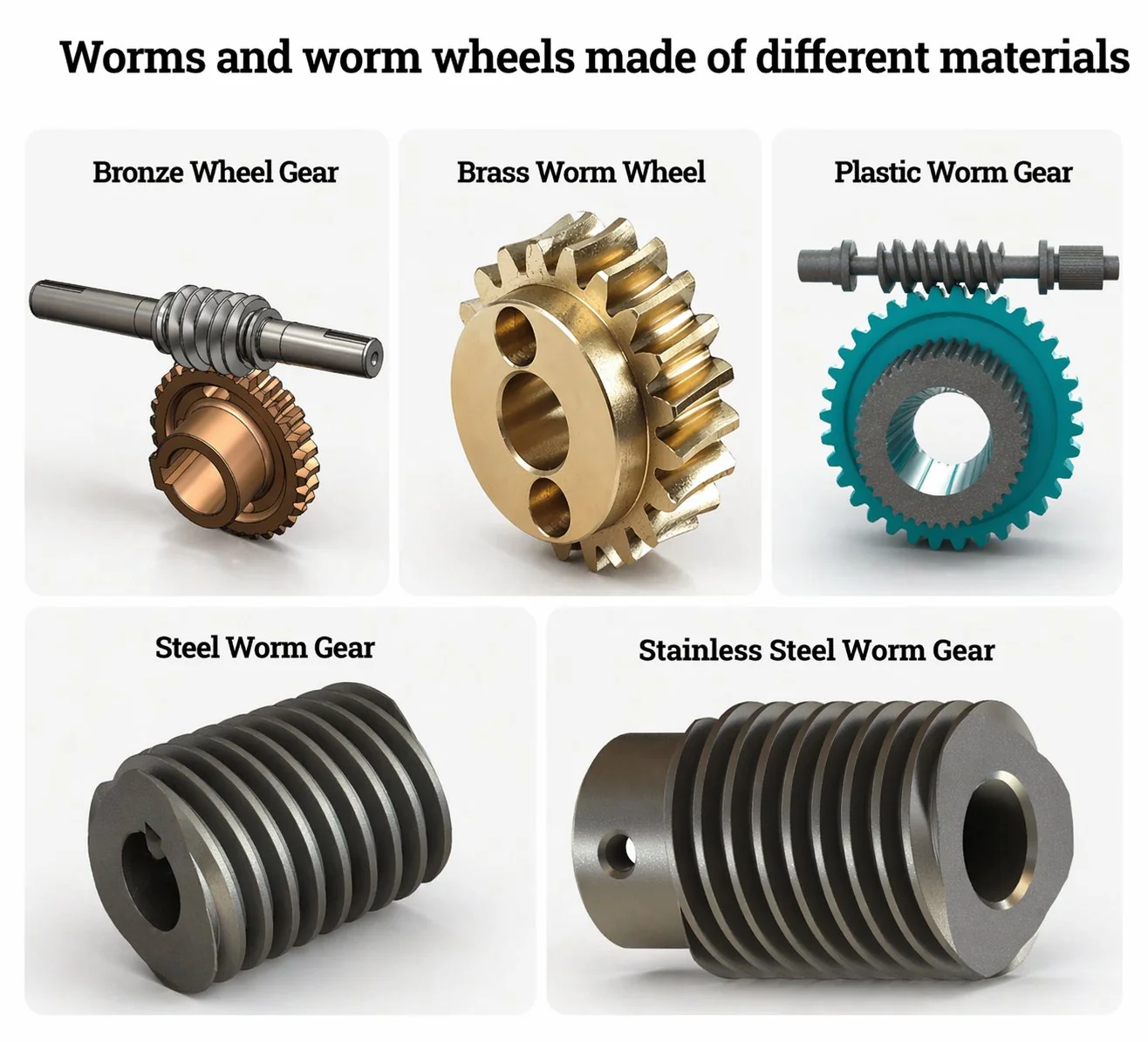
Tekstil makinelerinde sonsuz dişli tahrik sistemleri kullanılır.
Modern bir tekstil fabrikasında, her biri dakikada 500 ila 2.000 metre iplik işleyen hassas mekanizmaları çalıştıran 1 ila 8 adet sonsuz dişli çiftine sahip yüzlerce makine bulunur. 500 milli bir sarım salonunda 500 ila 1.500 adet sonsuz dişli çifti; 200 tezgahlı bir dokuma atölyesinde ise 400 ila 1.600 adet sonsuz dişli çifti bulunur. Tek bir tekstil tesisindeki toplam ünite sayısı, bu makale serisindeki diğer tüm uygulamaların toplam sayısını genellikle aşmaktadır.
Bu minik sonsuz dişli çiftleri (çoğu başparmaktan daha küçük), tork kapasitesinden ziyade hız tutarlılığının daha önemli olduğu hassas işlevleri yerine getirir; bu durum, torkun en önemli unsur olduğu ağır sanayi uygulamalarının (A25 çimento, A26 madencilik) tam tersidir.
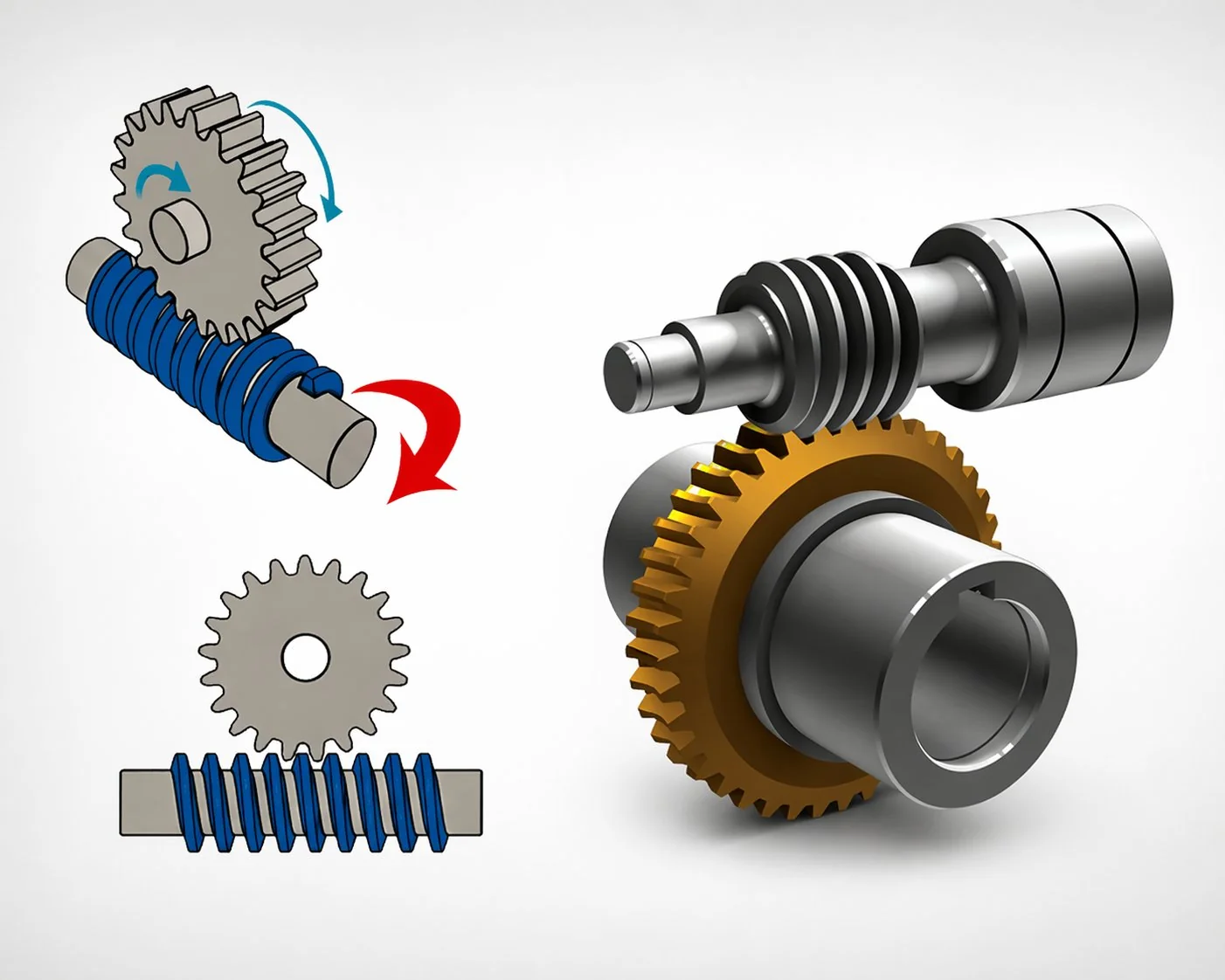
Sonsuz dişli çifti, sarma işlemi sırasında ipliği bobin üzerinde ileri geri hareket ettiren travers kamını veya ileri geri hareket eden kılavuzu tahrik eder. Travers hızı, ipliğin çaprazlama açısını ve paket yoğunluğunu belirler. Hızdaki değişim, sarılmış pakette sert ve yumuşak halkalar olarak görülebilen yoğunluk bantlanmasına neden olur. Sarma pozisyonu başına 1 ila 3 sonsuz dişli çifti; makine başına 100 ila 500 pozisyon.
Çözgü ipliğini kontrollü bir hızda çözgü kirişinden serbest bırakan mekanizma. Sarma mekanizması ise bitmiş kumaşı kumaş rulosuna sarar. Her ikisi de hassas hız kontrolü için sonsuz dişli çiftleri kullanır. Kendiliğinden kilitlenen mekanizma, atkı ipliği yerleştirme için tezgah durduğunda çözgü gerilimini sabit tutarak yeniden başlatmada gerilim artışlarını önler. Tezgah başına 2 ila 4 çift; açıklık başına 100 ila 400 tezgah.
İplik gerilimi ve hız eğrisi — sonsuz dişli hızındaki değişimin kopmaya nasıl yol açtığı
İplik sert bir cisim değil, gerilim altında uzayan elastik bir elyaftır. Sarma hızı anlık olarak arttığında (sonsuz dişli çifti iletim hatası nedeniyle), besleme noktası ile bobin yüzeyi arasındaki iplik uzar ve gerilimi artırır. Hız azaldığında ise iplik gevşer ve gerilimi azaltır. Gerilimdeki dalgalanma, ipliğin elastik özellikleriyle güçlendirilerek hız değişimine orantılıdır.
Tablo, standart dişli sonsuz vida çiftlerinin (Ra 1,6 µm) pamuk ve yün için %5'lik kırılma eşiğini aştığını ve doğal elyaf sarım makinelerinde ölçülebilir iplik kırılma artışlarına neden olduğunu ortaya koymaktadır. Polyester ve diğer düşük esneme özelliğine sahip sentetikler için dişli çiftler %4,8 ile marjinal bir performans sergilemektedir. Taşlanmış çiftler (Ra 0,4 µm) ise tüm iplik türleri için eşiğin oldukça altında kalmaktadır. Taşlama için yapılan maliyet farkı (tekstil boyut modüllerinde çift başına tipik olarak ila ), doğal elyaflar veya ince telli sentetikler sarıldıkça haklı çıkarılmaktadır; yüksek gerilim altında tek bir vardiyadan kaynaklanan iplik kırılma maliyeti, makinedeki tüm çiftler için taşlama maliyetini aşmaktadır.
Yüksek adet sayısı ve maliyet hassasiyeti — makine başına yüzlerce çift
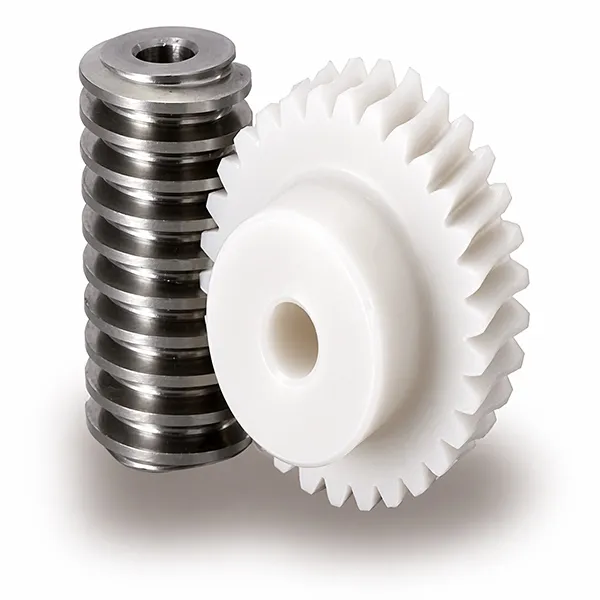
Tek bir otomatik konik sarım makinesinde, her biri 2 ila 3 sonsuz dişli çiftine (hareket tahriki, gerilim dengeleyici, paket kızağı) sahip 48 ila 120 sarım pozisyonu bulunur. 60 pozisyonlu bir makine yaklaşık 150 ayrı çift içerir. 10 makine bulunan bir sarım salonunda 1.500 çift bulunur. Bu ölçekte, çift başına 0,50 ABD doları maliyet düşüşü, salon başına 750 ABD doları tasarruf sağlar ve tipik bir Vietnam veya Kore tekstil fabrikasında 3 ila 8 sarım salonu bulunur. Düşük bireysel torka rağmen maliyet duyarlılığı otomotiv sektörüne benzer (Madde A30) çünkü ünite sayısı aynı hacim ekonomisini yaratır.
POM tekerlekler tekstil uygulamalarında yaygın olarak kullanılmaktadır. POM (asetal) dişli çarklar, tekstil sonsuz dişli çiftlerinde üç nedenden dolayı evrenseldir: ağırlık (çiftler hareketli travers kızaklarına monte edilir - kızak ağırlığının her gramı atalet ve ivme enerjisini artırır), gürültü (tekstil işçileri sarım salonunda 8 saatten fazla zaman geçirir - POM, bu hafif yüklerde bronzdan 10 ila 15 dB(A) daha sessiz çalışır) ve maliyet (POM dişli çarklar 0,08 ila 0,25 ABD doları, bronz ise 0,80 ila 2,50 ABD doları - salon başına 1500 ünite için belirleyici olan 5 ila 10 katlık bir fark). Dezavantajı: POM, tekstil sürekli çalışma koşullarında 2 ila 4 yıl dayanırken, bronz 5 ila 8 yıl dayanır - ancak dişli çark başına 0,15 ABD doları ile değiştirme maliyeti ihmal edilebilir düzeydedir.
Koreli bir sentetik elyaf üreticisi, 8 adet otomatik sarım makinesi (toplam 480 pozisyon, yaklaşık 1200 sonsuz dişli çifti) kullanarak, 6 aylık bir dönemde iplik kopma oranının 1000 kg başına 0,8'den 3,2'ye yükseldiğini bildirdi. Kopma, ağırlıklı olarak sarım birikim bölgesinde (paket çapının arttığı ve hassas travers hızı ayarlaması gerektiren bölge) meydana geldi. Yapılan incelemede, travers tahriklerindeki sonsuz dişli çiftlerinin (3 yıllık POM tekerlekler) aşınmadan kaynaklanan boşluk artışı gösterdiği (orijinal 3 yay dakikası, ölçülen 12 yay dakikası) tespit edildi. Artan boşluk, her travers yön değiştirme noktasında %2,5'lik bir hız değişimine neden olarak %3,8'lik gerilim artışları yarattı (polyester, k = 1,2) - bu oran polyester için %5'lik kopma eşiğinin altında, ancak tesisin 8 ay önce işlemeye başladığı karışık elyaf iplikler (polyester-pamuk karışımı, etkili k = 1,4) için eşiğin üzerindeydi. Doğal elyaf bileşeni, gerilim hassasiyetini artırdı. Çözüm: 1200 adet POM tekerleğinin tamamını değiştirin (toplam maliyet: 1200 × 0,18 USD = 216 USD parça artı 2 günlük teknisyen işçiliği 380 USD). Kırılma oranı 1000 kg başına 0,6'ya düştü - yeni tekerleklerin daha sıkı başlangıç boşluğuna sahip olması nedeniyle (önceki partideki 3 ark dakika spesifikasyonuna karşılık 2 ark dakika) orijinal oranın altında kaldı. Ders: Tekstil sonsuz dişli çifti tekerlek değişimi takvime göre değil, ürün türüne göre planlanmalıdır - 3. yılda sentetik iplik için yeterli olan bir çift, gerilim hassasiyet faktörü k daha yüksek olduğu için 2. yılda doğal elyaf karışımları için yetersiz olabilir.
Üç adet tekstil makinesi sonsuz dişli çifti spesifikasyon örneği
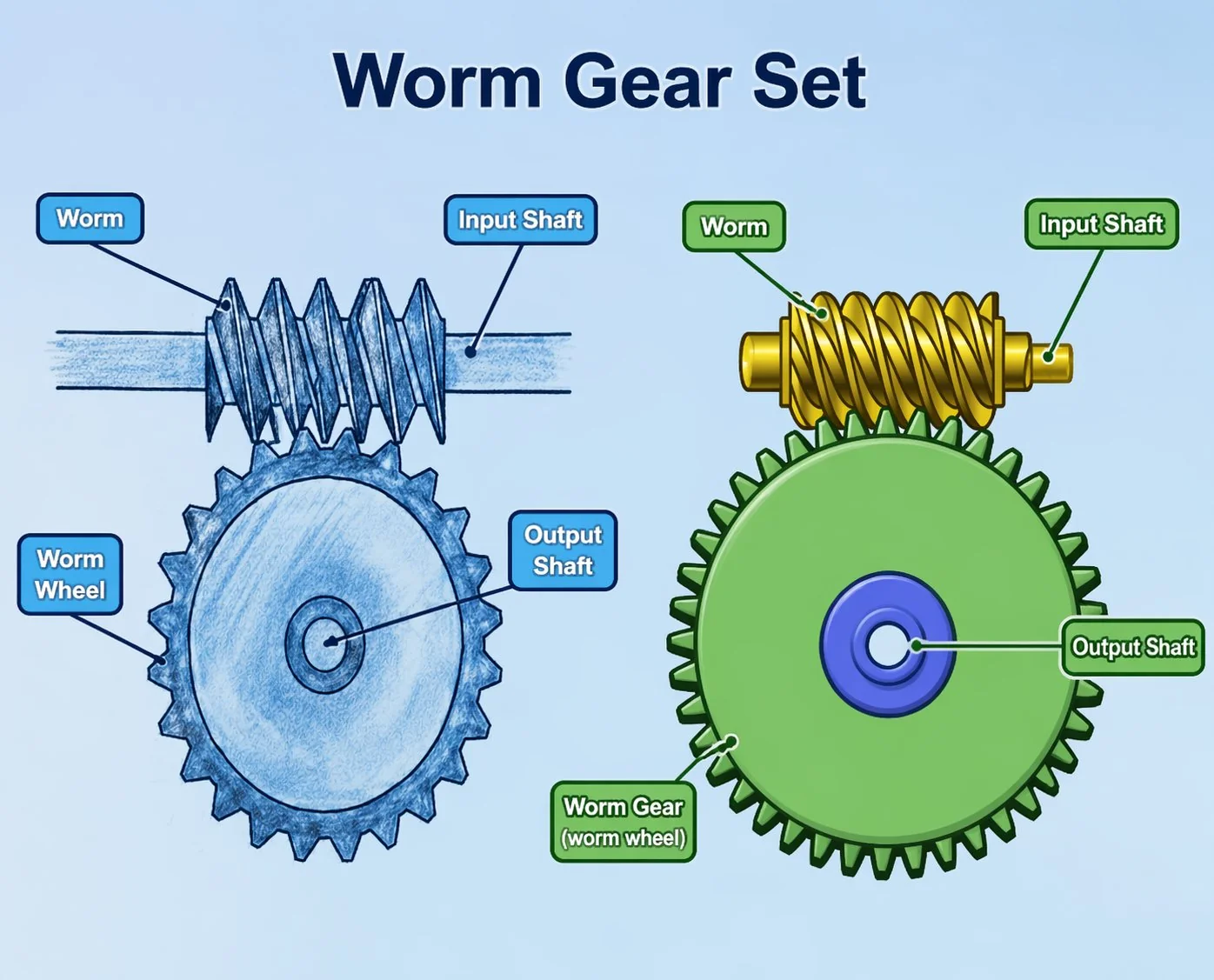
Örnek 1 — Kore sentetik elyaf sarımı: 200 pozisyon, hassas gerilim ±2%, servo tahrikli
Koreli bir sentetik elyaf üreticisi, 1200 m/dak hızda DTY (çekme dokulu iplik) paketleri üreten 200 pozisyonlu hassas sarım makinesinin travers tahrikleri için sonsuz dişli çiftleri belirledi. Gerilim toleransı: artı veya eksi %2 (DTY, düzgün kıvrım tutma için sıkı gerilim gerektirir). Sonsuz dişli çifti: tek başlangıçlı, modül 0,8, merkez mesafesi 20 mm, oran 30:1. Taşlanmış sonsuz dişli Ra 0,4 µm (hız değişimi %1'in altında - polyester için k = 1,2'de gerilim dalgalanması %1,2, %2 hedefinin oldukça altında). Çark: POM. Motor: pozisyon başına 24 V DC servo (kapalı döngü geri besleme yoluyla bireysel gerilim kontrolü). Çift başına maliyet: 2,80 USD (taşlanmış, POM, modül 0,8). 200 pozisyon × her biri 2 çift için maliyet: 1120 USD. Makine başına yıllık iplik üretim değeri: yaklaşık 2,4 milyon ABD doları — 1.120 ABD doları değerindeki sonsuz dişli çiftleri, çift maliyetinin 2.000 katı değerinde iplik kalitesini koruyor.
Örnek 2 — Japon hava jetli dokuma tezgahı: iplik bırakma tahriki, 800 RPM, tezgah kafasında ultra kompakt
Japon bir dokuma tezgahı üreticisi, dakikada 800 atkı hızıyla çalışan yüksek hızlı hava jetli bir dokuma tezgahının çözgü ipliği bırakma mekanizması için sonsuz dişli çiftleri belirledi. Bırakma mekanizması, çözgü ipliğini dokuma döngüsüyle senkronize edilmiş kontrollü bir hızda kirişten serbest bırakıyordu; hızdaki herhangi bir değişiklik, görünür atkı çubuğu kusurlarına (dokuma kumaşta periyodik yoğunluk değişimi) neden oluyordu. Sonsuz dişli çifti: tek başlangıçlı, modül 0,6, merkez mesafesi 15 mm, oran 40:1 - bu 35 makaleden oluşan serinin tamamındaki en küçük sonsuz dişli çiftlerinden biri. Taşlanmış sonsuz dişli Ra 0,3 µm (hız değişimi %0,8'in altında). Çark: PA66-GF15 (cam elyaf takviyeli naylon - 3 N·m'lik bırakma torku, küçük 15 mm merkez mesafesinde POM kapasitesini aşıyordu). Kendiliğinden kilitlenme şart: her atkı yerleştirme döngüsü arasındaki milisaniyelik duraklama sırasında çözgü gerilimini sabit tutuyordu. Çift başına maliyet: 3,50 USD. 1 m mesafedeki gürültü: 38 dB(A) (85 dB(A) dokuma tezgahı gürültüsünün üzerinde duyulmaz). Gözat tekstil makinesi için sonsuz dişli Dokuma, sarma ve iplik eğirme makineleri uygulamaları için seçenekler.
Vaka 3 — Vietnam pamuk iplik eğirme makinesi: 500 iğ, maliyet odaklı, dişli çarklı kabul edilebilir.
Vietnamlı bir pamuk iplik fabrikası, 500 iğli bir ring iplik makinesinin halka travers tahrikleri için sonsuz dişli çiftleri belirledi. Halka traversi, iplik demetini (iğ üzerindeki iplik paketi) oluşturmak için halka rayını yukarı ve aşağı hareket ettirir; bu, nispeten yavaş ve düşük hassasiyetli bir harekettir ve iplik demeti sarım geometrisi orta düzeyde yoğunluk değişimine tolerans gösterdiği için %5'in altında hız değişimi kabul edilebilir. Sonsuz dişli çifti: tek başlangıçlı, modül 1, merkez mesafesi 25 mm, oran 20:1. Dişli sonsuz vida Ra 1,2 µm (ince dişli – k = 1,5'te pamuk için hız değişimi yaklaşık %2,5, gerilim dalgalanması %3,8, %5 sınırı içinde). Çark: POM. Çift başına maliyet: 0,85 USD. 500 iğ × her biri 1 çift için maliyet: 425 USD. Dişli frezeleme yöntemi, taşlama yöntemine (1,80 USD) kıyasla çift başına 0,95 USD tasarruf sağladı; bu da fabrikadaki 12 çerçeve için toplamda 475 USD'lik önemli bir tasarruf anlamına geliyor. Bu özellik, tüm tekstil uygulamalarının taşlanmış sonsuz dişli çiftlerine ihtiyaç duymadığını gösteriyor; gerilim hassasiyeti formülü, "tekstil = taşlanmış" genel varsayımından ziyade, son işlem seçimini yönlendirmelidir.
Sıkça sorulan sorular
S: Kullandığım ipliğin esneklik faktörü k'yı nasıl belirlerim?
İplik çekme modülünü (birim gerinim başına kuvvet) bir iplik çekme test cihazı (Instron veya eşdeğeri) kullanarak sarım hızında ölçün. k = (E_dinamik / E_statik) formülünü kullanarak hesaplayın; burada E_dinamik sarım hızındaki modül, E_statik ise sıfır hızdaki modüldür. Çoğu ticari iplik için: polyester filament k = 1,1 ila 1,3; pamuk elyaf k = 1,4 ila 1,6; yün k = 1,6 ila 1,8; ipek k = 1,5 ila 1,7; naylon filament k = 1,3 ila 1,5. Karışım iplikler için ağırlıklı ortalama kullanılır: polyester/ pamuk karışımı için k = 0,65 × 1,2 + 0,35 × 1,5 = 1,31. Gerilim formülünde k değerini kullanarak sonsuz dişli çiftinden izin verilen maksimum hız değişimini belirleyin.
S: Tekstil sonsuz dişli çiftli POM tekerlekleri ne sıklıkla değiştirilmelidir?
Tekstil sarma makinelerindeki POM tekerlekleri, sürekli 2 vardiya çalışmasında (yılda 4.000 ila 6.000 saat) tipik olarak 2 ila 4 yıl dayanır. Ömrü sınırlayan faktör, aşınmadan kaynaklanan boşluk artışıdır; boşluk başlangıç değerinin iki katına çıktığında (örneğin 3'ten 6 ark dakikaya), hız değişimi orantılı olarak artar ve gerilim toleransını aşabilir. Değiştirme programı, işlenen iplik türüne göre belirlenir: düşük k sentetikler (polyester) için, başlangıç boşluğunun 2 katında; yüksek k doğal elyaflar (pamuk, yün) için, başlangıç boşluğunun 1,5 katında değiştirilir. POM tekerleklerinin maliyeti 0,08 ila 0,25 ABD doları arasında olduğundan, değiştirme maliyeti ihmal edilebilir düzeydedir; tekerleğe erişim ve değiştirme işçiliği (pozisyon başına 5 ila 15 dakika) baskın değiştirme maliyetidir.
S: Tekstil sonsuz dişli takımlarında daha uzun ömür için bronz dişli çarklar kullanılabilir mi?
Teknik olarak evet, ancak ağırlık ve gürültü dezavantajları bronzu çoğu tekstil uygulaması için pratik olmaktan çıkarıyor. Tekstil sonsuz dişli çiftleri, her gramın ivme enerjisini ve motor boyutunu artırdığı hareketli taşıyıcılara (sarma traversi) monte edilir. 8 gram ağırlığındaki bronz bir dişli, 2 gram ağırlığındaki POM dişliye kıyasla pozisyon başına 6 gram daha fazla ağırlık ekler; 200 pozisyon boyunca bu, 1,2 kg ek hareketli kütle anlamına gelir ve travers yönü başına ila daha fazla motor gücü gerektirir. Bronz ayrıca tekstil hızlarında POM'dan 10 ila 15 dB(A) daha fazla gürültü üretir; bu da salon gürültüsünü 78 dB(A)'dan 85 dB(A) mesleki sınırına doğru iter. Planlı değiştirme ile POM, makinenin ömrü boyunca bronzdan daha uygun maliyetlidir.
S: Tüy ve lif kirliliği tekstil sonsuz dişli takımlarını etkiler mi?
Tekstil ortamlarında, tüm makine yüzeylerine çöken havada uçuşan tüy (kısa lif parçaları) oluşur. Sonsuz dişli çiftinin ağına giren tüy, yumuşak bir aşındırıcı görevi görür; metal parçacıklarından veya çimento tozundan daha az zararlıdır, ancak birikmesine izin verilirse POM aşınmasını ila oranında hızlandırmaya yeterlidir. Çoğu tekstil sonsuz dişli çifti açıktır (sızdırmaz bir muhafaza yoktur), çünkü hafif yükler yağ veya gres gerektirmez; 5 N·m'nin altındaki torklarda kuru POM-çelik teması yeterlidir. Düzenli olarak (haftalık) basınçlı hava ile temizleme, dişli ağından biriken tüyü uzaklaştırır. Yüksek tüy oluşumu olan ortamlarda (pamuk tarama, fitilleme), dişli ağının üzerine basit bir keçe toz örtüsü, sızdırmaz bir muhafazanın maliyeti veya karmaşıklığı olmadan tüy girişini oranında azaltır.
S: Tekstil sonsuz dişli takımlarının tipik maliyeti nedir?
Bu 35 ürünlük serinin en küçük ve en ucuz modeli: Modüle, yüzey işlemine (tırtıklı veya taşlanmış) ve hacme bağlı olarak çift başına 0,65 ila 4,50 ABD doları. 0,6 ila 0,8 modülde POM tekerleği ile: tırtıklı 0,65 ila 1,20 ABD doları, taşlanmış 1,80 ila 3,50 ABD doları. 1,0 ila 1,5 modülde: tırtıklı 0,85 ila 1,80 ABD doları, taşlanmış 2,20 ila 4,50 ABD doları. Hacim fiyatlandırması: 1.000 adetten fazla alımlarda ila indirim, 5.000 adetten fazla alımlarda ila indirim. Otomotiv (A30) ile karşılaştırın (0,65 ila 4,20 ABD doları) — birim başına fiyatlandırma benzer ancak kalite çerçeveleri farklı (tekstil PPAP/IATF gereksinimine sahip değil; kalite SPC Cpk yerine iplik kopma oranı ile doğrulanıyor).
Tekstil makinelerinde kullanılan sonsuz dişli çiftleri, ağır sanayinin aksine, teknik özellik spektrumunun tam tersi ucunda yer alır: en küçük modüller (0,5 ila 1,5), en düşük torklar (0,5 ila 10 N·m) ve bu serideki herhangi bir uygulamaya göre en yüksek ünite sayıları (fabrika başına 200 ila 1.500 çift). Ancak hassasiyet gereksinimi, takım tezgahı uygulamalarıyla karşılaştırılabilir (A22 ila A24 maddeleri): iplik gerilimini kopma eşiği içinde tutmak için hız varyasyonu artı veya eksi %1,5'in altında olmalıdır. İplik gerilimi-hız eğrisi analizi — ΔT/T = k × ΔV/V — neden doğal elyaflar ve ince sentetikler için taşlanmış sonsuz dişli çiftlerinin zorunlu olduğunu, kaba sentetikler ve gerilim toleransının daha geniş olduğu ring iplik eğirme için ise frezelenmiş çiftlerin kabul edilebilir olduğunu nicel olarak ortaya koymaktadır. POM tekerlekleri evrenseldir çünkü ağırlık, gürültü ve maliyet avantajları, daha kısa değiştirme döngüsünün dezavantajlarından daha ağır basar; tekerlek başına 0,08 ila 0,25 ABD doları olan değiştirme maliyeti, tek bir kopma olayında kaybedilen iplik değerinden daha düşüktür.
Tekstil makineleri üreticileri ve fabrika mühendisleri için, mühendislik masamız iplik tipinize göre gerilim hassasiyetini hesaplar ve doğru apre derecesini önerir. Standart katalog minyatür sonsuz dişli takımları Modül 0,5 ile 1,5 arasında değişen tekstil boyutlarını, 15 ile 40 mm arasındaki merkez mesafesini ve POM ve PA66 tekerlek seçeneklerini kapsar. Siparişinizi gönderin. tekstil tahrik spesifikasyonu İplik türü, sarım hızı, gerilim toleransı ve makine başına birim miktarı ile birlikte.
Tekstil makineleri için sonsuz dişli çiftlerinin özelliklerini belirlemek mi istiyorsunuz?
İplik tipi, sarım veya tezgah hızı, gerilim toleransı, pozisyon sayısı ve yıllık birim miktarını gönderin. Gerilim hassasiyetini hesaplayıp üretim hacminize uygun son işlem kalitesini, modülü ve tekerlek malzemesini önereceğiz.
Editör: Cxm