Korea Ever-Power · Application Engineering Guide
Wormwiel en wormwiel voor transportbanden en deegverwerking in bakkerijovens
Het wormwielpaar dat een transportband in een tunneloven aandrijft, bevindt zich op 400 mm afstand van een ovenruimte die op 230 graden Celsius werkt. Door de stralingswarmte stijgt de temperatuur van het oppervlak van de tandwielkast tot 85-110 graden Celsius – ruim boven de limiet van 80 graden voor standaard mineraalvet. Binnen 6 weken verkoolt het standaardvet op de schroefdraad van de wormwielen, neemt de wrijving toe, groeit de speling en loopt de transportband vast midden in het bakproces met 200 broden erin. De keuze van het smeermiddel is de specificatie die het verschil maakt tussen een paar dat 5 jaar meegaat en een paar dat na 6 weken al uitvalt.
Transportbanden in bakovens, aandrijvingen van rijskasten en apparatuur voor deegverwerking plaatsen het wormwielpaar in een extern verwarmde omgeving – 60 tot 120 graden Celsius omgevingstemperatuur door de stralingswarmte van de oven – in plaats van dat er intern warmte wordt gegenereerd door inefficiëntie van de tandwielen. Deze externe warmte-uitdaging vereist een smeermiddel dat geschikt is voor de werkelijke temperatuur van de behuizing, niet voor de referentietemperatuur in de catalogus. De selectiematrix voor smeermiddelen voor hoge temperaturen koppelt de behuizingstemperatuur aan de juiste vetfamilie: standaard lithiumvet tot 80 graden Celsius (deegverwerking buiten de ovens), synthetisch PAG-vet voor 80 tot 120 graden Celsius (aandrijvingen in de buurt van de oven), siliconenvet voor 120 tot 150 graden Celsius (aandrijvingen in de oven) en PFPE-vet voor temperaturen boven 150 graden Celsius (mechanismen in de oven). Thermische uitzetting bij verhoogde temperatuur verschuift de hartafstand van het wormwiel met 0,03 tot 0,08 mm per 50 graden Celsius temperatuurstijging – voldoende om speling en contactpatroon te veranderen. Bakkerijen bevatten ook meelstof (brandbaar – potentieel ATEX-zone 22) en vereisen voedselveilig smeermiddel (NSF H1) voor alle aandrijvingen in de productiezone.
Waarom bakkerijapparatuur een andere thermische uitdaging vormt dan andere toepassingen
Bij de meeste wormwieloverbrengingen stroomt de warmte naar buiten: het tandwielpaar genereert wrijvingswarmte en de behuizing voert deze af naar de omgeving. Het tandwielpaar is de warmtebron; de omgeving is de koele afvoer. Bij bakovens is deze relatie omgekeerd: de oven is de warmtebron en het wormwielpaar ontvangt externe stralings- en convectiewarmte. Het tandwielpaar absorbeert warmte uit de omgeving in plaats van deze te genereren.
Dit onderscheid is belangrijk omdat het standaard thermische model (artikel A08 roltrap: T_behuizing = T_omgeving + P_warmte / (h × A)) ervan uitgaat dat de omgevingstemperatuur constant en lager is dan de temperatuur in de behuizing. In een bakkerij kan de omgevingstemperatuur rond de tandwielbehuizing 60 tot 120 graden Celsius bedragen, en de temperatuur in de behuizing is gelijk aan of hoger dan de omgevingstemperatuur, omdat de behuizing geen warmte kan afvoeren naar de reeds warme lucht.
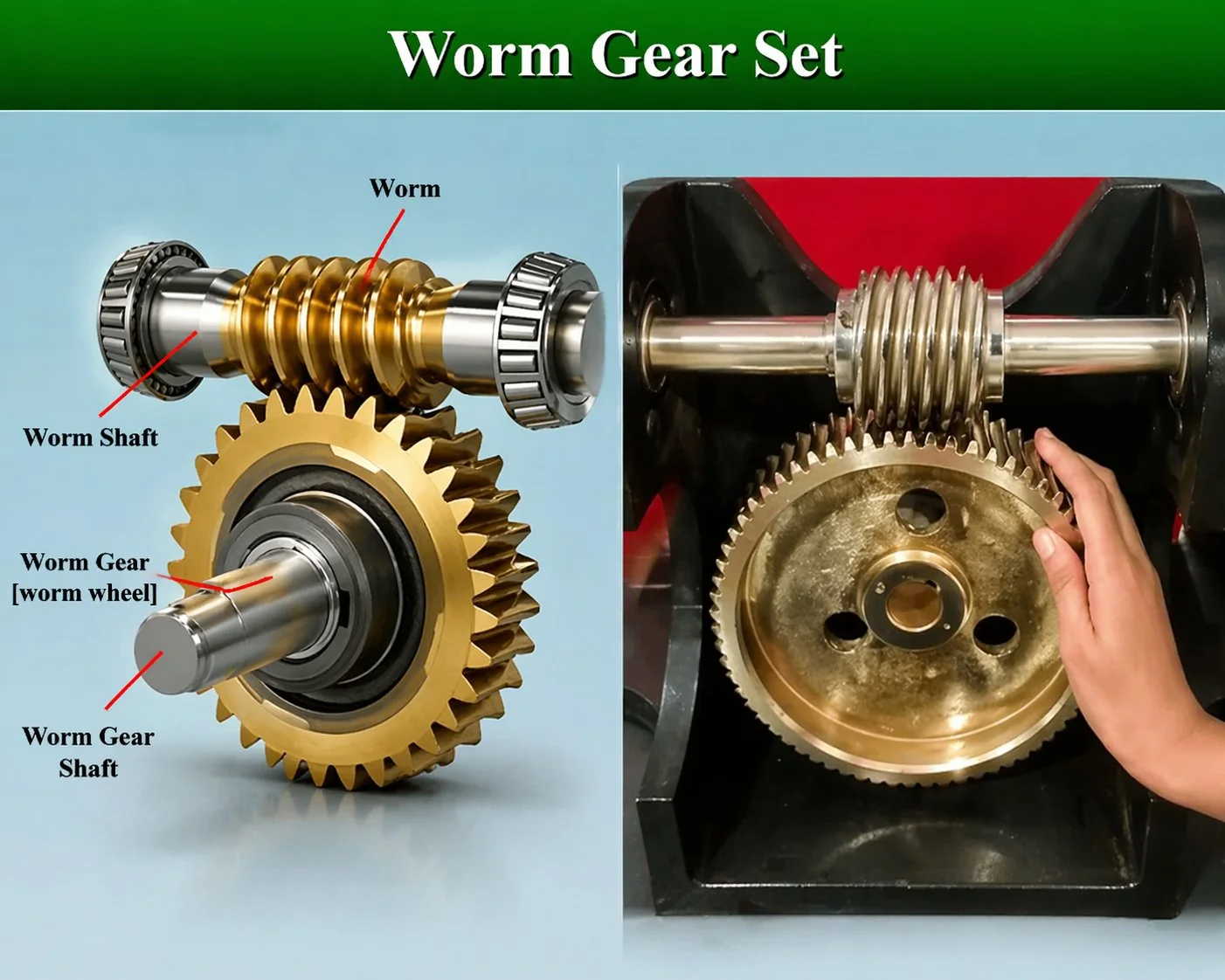
Het praktische gevolg: een wormwieloverbrenging met een nominale waarde van 2000 N·m bij een omgevingstemperatuur van 20 graden Celsius kan bij een omgevingstemperatuur van 100 graden Celsius slechts 1400 tot 1600 N·m leveren. Dit komt doordat de hogere temperatuur de viscositeit van het smeermiddel verlaagt, de wrijvingscoëfficiënt verhoogt, de vloeigrens van het brons verlaagt en de thermische degradatie van het vet versnelt. De reductiefactor voor een wormwieloverbrenging bij een hogere omgevingstemperatuur bedraagt doorgaans 15 tot 30 procent per 50 graden Celsius boven de cataloguswaarde (meestal 20 graden Celsius). Deze reductie wordt vaak over het hoofd gezien bij de specificatie van bakkerijapparatuur: de wormwieloverbrenging wordt geselecteerd op basis van de volledige cataloguswaarde en vervolgens naast een oven van 230 graden geplaatst, waar deze vanaf de eerste dag op 70 tot 80 procent van zijn nominale capaciteit werkt.
Selectiematrix voor smeermiddelen voor hoge temperaturen — van behuizingstemperatuur tot vetsoort
De keuze van het smeermiddel voor wormwieloverbrengingen in bakkerijen hangt af van één meting: de constante temperatuur van het behuizingsoppervlak tijdens gebruik in de oven. Deze temperatuur bepaalt welke vetsoort de thermische belasting kan doorstaan. De onderstaande matrix koppelt de temperatuurbereiken van de behuizing aan het juiste smeermiddel, met vermelding van de voedselveiligheidsvarianten (NSF H1) voor elk bereik.
De kosten stijgen aanzienlijk: PFPE kost 250 tot 600 dollar per kg, 20 tot 40 keer zoveel als standaard lithiumvet. De hoeveelheid vet per wormwieloverbrenging is echter klein (50 tot 200 gram), waardoor de absolute kosten per vulling 12 tot 120 dollar bedragen voor PFPE, tegenover 0,50 tot 3 dollar voor standaardvet. Dit is een significant verschil, maar niet onbetaalbaar voor apparatuur die gebak beschermt met een waarde van duizenden dollars per ovenlading.
Let op met siliconenvet. Siliconenvet is bestand tegen hoge temperaturen, maar presteert aanzienlijk minder goed onder extreme druk (EP) dan lithium- of PAG-vetten. Bij zware belastingen, zoals die typisch zijn voor grote tunneloventransportbanden (uitgangskoppel 200 tot 500 N·m), kan siliconenvet de benodigde grenslaagsmering niet handhaven om wrijving tussen brons en staal te voorkomen. Voor wormwieloverbrengingen met een uitgangskoppel van meer dan 100 N·m bij temperaturen tussen 120 en 150 graden Celsius presteert synthetisch PAG met een hogere basisolieviscositeit (ISO VG 680 of 1000) vaak beter dan siliconenvet, ondanks een nominaal lagere temperatuurclassificatie. De superieure bescherming door de EP-film compenseert de iets lagere thermische marge. Test het specifieke vet onder belasting bij de juiste temperatuur op de wormwieloverbrenging voordat u een productiespecificatie vastlegt.
Thermische uitzetting — hoe de warmte in een oven de hartafstand en speling beïnvloedt.
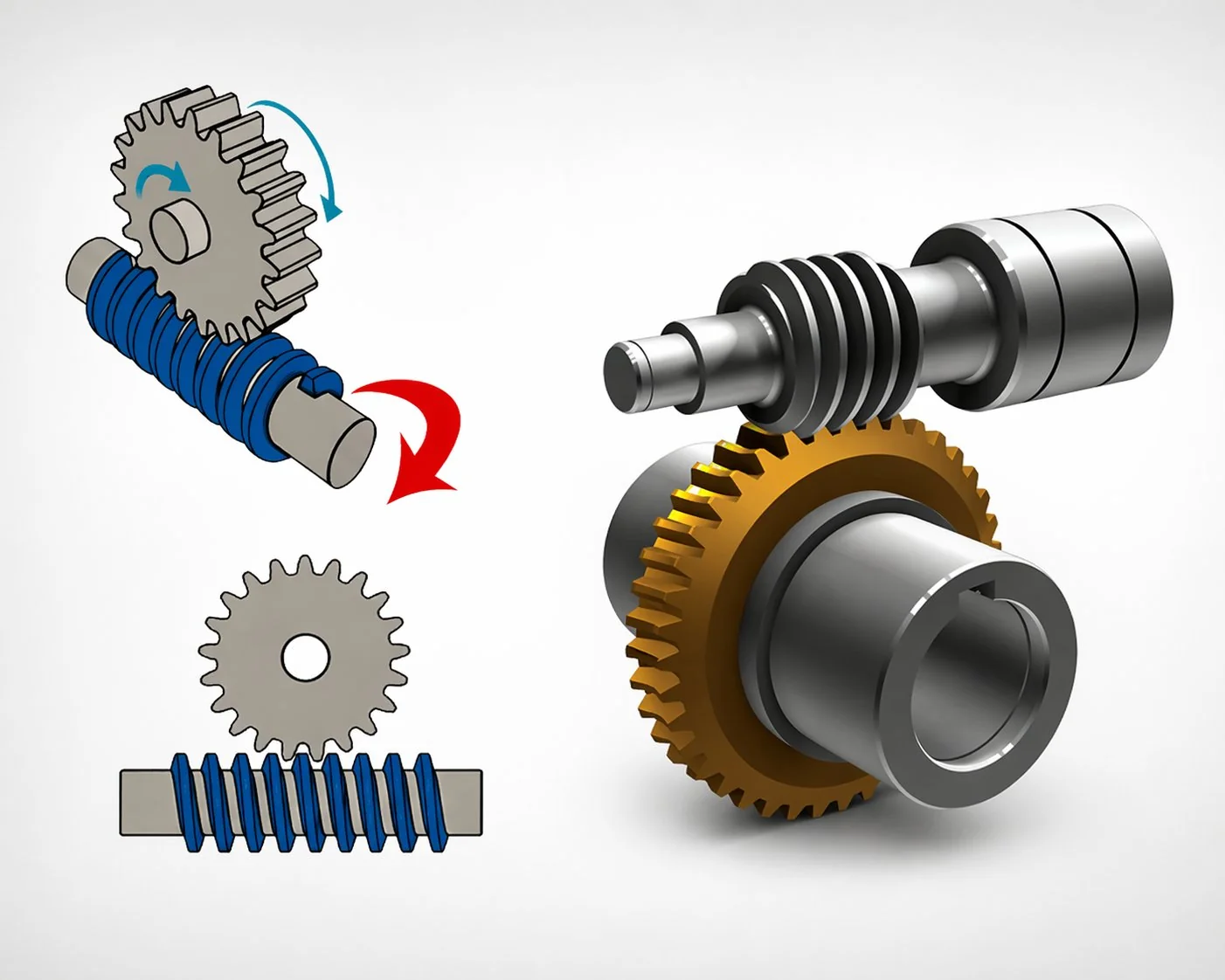
Wanneer een wormwieloverbrenging opwarmt van 20 graden Celsius (montagetemperatuur) tot 100 graden Celsius (bedrijfstemperatuur vlakbij de oven), zetten de behuizing en assen van de wormwieloverbrenging uit. Staal en gietijzer hebben een thermische uitzettingscoëfficiënt van ongeveer 11 tot 12 µm per meter per graad Celsius. Bij een wormwieloverbrenging met een hartafstand van 100 mm en een temperatuurstijging van 80 graden Celsius, neemt de hartafstand toe met ongeveer 0,09 tot 0,10 mm. Brons zet sneller uit (18 µm/m/°C), waardoor het bronzen wiel meer uitzet dan de stalen worm – wat de vertanding verder opent.
Het ge gecombineerde effect: de speling neemt toe met ongeveer 0,03 tot 0,08 mm per 50 graden Celsius temperatuurstijging bij een typisch wormwielpaar voor bakkerijen (hartafstand 80 tot 125 mm). Deze thermische speling is omkeerbaar: ze verdwijnt wanneer het paar afkoelt tot de montagetemperatuur. Tijdens bedrijf verandert de toegenomen speling echter het contactpatroon van de wormwielen (de contactzone verschuift naar de tandpunten) en neemt het loopgeluid toe. Bij bakkerijapparatuur waar het paar dagelijks opwarmt en afkoelt (oven aan tijdens de bakdienst, uit 's nachts), belast de dagelijkse cyclus van speling de tandcontactzone anders dan bij een paar dat op een constante temperatuur draait.
Ontwerpbeperking. Specificeer de initiële speling aan de krappe kant van de tolerantieband (in plaats van het nominale midden) zodat de thermische uitzetting de vertanding opent tot de nominale bedrijfsspeling bij oventemperatuur. Voor een tandwielpaar dat bedoeld is om te werken in een behuizing van 100 graden Celsius, stelt u de montagespeling 0,05 tot 0,08 mm strakker in dan de standaard catalogusspecificatie. Het paar zal bij kamertemperatuur iets stroef aanvoelen, maar zal met de beoogde speling werken zodra het op bedrijfstemperatuur is gebracht. Deze aanpak vereist dat de leverancier van het tandwielpaar de bedrijfstemperatuur weet – wat betekent dat de ontwerper van de bakkerijapparatuur de thermische omstandigheden moet communiceren, niet alleen het koppel en de overbrengingsverhouding.
Een Koreaanse industriële bakkerij installeerde een nieuwe tunneloven van 25 meter voor de productie van sandwichbrood. De oven werkte op 210 graden Celsius. De aandrijving van de transportband bevond zich aan de afvoerzijde, op 400 mm van de ovenwand, zonder thermische afscherming. Specificaties van het wormwielpaar: enkelvoudige start, module 4, hartafstand 100 mm, overbrengingsverhouding 30:1 — gevuld met standaard mineraal lithiumvet (NLGI 2, maximale continue temperatuur 80 graden Celsius). De temperatuur van het behuizingsoppervlak, gemeten op de derde productiedag, bedroeg 95 graden Celsius. Het standaardvet begon binnen twee weken te oxideren — er vormde zich een bruine korst op de wormdraden, zichtbaar door het oliepeilglas. In week 6 was het vet verkoold, de wrijvingscoëfficiënt was ongeveer verdubbeld, de motorstroom was met 40 procent gestegen en de transportband liep vast met 200 broden in de ovenkamer. Noodreparatie: behuizing spoelen met oplosmiddel, opnieuw vullen met synthetisch PAG H1-vet (geschikt voor 120 graden Celsius). Kosten voor het vervangen van het vet: 180 USD (inclusief oplosmiddel, PAG-vet en 3 uur arbeid van een technicus). Kosten van 200 verbrande broden plus 4 uur verloren productie: circa 3.200 USD. De totale kosten van de storing – 3.380 USD – waren het gevolg van een fout in de vetkeuze die 35 USD had gekost om te voorkomen tijdens de specificatiefase (het prijsverschil tussen standaard mineraalvet en PAG H1-vet voor één wormwielpaar). De bakkerij installeerde vervolgens een roestvrijstalen hitteschild tussen de ovenwand en de tandwielkast, waardoor de temperatuur in de kast daalde tot 72 graden Celsius – binnen het standaard vetbereik. Het hitteschild kostte 85 USD. Gecombineerde preventiekosten: 120 USD in totaal versus 3.380 USD reparatiekosten.
Classificatie van voedselzones voor wormwieloverbrengingen en aandachtspunten met betrekking tot meelstof.
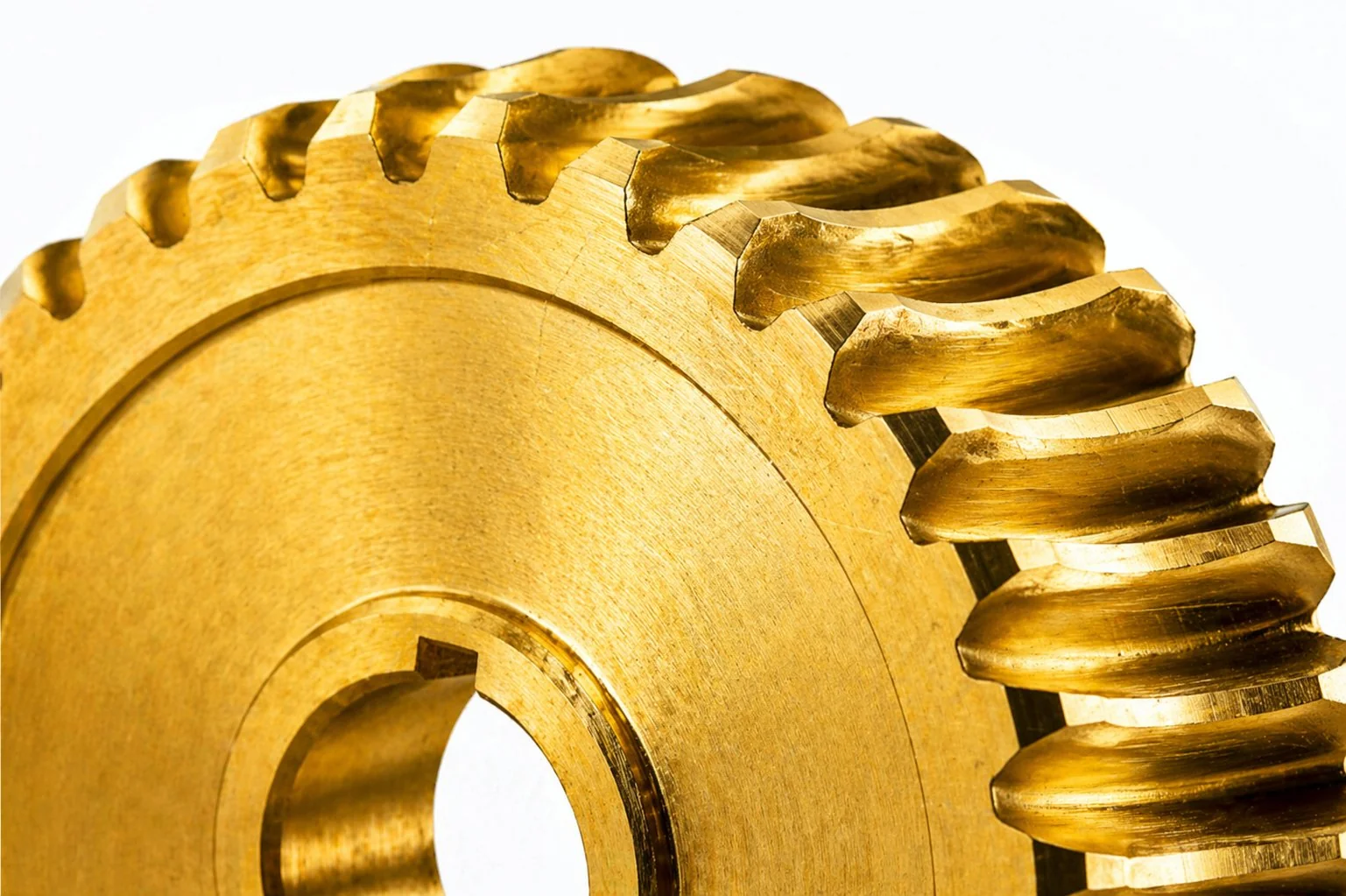
In bakkerijproductieomgevingen komen twee wettelijke aspecten samen: voedselveiligheid (NSF H1-smeermiddel voor aandrijvingen in de productiezone) en brandbaar stof (meelstof kan explosieve atmosferen vormen boven de minimale explosieve concentratie van ongeveer 60 g/m³).
Niet alle wormwieloverbrengingen in bakkerijen hoeven te voldoen aan de voedselveiligheidseisen. Wormwieloverbrengingen vóór het bakproces (deegmixer, deegverdeler, vormmachine, rijskast) bevinden zich in de voedselzone en vereisen NSF H1. De aandrijving van de ovenband en de koelband bevinden zich doorgaans na het bakproces – het product wordt gebakken en komt niet in contact met het aandrijfmechanisme. Voor deze aandrijvingen mag standaard industrieel smeermiddel worden gebruikt als een HACCP-beoordeling aantoont dat er geen besmettingsroutes zijn.
Aandrijvingen: Deegmixer, deegverdeler, vormmachine, rijskast met transportband.
Smeermiddel: NSF H1 verplicht (risico op contact met deeg).
Temperatuur: Omgevingstemperatuur 20-35°C (standaard smeervet is voldoende).
Stof: Meelstof aanwezig — afgesloten behuizing, ATEX-zone 22 indien de concentratie de LEL overschrijdt. Vonkvrij behuizingsoppervlak.
Aandrijvingen: Tunneloventransportband, aandrijving met gaasband, steendekindexeerder.
Smeermiddel: PAG, siliconen of PFPE — keuze afhankelijk van de temperatuur van de behuizing. NSF H1 heeft de voorkeur, maar is niet altijd verplicht (nabakzone).
Temperatuur: De temperatuur in de behuizing varieert van 60 tot 150 °C, afhankelijk van de afstand en de afscherming.
Stof: Minimale hoeveelheid meelstof (verbrandt in de ovenzone). ATEX is doorgaans niet vereist.
Specificatiegevallen voor drie wormwieloverbrengingparen voor bakovens
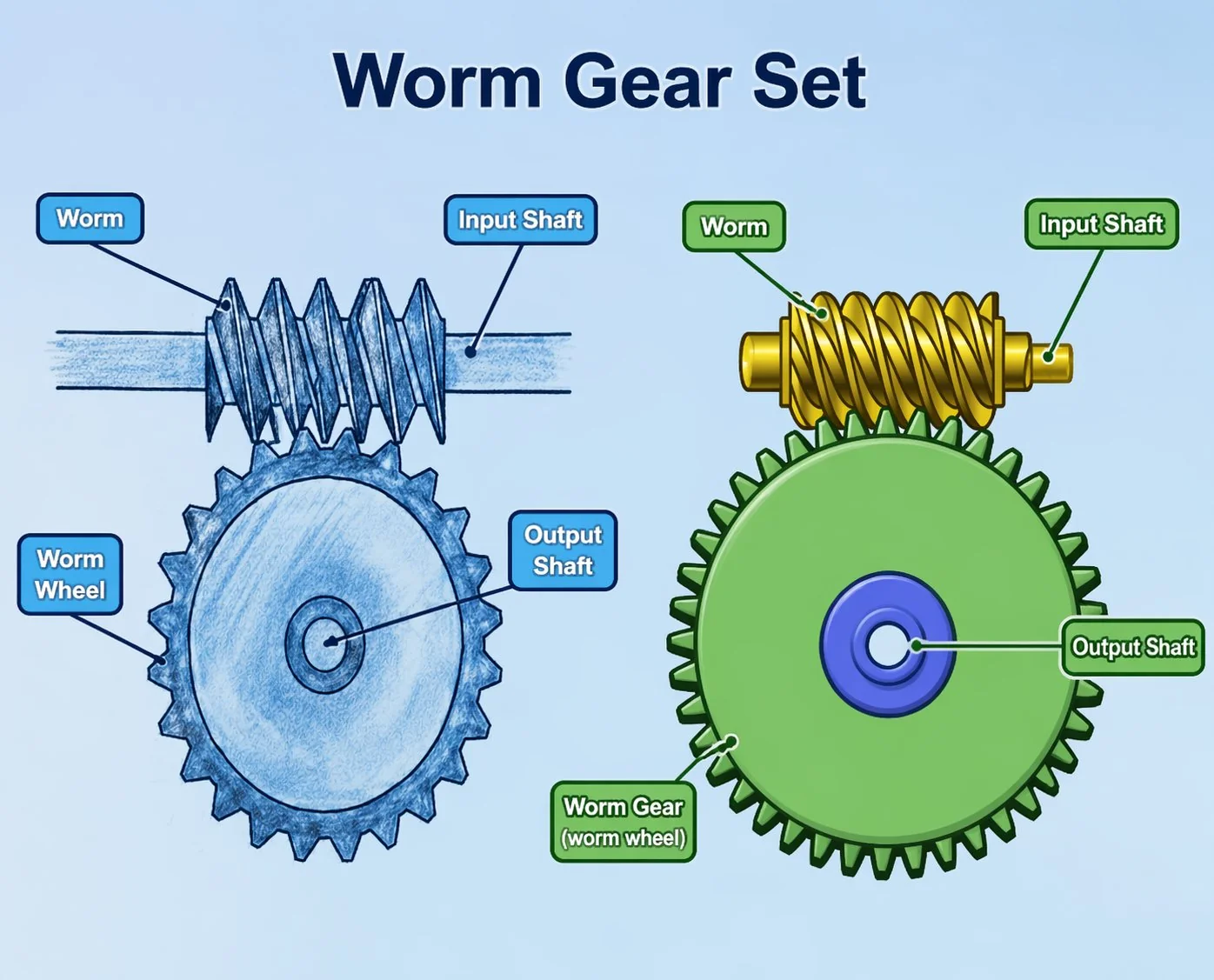
Casus 1 — Koreaanse industriële bakkerij: 25 m tunneloven, brood, hittebestendige aandrijving
Een Koreaanse industriële bakkerij (30.000 broden per dag) specificeerde een wormwieloverbrenging voor de aandrijving van de afvoerband van een 25 meter lange, gasgestookte tunneloven met een kamertemperatuur van 210 graden Celsius. De aandrijving bevond zich bij de uitgang van de oven, oorspronkelijk 400 mm van de ovenwand – de temperatuur van de behuizing werd gemeten op 95 graden Celsius (zie Engineering Desk Note). Na installatie van een roestvrijstalen hitteschild (85 USD) daalde de temperatuur van de behuizing tot 72 graden Celsius. De uiteindelijke specificaties van de wormwieloverbrenging: enkelvoudige start, module 4, hartafstand 100 mm, overbrengingsverhouding 30:1. Motor: 2,2 kW, 1450 tpm. Uitgangskoppel: 180 N·m (bandspanning + wrijvingsweerstand van het brood). Vet: NSF H1 synthetisch PAG (geschikt voor 120 graden Celsius – wat een marge van 48 graden biedt boven de bedrijfstemperatuur van 72 graden). Smeerinterval: 12 maanden (Arrhenius-gecorrigeerd voor 72 graden Celsius, referentietemperatuur 40 graden). Materiaal: AISI 304 wormwiel, fosforbrons wiel. Afdichting: FKM (Viton) – hittebestendig. Prijs per paar: 195 USD. Totale kosten ovenaandrijving (paar + hitteschild + PAG-vet): 315 USD. Jaarlijkse broodproductie met deze oven: circa 1,8 miljoen USD groothandelswaarde.
Casus 2 — Japanse instant ramenfabriek: snelkookoven, behuizing van 160 °C, siliconenvet
Een Japanse fabrikant van instant noedels specificeerde een wormwieloverbrenging voor de transportband in een snelfrituuroven waarin noedelblokken worden gefrituurd in een olie van 150 graden Celsius. De aandrijving was ingebouwd in de oven – gemonteerd op het ovenframe in de verwarmde kamer. Warmteafscherming was niet mogelijk. De temperatuur van de behuizing werd gemeten op 135 graden Celsius tijdens bedrijf in stationaire toestand. Standaard PAG-vet (geschikt voor 120 graden Celsius) zou binnen enkele maanden bezwijken bij 135 graden Celsius. Specificaties: enkelvoudige start, module 3, hartafstand 80 mm, overbrengingsverhouding 25:1. Vet: siliconenvet voor hoge temperaturen, geschikt voor 180 graden Celsius, NSF H1-gecertificeerd. Het siliconenvet had een lagere EP-prestatie dan PAG – acceptabel bevonden bij een uitgangskoppel van 85 N·m (ruim binnen de beperkte EP-filmcapaciteit). Materiaal: wormwiel van AISI 316L (frituuroliespatten worden na verloop van tijd zuur), wiel van aluminiumbrons. Interval voor opnieuw smeren: 3 maanden (siliconenvet degradeert sneller dan PAG vanwege de vluchtigheid van de basisolie bij langdurig hoge temperaturen). Kosten per paar: 165 USD. Kosten siliconenvet H1 per vulling: 18 USD. Jaarlijks onderhoud (4 vullingen): 72 USD. Bekijken hoge temperatuur wormwielreductor Opties ontworpen voor bakkerijtoepassingen naast en in de oven.
Casus 3 — Vietnamese baguettefabriek: dekovenlader, kostengeoptimaliseerd, gematigde hitte
Een Vietnamese baguettefabriek specificeerde wormwieloverbrengingen voor een laadmechanisme met twee verdiepingen dat deegbakken in een oven met drie verdiepingen schuift bij een temperatuur van 240 graden Celsius. De aandrijving van het laadmechanisme was op 1,2 meter afstand van de voorkant van de oven geplaatst, achter een stenen warmtewand. De temperatuur van de behuizing bedroeg 58 graden Celsius – onder de standaardlimiet van 80 graden voor vet. Hierdoor kon standaard NSF H1 lithiumcomplexvet worden gebruikt, waardoor de hogere kosten van synthetisch PAG-vet of siliconenvet werden vermeden. Wormwieloverbrenging: enkelvoudige start, module 2,5, hartafstand 63 mm, overbrengingsverhouding 20:1. Uitgangskoppel: 55 N·m (gewicht van de bak plus wrijvingsweerstand op de stenen bodem). Motor: 0,75 kW. Materiaal: verzinkte koolstofstalen worm, fosforbrons tandwiel. Smeerinterval: 12 maanden (standaard schema bij 58 graden Celsius). Kosten per paar: 72 USD. Deze casus laat zien dat niet alle wormwieloverbrengingen in bakkerijen een smeermiddel voor hoge temperaturen nodig hebben. De beslissing hangt af van de werkelijke temperatuur van de behuizing, die wordt bepaald door de afstand tot de oven en eventuele thermische afscherming. Een temperatuurmeting van 30 seconden met een infraroodthermometer tijdens het gebruik van de oven levert de gegevens op die bepalen of standaard of synthetisch vet nodig is.
Veelgestelde vragen
V: Hoe meet ik de temperatuur van de behuizing voor de juiste smeermiddelkeuze?
Gebruik een infraroodthermometer gericht op het oppervlak van de wormwielbehuizing tijdens stabiele werking van de oven (minimaal 2 uur na het opstarten van de oven om volledige thermische evenwicht te bereiken). Meet de temperatuur op het punt dat het dichtst bij de oven ligt. Noteer de temperatuur op de warmste productiedag (de omgevingstemperatuur in de zomer draagt bij aan de stralingswarmte van de oven). Deze meting in het meest ongunstige geval bepaalt de smeermiddelfamilie. Als de behuizing nog niet is geïnstalleerd (nieuw ontwerp van apparatuur), schat de temperatuur dan met behulp van thermische simulatie of installeer een tijdelijke thermokoppel tijdens de inbedrijfstelling voordat het productievet wordt gespecificeerd. Ga er nooit van uit dat de temperatuur van de wormwielbehuizing af te leiden is uit de oventemperatuur – de relatie hangt af van de afstand, afscherming, isolatie en luchtstroom, die per installatie verschillen.
V: Kan een hitteschild het temperatuurprobleem oplossen in plaats van duur smeervet?
In veel gevallen wel, en het is de meest kosteneffectieve oplossing. Een gepolijste roestvrijstalen warmtereflector tussen de ovenwand en de wormwielkast reflecteert 70 tot 90 procent van de stralingswarmte. Een 1 mm dikke, gepolijste 304 roestvrijstalen plaat, op maat gesneden en vastgeschroefd aan het ovenframe, kost 50 tot 150 dollar en verlaagt de temperatuur van de behuizing doorgaans met 20 tot 40 graden Celsius. Deze verlaging brengt de temperatuur van de behuizing vaak terug van het PAG-bereik (80-120 graden Celsius) naar het standaard lithiumbereik (onder 80 graden Celsius), waardoor de noodzaak voor duur synthetisch vet volledig vervalt. Een hitteschild plus standaardvet is goedkoper dan geen schild plus PAG-vet, en het standaardvet heeft betere EP-filmeigenschappen. Evalueer altijd de afscherming voordat u een smeermiddel voor hoge temperaturen specificeert.
V: Is meelstof in de buurt van wormwieloverbrengingen in bakkerijen onderworpen aan de ATEX-specificatie?
Meelstof is brandbaar (minimale explosieve concentratie circa 60 g/m³, minimale ontbrandingstemperatuur circa 380-440 graden Celsius, afhankelijk van het meeltype). Als de wormwieloverbrenging werkt in een gebied dat is geclassificeerd als ATEX Zone 21 of Zone 22 (er kan een stofwolk ontstaan tijdens normaal of abnormaal gebruik), moet de behuizing voldoen aan de toepasselijke ATEX-apparatuurcategorie. In de praktijk zijn de meeste wormwieloverbrengingen voor bakkerijen afgedicht en hebben ze geen interne ontstekingsbron. Ze voldoen doorgaans zonder aanpassingen aan de eisen van Zone 22, omdat de temperatuur van het afgedichte oppervlak van de behuizing (zelfs bij 120 graden Celsius) ruim onder de zelfontbrandingstemperatuur van meelstof ligt. De belangrijkste voorzorgsmaatregel is het voorkomen van meelophoping aan de buitenkant van de behuizing, die door het hete oppervlak kan ontbranden. Regelmatige reiniging van het oppervlak van de behuizing tijdens de productie zorgt ervoor dat de stoflaag onder de kritische diepte blijft.
V: Welk effect heeft het dagelijks aan- en uitschakelen van de oven op het wormwielpaar?
Dagelijkse temperatuurschommelingen (van 20 graden Celsius koud naar meer dan 90 graden Celsius heet en weer terug) veroorzaken twee effecten. Ten eerste zorgt de thermische uitzetting en krimp van de behuizing voor micropompen bij de afdichtingen – lucht wordt aangezogen tijdens het afkoelen en afgevoerd tijdens het opwarmen – waardoor na verloop van maanden atmosferisch vocht en meelstof langs de afdichtingen terechtkomen. Ten tweede vormt zich condens in de behuizing tijdens de afkoelfase wanneer de temperatuur van de behuizing boven het dauwpunt komt. Deze condensatie emulgeert het vet en veroorzaakt corrosie op onbehandelde stalen oppervlakken. Preventie: installeer een klein ontluchtingsventiel met een droogmiddelpatroon dat zorgt voor drukvereffening en tegelijkertijd vocht en stof tegenhoudt. Vervang het droogmiddelpatroon elke 6 maanden. Dit accessoire van 15 USD voorkomt de door vocht veroorzaakte vetdegradatie die anders de levensduur van het vet met 30 tot 50 procent verkort in bakkerijomgevingen met temperatuurschommelingen.
V: Wat is de levensduur van een wormwieloverbrenging in een bakoven?
Met het juiste smeermiddel voor de werkelijke temperatuur van de behuizing: 4 tot 8 jaar bij een eenploegendienst in een bakkerij (2.500 tot 3.000 uur per jaar). Het bronzen wiel is het slijtageonderdeel; de stalen wormwiel gaat meer dan 10 jaar mee. Met een onjuist smeermiddel (standaardvet in een omgeving met hoge temperaturen): 3 tot 12 maanden voordat carbonisatie van het vet versnelde slijtage en mogelijke blokkering veroorzaakt. De keuze van het smeermiddel is de belangrijkste factor voor de levensduur in bakkerijtoepassingen — een set met het juiste vet gaat 5 keer langer mee dan dezelfde set met het verkeerde vet bij hoge temperaturen. Jaarlijkse inspectie dient een meting van de temperatuur van de behuizing, een controle van de vetconditie (kleur, consistentie) en een meting van de speling te omvatten.
Transportbanden en deegverwerkingsapparatuur in bakkerijovens stellen een unieke thermische uitdaging voor wormwieloverbrengingen: externe warmte door de nabijheid van de oven in plaats van interne warmte door wrijving in de tandwielen. De selectiematrix voor smeermiddelen bij hoge temperaturen – van de temperatuur van de behuizing tot de vetsoort – is de belangrijkste specificatietool voor wormwieloverbrengingen in bakkerijen, omdat het smeermiddel bepaalt of de overbrenging 5 jaar of 5 weken meegaat bij hoge temperaturen. Thermische uitzetting bij 60 tot 120 graden Celsius verandert de hartafstand en de speling meetbaar – dit wordt gecompenseerd door een kleinere initiële speling te specificeren bij montagetemperatuur. Warmteafscherming tussen de oven en de tandwielbehuizing is vaak de meest kosteneffectieve oplossing, waardoor de temperatuur van de behuizing met 20 tot 40 graden Celsius daalt en mogelijk de noodzaak voor dure synthetische smeermiddelen vervalt. De classificatie van de voedselzone (voorovenzone versus ovenzone) bepaalt of NSF H1-smeermiddel verplicht of optioneel is, en de beoordeling van meelstof bepaalt of de behuizing aan de ATEX-norm moet voldoen.
Voor fabrikanten van bakkerijapparatuur en fabriekstechnici berekent onze technische afdeling de smeermiddelkeuze op basis van uw gemeten of geschatte behuizingstemperatuur. Standaardcatalogus wormwielsets van voedselkwaliteit Verzend met standaard-, PAG- en siliconenvetopties voor hartafstanden van 63 tot 160 mm. Dien een aanvraag in. specificaties van de bakkerij-oprit met meting van de oventemperatuur, de positie van de aandrijving (afstand tot de oven) en de temperatuur van de behuizing, indien beschikbaar.
Welke wormwieloverbrengingen zijn geschikt voor bakovens of deegverwerkingsapparatuur?
Geef de oventemperatuur, de positie van de aandrijving ten opzichte van de oven, de temperatuur van de behuizing (of wij schatten deze in) en of de aandrijving zich in de voedselzone of de nabakzone bevindt. Wij adviseren u dan over het smeermiddel, het materiaal en de thermische beheersingsmethode.
Redacteur: Cxm