Korea Ever-Power · Application Engineering Guide
Wormwieloverbrenging voor zwenkaandrijvingen van zonnevolgsystemen
Een zonnepark met 5.000 trackers volgt de zon elke dag van oost naar west gedurende 25 jaar – ongeveer 9.000 cycli van zonsopgang tot zonsondergang per tracker. Elke tracker bevat 60 vierkante meter aan zonnepanelen die als een zeil in de wind fungeren en een stuwkracht genereren van 2.000 tot 8.000 N, afhankelijk van de windsnelheid. Het wormwielmechanisme in de zwenkaandrijving is het enige onderdeel tussen het paneel en de wind – het moet zijn positie behouden bij een windvlaag van 40 m/s, soepel meedraaien met een snelheid van 15 graden per uur en 25 jaar lang bestand zijn tegen UV-straling, regen en temperatuurschommelingen in de buitenlucht zonder grote onderhoudsbeurten.
Neem contact op met een specialist in zonne-energieaandrijvingen →
De aandrijvingen van zonnevolgsystemen maken gebruik van wormwieloverbrengingen omdat deze zelfvergrendelende werking de paneelhoek stabiel houdt tegen windbelasting zonder dat de motor continu hoeft te draaien. De lage volgsnelheid (15 graden per uur voor een enkelassige aandrijving) sluit aan bij de hoge overbrengingsverhouding en lage snelheid van een wormwieloverbrenging, en de geïntegreerde aandrijving (wormwieloverbrenging plus lager plus behuizing in één afgedichte eenheid) zorgt voor een compacte, in het veld te installeren module. Het model voor gebruik van zonsopgang tot zonsondergang vertaalt de dagelijkse volgcyclus naar jaarlijkse bedrijfsuren (3.000 tot 5.000), de levensduur van 25 jaar (75.000 tot 125.000 bedrijfsuren) en het onderhoudsschema dat deze extreme levensduur vereist. Windbelasting is de dominante ontwerpkracht: een paneel van 60 m² in een wind van 40 m/s genereert een stuwkracht van ongeveer 12.000 N, wat een koppel van 2.400 tot 6.000 N·m oplevert bij de aandrijving, afhankelijk van de momentarm. Het wormwielpaar moet deze belasting statisch vasthouden door middel van zelfvergrendeling terwijl de motor uitgeschakeld is – wat 90 procent van de tijd het geval is (de tracker beweegt langzaam en houdt vervolgens zijn positie vast terwijl de panelen stroom opwekken).
Waarom zonvolgsystemen gebruikmaken van wormwielaandrijvingen
Een zonnevolgsysteem roteert een zonnepanelenarray om de zon aan de hemel te volgen, waardoor de energieopbrengst met 25 tot 40 procent toeneemt in vergelijking met een installatie met een vaste hellingshoek. Enkelassige trackers draaien van oost naar west rond een horizontale noord-zuid-as. Dubbelassige trackers voegen een hellingsas toe voor seizoensgebonden hoogteaanpassing. Beide typen vereisen een wormwielaandrijving die zeer langzaam beweegt (de zon beweegt 15 graden per uur), stevig op zijn plaats blijft bij wind (het paneel fungeert als een groot zeil) en 25 jaar buiten meegaat met minimaal onderhoud.
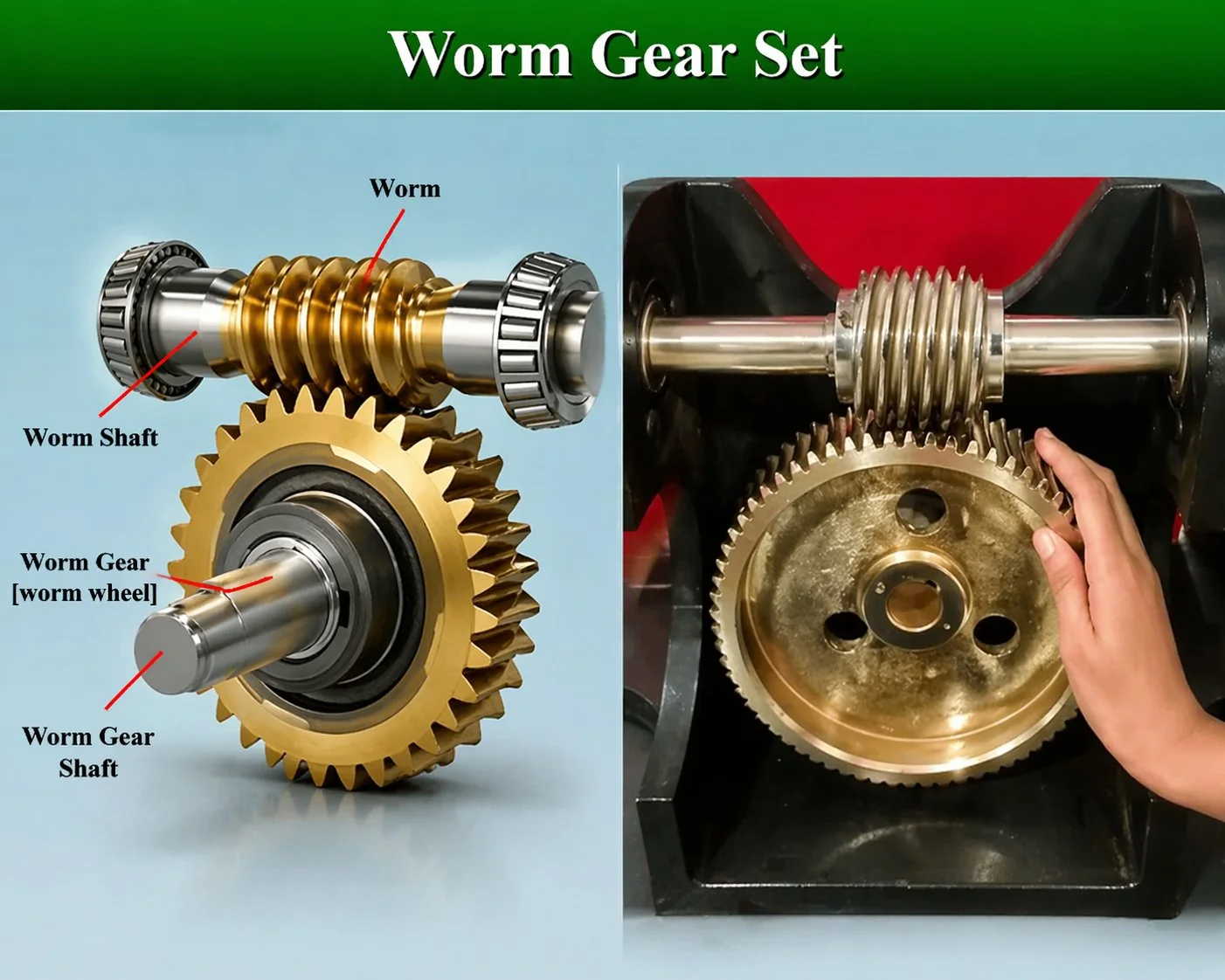
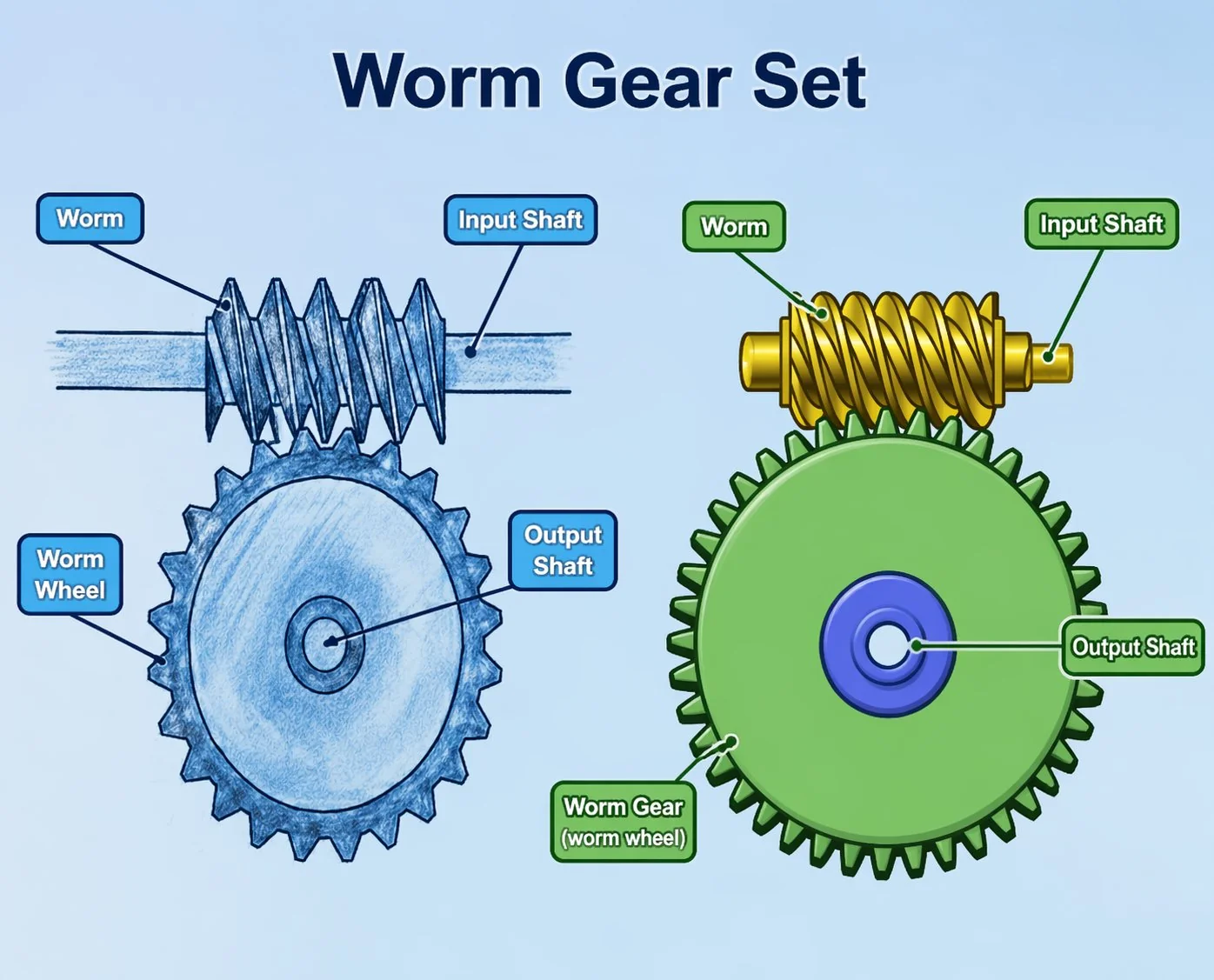
De wormwielaandrijving – een geïntegreerde eenheid met een wormwielpaar, een zwenklager en een afgedichte behuizing – is de standaard geworden voor zonnevolgsystemen omdat deze alle drie de vereisten in één enkele, eenvoudig te monteren module vervult.
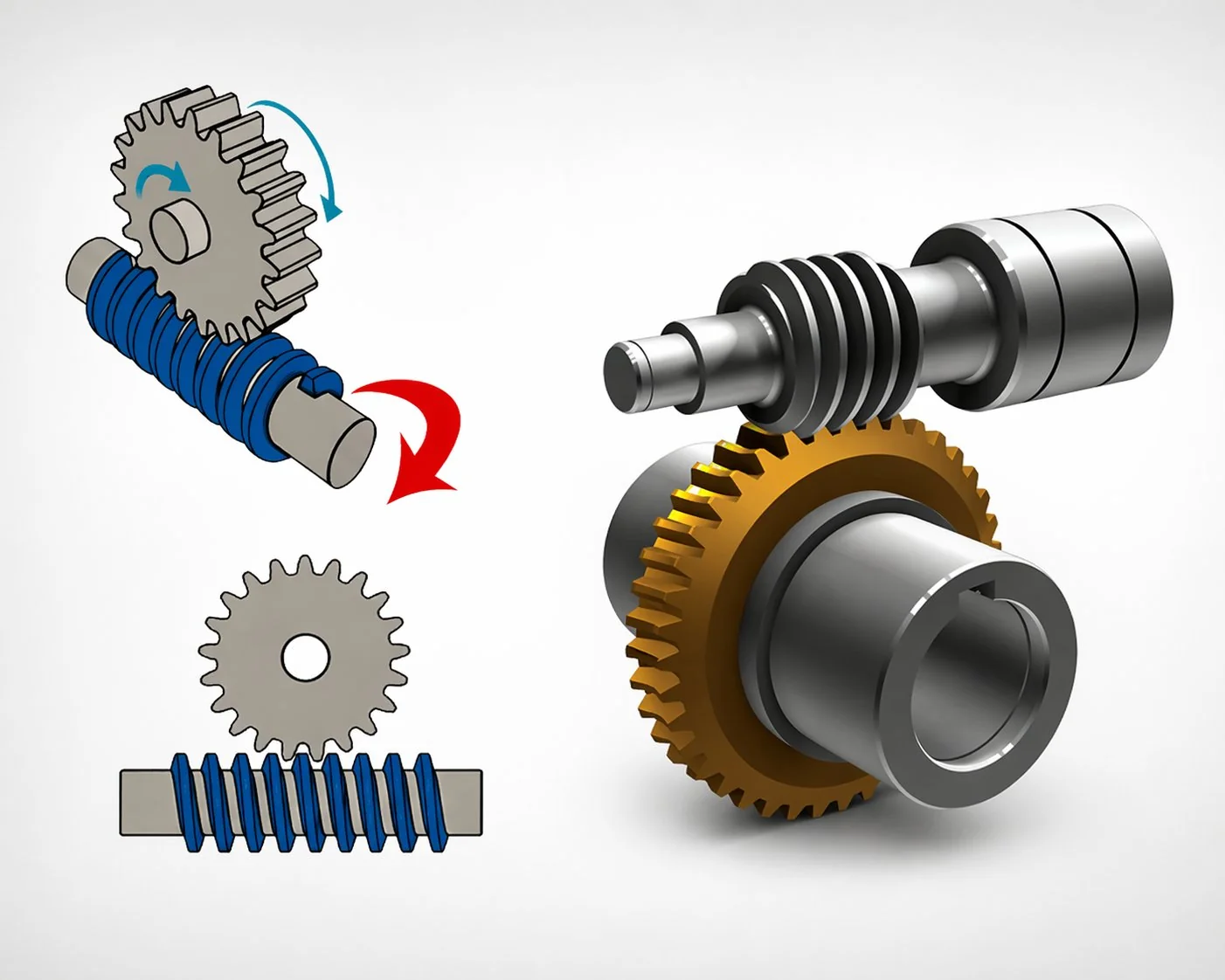
Het zelfvergrendelende mechanisme houdt het paneel in de gewenste hoek, zelfs bij windvlagen, zonder dat de motor hoeft te werken. De wormwielmotor is 85 tot 95 procent van de tijd uitgeschakeld; de wormwieloverbrenging past de positie elke 5 tot 15 minuten in kleine stapjes aan en houdt deze vervolgens vast. Tijdens een storm kan de overbrenging plat (horizontaal) komen te liggen, waarna het zelfvergrendelende mechanisme deze uren of zelfs dagenlang in die positie houdt.
De zon beweegt met 15 graden per uur. Een wormwieloverbrenging met een verhouding van 60:1 en een kleine gelijkstroommotor met 30 omwentelingen per minuut produceert een vermogen van 0,5 omwenteling per minuut – 3 graden per minuut op de volgas. De controller stuurt de wormwielmotor elke 10 tot 15 minuten een paar seconden aan om de zon te volgen. De totale dagelijkse looptijd van de motor bedraagt 15 tot 45 minuten.
Zonnepanelen hebben een prestatiegarantie van 25 jaar. Het volgsysteem moet dezelfde levensduur hebben — geen gepland onderhoud, geen vervanging van wielen, en in veel gevallen geen smering. Dit vereist een levenslang afgedicht smeermiddel, UV-bestendige afdichtingen en corrosiebestendige behuizingen die meer dan 9000 dag/nacht thermische cycli doorstaan.
Model voor gebruik van zonsopgang tot zonsondergang — dagelijkse volgcyclus met een levensduur van 25 jaar.
Het wormwielmechanisme van de zonnevolger heeft een uniek werkingsprofiel: zeer lichte belastingen tijdens het volgen (alleen motorkoppel, geen externe belasting), zeer zware statische belastingen tijdens winderige omstandigheden (volledige windkracht, motor uitgeschakeld) en een zeer voorspelbare dagelijkse cyclus die zich 365 dagen per jaar herhaalt gedurende 25 jaar. Het model van zonsopgang tot zonsondergang kwantificeert deze cyclus.
Het model onthult een cruciaal inzicht: de wormwielmotor draait slechts 120 uur per jaar (ochtendterugkeer + avondopbergen + intermitterende volgbewegingen) — maar de zelfvergrendelingsfunctie is 8.640 uur per jaar actief (de volledige 24 uur min de korte draaiperiodes van de motor). Over 25 jaar bedraagt het totale aantal draaiuren van de wormwielmotor slechts 3.000 — verwaarloosbaar laag voor mechanische slijtage. Het totale aantal uren in statische toestand (zelfvergrendeling onder windbelasting) bedraagt echter ongeveer 216.000 uur. De ontwerpuitdaging is niet zozeer mechanische slijtage door beweging, maar statische corrosie, degradatie van de afdichtingen en de levensduur van het smeermiddel gedurende 25 jaar continue blootstelling aan de buitenlucht met minimale rotatie om het smeermiddel te herverdelen.
Windbelasting — het paneel als zeil en het wormwielpaar als anker
Een zonnepanelenarray is aerodynamisch vergelijkbaar met een vlakke plaat – een vorm die de hoogste luchtweerstandscoëfficiënt (Cd 1,1 tot 1,3 voor een vlakke plaat loodrecht op de wind) van alle constructies oplevert. De windstuwkracht op een enkelassige tracker van 60 m² bij een ontwerpwindsnelheid van 40 m/s is F = 0,5 × 1,225 × 40² × 1,2 × 60 = ongeveer 70.560 N (in het meest ongunstige geval, loodrecht op de wind). In de praktijk wordt de tracker plat opgevouwen (waardoor het effectieve oppervlak met 80 tot 90 procent afneemt) voordat extreme wind opsteekt, waardoor de werkelijke kracht in opgevouwen positie wordt teruggebracht tot ongeveer 7.000 tot 14.000 N.
Het koppel bij de zwenkaandrijving is afhankelijk van de momentarm tussen het drukpunt van de windkracht en de rotatieas van de volger. Voor een enkelassige volger met een koppelbuis van 12 meter is de momentarm ongeveer 1 tot 3 meter (excentriciteit tussen het krachtcentrum en de as), wat resulteert in een windkoppel van 7.000 tot 42.000 N·m in de strekstand. Het wormwielpaar moet dit koppel statisch weerstaan door middel van zelfvergrendeling. De zelfvergrendelingscapaciteit moet het maximale ontwerpwindkoppel met een veiligheidsfactor van 1,5 tot 2,0 overschrijden volgens de constructienormen (ASCE 7, Eurocode 1).
Een Koreaanse ontwikkelaar van zonneparken installeerde 2400 enkelassige trackers op een fotovoltaïsche installatie van 50 MW. Elke tracker maakte gebruik van een wormwielaandrijving met een nominale houdkoppel van 3500 N·m. In het derde jaar bracht tyfoon Hinnamnor (september 2022) aanhoudende winden van 45 m/s naar de locatie. Alle trackers waren plat opgevouwen voordat de tyfoon arriveerde. Bij een inspectie na de tyfoon werden bij 18 trackers panelen aangetroffen die 15 tot 25 graden gedraaid waren ten opzichte van de opgevouwen positie – het zelfvergrendelingsmechanisme was door de extreme windkracht losgeraakt. Onderzoek wees uit dat het berekende windkoppel bij 45 m/s op de opgevouwen panelen 4200 N·m bedroeg – 20 procent meer dan het nominale houdkoppel van 3500 N·m. De oorspronkelijke specificatie ging uit van een ontwerpwindsnelheid van 35 m/s (de tyfoon met een herhalingsperiode van 50 jaar op de locatie), maar de daadwerkelijke tyfoon overtrof dit met 29 procent. Er ontstond geen structurele schade (de panelen waren weliswaar gekanteld, maar niet losgeraakt), maar de 18 trackers moesten handmatig opnieuw worden gepositioneerd en uitgelijnd. Corrigerende maatregel: 18 zwenkaandrijvingen werden vervangen door exemplaren met een nominale waarde van 6000 N·m. De overige 2382 trackers behielden de aandrijvingen van 3500 N·m (die standhielden bij een windsnelheid van 45 m/s – de 18 storingen deden zich voor aan de windzijde van de installatie, waar windversnelling lokaal hogere krachten veroorzaakte). Les: het houdkoppel van de zwenkaandrijving van de wormwieloverbrenging van de zonnetracker moet worden gespecificeerd voor de extreme windomstandigheden, niet voor de gemiddelde ontwerpwindsnelheid – en trackers aan de rand van grote installaties ondervinden 15 tot 30 procent hogere windbelastingen dan trackers in het midden van de installatie vanwege windgeleiding.
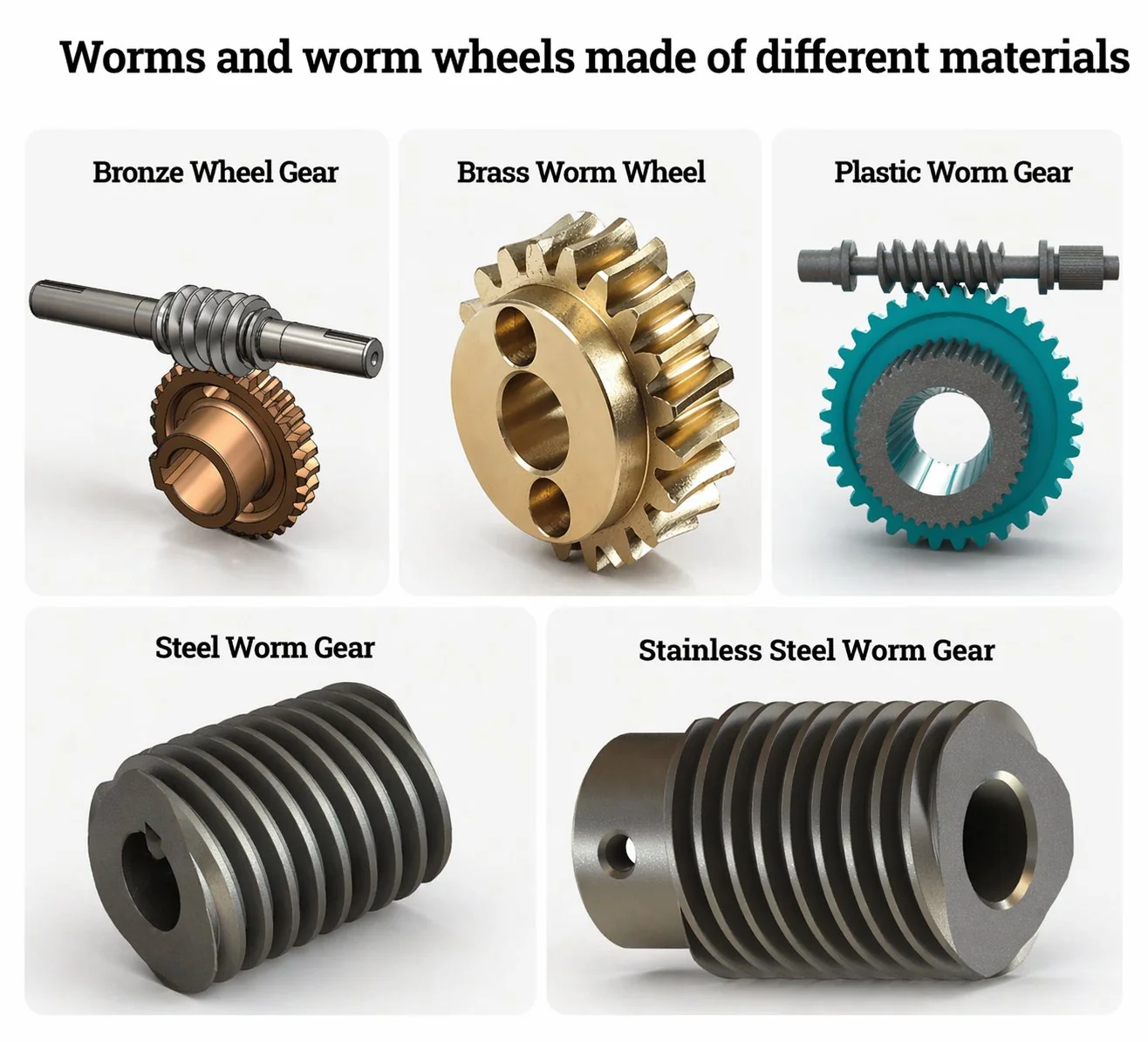
Drie specificatievoorbeelden voor wormwielaandrijvingen van zonvolgsystemen
Casus 1 — Koreaans zonne-energiepark: 2400 enkelassige trackers, tyfoonzone, levensduur van 25 jaar
Voor een Koreaans zonnepark van 50 MW werden wormwieloverbrengingen voorgeschreven voor 2400 enkelassige trackers. Paneeloppervlak per tracker: 60 m² (24 modules × 2,5 m²). Lengte van de torsiebuis: 12 meter. Ontwerpwindsnelheid: 45 m/s (gecorrigeerd na tyfoon Hinnamnor). Vereist zelfvergrendelend houdkoppel: 6000 N·m (randrijen), 4500 N·m (binnenrijen). Trackingsnelheid: 0,5 RPM. Wormwieloverbrenging: enkelvoudige start, module 3, hartafstand 80 mm, geïntegreerd zwenklager (Ø300 mm), overbrengingsverhouding 62:1. Motor: 24 V DC, 100 W. Materiaal: verzinkte worm, fosforbrons tandwiel. Afdichting: FKM dubbele lip met UV-bestendig elastomeer, IP66. Smeermiddel: synthetisch polyureum (levenslang afgedicht – geen hersmering nodig gedurende 25 jaar). Behuizing: thermisch verzinkt gietijzer. Kosten per zwenkaandrijving: 280 USD (randrijversie 6.000 N·m), 195 USD (binnenversie 4.500 N·m). Totale kosten zwenkaandrijving voor 2.400 trackers: circa 520.000 USD. Jaarlijkse energiebesparing door tracking ten opzichte van vaste helling: circa 14 miljoen kWh × 0,08 USD = 1.120.000 USD per jaar – de investering in zwenkaandrijving is in minder dan 6 maanden terugverdiend.
Casus 2 — Japanse daktracker met dubbele as: 10 m², gebouwgemonteerd, esthetisch
Een Japans bedrijf gespecialiseerd in in gebouwen geïntegreerde zonne-energiesystemen heeft wormwielaandrijvingen gespecificeerd voor een tweeassige daktracker (4 modules, 10 m²). Twee aandrijvingen per tracker: één voor azimut (horizontale rotatie) en één voor elevatie (kanteling). De dakinstallatie vereiste compacte afmetingen (de aandrijving mag niet buiten het oppervlak van de tracker uitsteken), een laag geluidsniveau (woongebouw – minder dan 45 dB(A) tijdens het volgen) en een esthetische behuizing (gepoedercoat in dezelfde kleur als het frame van de tracker). Ontwerpwindsnelheid: 35 m/s. Houdkoppel per as: 800 N·m. Wormwielaandrijving: enkelvoudige start, module 2, hartafstand 50 mm, geïntegreerd lager Ø150 mm, overbrengingsverhouding 50:1. Motor: 12 V DC, 30 W. Materiaal: verzinkte worm, POM-wiel (geluidsreductie – POM op 38 dB(A) versus brons op 48 dB(A) tijdens het volgen). Smeermiddel: synthetisch polyureum, levenslang afgedicht. Behuizing: gepoedercoat aluminium (gewichtsbesparing voor de structurele belasting van het dak). Kosten per zwenkaandrijving: 85 USD. Twee per tracker: 170 USD. Bekijken wormwieloverbrenging Opties voor zonvolgsystemen met één as en met twee assen.
Casus 3 — Vietnamese drijvende zonnepanelen: enkelassig, IP68 waterdicht, corrosiebestendig
Een Vietnamese ontwikkelaar van drijvende zonnepanelen heeft wormwielaandrijvingen gespecificeerd voor 800 enkelassige trackers op het wateroppervlak van een reservoir. De drijvende installatie bracht uitdagingen met zich mee die bij trackers op de grond niet voorkomen: periodieke onderdompeling tijdens golfslag en hevige regenval (IP68 vereist), corrosie door zoet water als gevolg van permanente blootstelling aan vochtigheid en algengroei op de behuizing. Paneeloppervlak per tracker: 40 m² (16 modules). Ontwerpwindsnelheid: 30 m/s (binnenwaterreservoir – lager dan aan de kust). Houdkoppel: 2800 N·m. Wormwielaandrijving: enkelvoudige start, module 2,5, hartafstand 63 mm, geïntegreerd lager Ø200 mm, overbrengingsverhouding 55:1. Materiaal: 304 roestvrijstalen worm (permanente blootstelling aan water), fosforbrons wiel. Afdichting: IP68 dubbele mechanische afdichting met drukvetkamer. Behuizing: epoxygecoat gietijzer van maritieme kwaliteit met aangroeiwerende verf. Kosten per zwenkaandrijving: 340 USD (de IP68- en roestvrijstalen specificatie kostte 60 procent meer dan de equivalente versie voor montage op het land, die 195 USD kostte). Totaal voor 800 volgsystemen: 272.000 USD. De drijvende specificatie toont aan dat dezelfde wormwieloverbrenging ook geschikt is voor installaties op het wateroppervlak — de kernfuncties voor zelfvergrendeling en volging zijn identiek, waarbij de bescherming tegen weersinvloeden is verbeterd om aan de eisen van onderdompeling te voldoen.
Veelgestelde vragen
Vraag: Kan een wormwielaandrijving van een zonnevolgsysteem echt 25 jaar meegaan zonder opnieuw te hoeven smeren?
Met synthetisch polyureumvet in een goed ontworpen behuizing is het inderdaad mogelijk om de motor gedurende 25 jaar slechts 3000 uur te laten draaien, wat minder is dan een jaar voor een typische industriële versnellingsbak. De levensduur van het vet bij deze lichte belasting en gematigde temperatuur (buitentemperatuur) is meer dan 25 jaar. De beperkende factor is niet de degradatie van het vet, maar de integriteit van de afdichting. Als de afdichting defect raakt en er water binnendringt, emulgeert het vet en begint corrosie. FKM-afdichtingen met een UV-bestendige samenstelling behouden hun integriteit gedurende 15 tot 20 jaar bij blootstelling aan de buitenlucht. Na 15 jaar is een visuele inspectie van de afdichting en eventueel bijvullen van het vet via een smeernippel een verstandige voorzorgsmaatregel – dit kost ongeveer 15 minuten extra per machine.
V: Hoe bereken ik het windkoppel op mijn volgsysteem voor de dimensionering van de zwenkaandrijving?
De windsnelheid T_wind bij de wormwieloverbrenging = F_wind × L_arm. F_wind = 0,5 × ρ × v² × Cd × A_eff. Voor een ingeklapte (platte) tracker: ρ = 1,225 kg/m³, Cd = 0,1 tot 0,2 (platte plaat met een hoek bijna nul graden), A_eff = paneeloppervlak × cos(inklaphoek). L_arm = afstand van de rotatieas tot het drukpunt (doorgaans 0,5 tot 2 meter voor trackers met één as, afhankelijk van de symmetrie van de paneelopstelling). Pas een veiligheidsfactor van 1,5 toe volgens ASCE 7 of Eurocode 1. Voor trackers met een randopstelling, vermenigvuldig met 1,2 tot 1,3 voor windgeleiding. Het kritieke geval is meestal de ingeklapte positie tijdens extreme wind – niet de volgpositie tijdens normaal bedrijf (trackers worden ingeklapt voordat extreme wind optreedt).
V: Waarom gebruiken sommige zonvolgsystemen lineaire actuatoren in plaats van zwenkaandrijvingen?
Lineaire actuatoren (elektrische cilinders) worden gebruikt op kleinere volgsystemen (met een paneeloppervlakte van minder dan 30 m²) waar het windkoppel binnen het stuwkrachtvermogen van de lineaire actuator valt. Lineaire actuatoren zijn eenvoudiger dan wormwielaandrijvingen en goedkoper voor kleine panelen, maar zijn niet schaalbaar naar grote volgsystemen omdat de benodigde stuwkracht toeneemt met het paneeloppervlak, terwijl de diameter en slag van de cilinder van de lineaire actuator onpraktisch worden boven een koppel van ongeveer 3000 N·m. Wormwielaandrijvingen schalen efficiënt tot een houdkoppel van meer dan 20.000 N·m en domineren de markt voor grootschalige volgsystemen (40 tot meer dan 100 m² per volgsysteem). De twee technologieën bestaan naast elkaar: lineaire actuatoren voor residentiële en kleine commerciële toepassingen, wormwielaandrijvingen voor grootschalige toepassingen.
V: Wat gebeurt er als het zelfvergrendelingsmechanisme het begeeft tijdens een windvlaag?
De zonnepanelen roteren ongecontroleerd vanuit de opbergpositie, waardoor het effectieve windoppervlak toeneemt van bijna nul (vlak) tot het volledige paneeloppervlak (loodrecht op de wind). Dit verhoogt de windkracht aanzienlijk – van 7.000 N in de opbergpositie tot 70.000 N loodrecht op de wind – wat een structurele overbelasting veroorzaakt die de torsiebuis kan buigen, de paneelklemmen kan scheuren of de fundering van de tracker kan ontwortelen. Het falen van de zelfvergrendeling tijdens een windvlaag is een scenario van structurele schade, niet slechts een onderhoudsprobleem. Ontwerp het zelfvergrendelingskoppel van de wormwieloverbrenging met een veiligheidsfactor van 1,5 tot 2,0 boven het berekende extreme windkoppel. Test de zelfvergrendeling tijdens de fabrieksacceptatie op 150 procent van het nominale houdkoppel – de test moet na 1 uur statische belasting geen rotatie meer laten zien.
V: Wat zijn de gemiddelde kosten van een aandrijving voor een zonnevolgsysteem per watt aan zonnevermogen?
Voor grootschalige, enkelassige volgsystemen: de aandrijfas kost 195 tot 350 USD per volgsysteem, en elk volgsysteem ondersteunt 15 tot 30 kW aan zonne-energiecapaciteit. Dit komt neer op ongeveer 0,007 tot 0,023 USD per watt aan geïnstalleerde zonne-energiecapaciteit – ruwweg 1 tot 3 procent van de totale kosten van het volgsysteem en 0,3 tot 0,8 procent van de totale kosten van de zonne-energiecentrale. De aandrijfas is een van de goedkoopste componenten per watt, maar een van de componenten met de grootste gevolgen als deze defect raakt (een defecte aandrijfas legt een volledig volgsysteem plat, waardoor 15 tot 30 kW aan energieopwekking verloren gaat totdat deze is gerepareerd).
De wormwielaandrijvingen van zonnevolgsystemen werken in een uniek gebruiksregime dat geen enkele andere toepassing in deze serie evenaart: extreem lage mechanische slijtage (3.000 motoruren over 25 jaar) gecombineerd met een extreem hoge milieubelasting (216.000 uur statische blootstelling buitenshuis met continue windbelasting). Het model voor gebruik van zonsopgang tot zonsondergang vertaalt deze unieke cyclus naar de belangrijkste specificatieparameters: zelfvergrendelend houdkoppel bij winderige omstandigheden (de dominante ontwerpkracht), levensduur van afdichtingen en smeermiddel voor 25 jaar onderhoudsvrije blootstelling buitenshuis (de belangrijkste beperkende factor voor de levensduur) en UV- en corrosiebestendigheid voor tientallen jaren gebruik. De wormwielaandrijving is de standaard geworden voor grootschalige zonnevolgsystemen, omdat geen enkele andere aandrijftechnologie zelfvergrendelende windbestendigheid, ultrasnelle volgmogelijkheid en 25 jaar duurzaamheid buitenshuis in één geïntegreerde module biedt tegen de kosten die de zonne-energiesector vereist.
Voor fabrikanten van zonvolgsystemen en ontwikkelaars van zonneparken berekent onze technische afdeling het windkoppel op basis van uw paneelconfiguratie en windgegevens van de locatie. Standaardcatalogus zwenkaandrijving wormwielsets Geschikt voor toepassingen met één of twee assen, met lagerdiameters van Ø150 tot Ø400 mm en een houdkoppel van 800 tot 8.000 N·m. Dien een aanvraag in. Specificaties van de aandrijving met zonnevolgsysteem met paneeloppervlakte, ontwerpwindsnelheid, type volgsysteem (enkel-/dubbelassig) en klimaatzone van de locatie.
Specificaties voor zwenkaandrijvingen voor zonnevolgsystemen?
Stuur ons de volgende gegevens: paneeloppervlakte, ontwerpwindsnelheid, type tracker, klimaatomstandigheden ter plaatse en aantal. Wij berekenen het windkoppel, adviseren de juiste koppelklasse en leveren een verificatie van de levensduur van 25 jaar voor uw installatie.
Redacteur: Cxm