Guía de ingeniería de aplicaciones de Korea Ever-Power
Tornillo sin fin y rueda helicoidal para actuadores de válvulas de compuertas y presas.
Una compuerta de control de inundaciones en un río coreano soporta una columna de agua de 4 metros (40 kN de fuerza hidrostática por metro de ancho de compuerta) contra un engranaje helicoidal que puede permanecer inmóvil durante 11 meses entre operaciones. Cuando llega el monzón y la compuerta debe abrirse, el engranaje helicoidal debe superar meses de fricción estática, corrosión y acumulación de sedimentos al primer comando. Si no se abre, no es un problema de mantenimiento, sino una inundación.
Las compuertas, válvulas de presa, actuadores de tuberías forzadas y compuertas de control de inundaciones utilizan pares de engranajes helicoidales porque ningún otro tipo de engranaje combina la retención de presión de agua autoblocante con la capacidad de anulación manual mediante volante. El protocolo de inmersión y exposición a inundaciones clasifica las instalaciones de actuadores en cuatro niveles: zona de salpicaduras, inundación intermitente, inmersión permanente e inmersión presurizada, y asigna a cada uno la clasificación IP requerida, la protección contra la corrosión, el tipo de sello y la especificación de protección catódica. El autoblocante mantiene la compuerta en cualquier posición contra la presión del agua sin un mecanismo de bloqueo independiente. La anulación manual de emergencia mediante volante es obligatoria para todas las compuertas de presas y de control de inundaciones porque la falla de energía durante una inundación es el escenario más probable que requiere la operación de la compuerta. La severidad de la corrosión varía de leve (canal de riego de agua dulce) a moderada (estuario salobre) y severa (defensa costera de agua de mar), lo que requiere una progresión de materiales desde acero galvanizado a acero inoxidable 316L y acero inoxidable dúplex con protección de ánodo de sacrificio.
¿Por qué las compuertas y las válvulas de las presas utilizan actuadores de engranajes helicoidales?
La infraestructura de control de agua —presas de riego, compuertas, diques, desagües de embalses y barreras contra las mareas— opera en la intersección de un alto par motor (movimiento de pesadas compuertas de acero contra la presión del agua), un funcionamiento poco frecuente (algunas compuertas solo funcionan durante las crecidas estacionales) y una fiabilidad absoluta (un fallo durante una inundación puede provocar pérdidas humanas y materiales). El par de engranajes helicoidales cumple con estos tres requisitos gracias a su sistema de bloqueo automático de posición, una alta relación de una sola etapa para la anulación manual y una simplicidad mecánica que le permite sobrevivir a años de inactividad.
Tres propiedades convierten al tornillo sin fin y a la rueda helicoidal en el estándar para los actuadores de compuertas de agua en todos los continentes y en todos los climas.
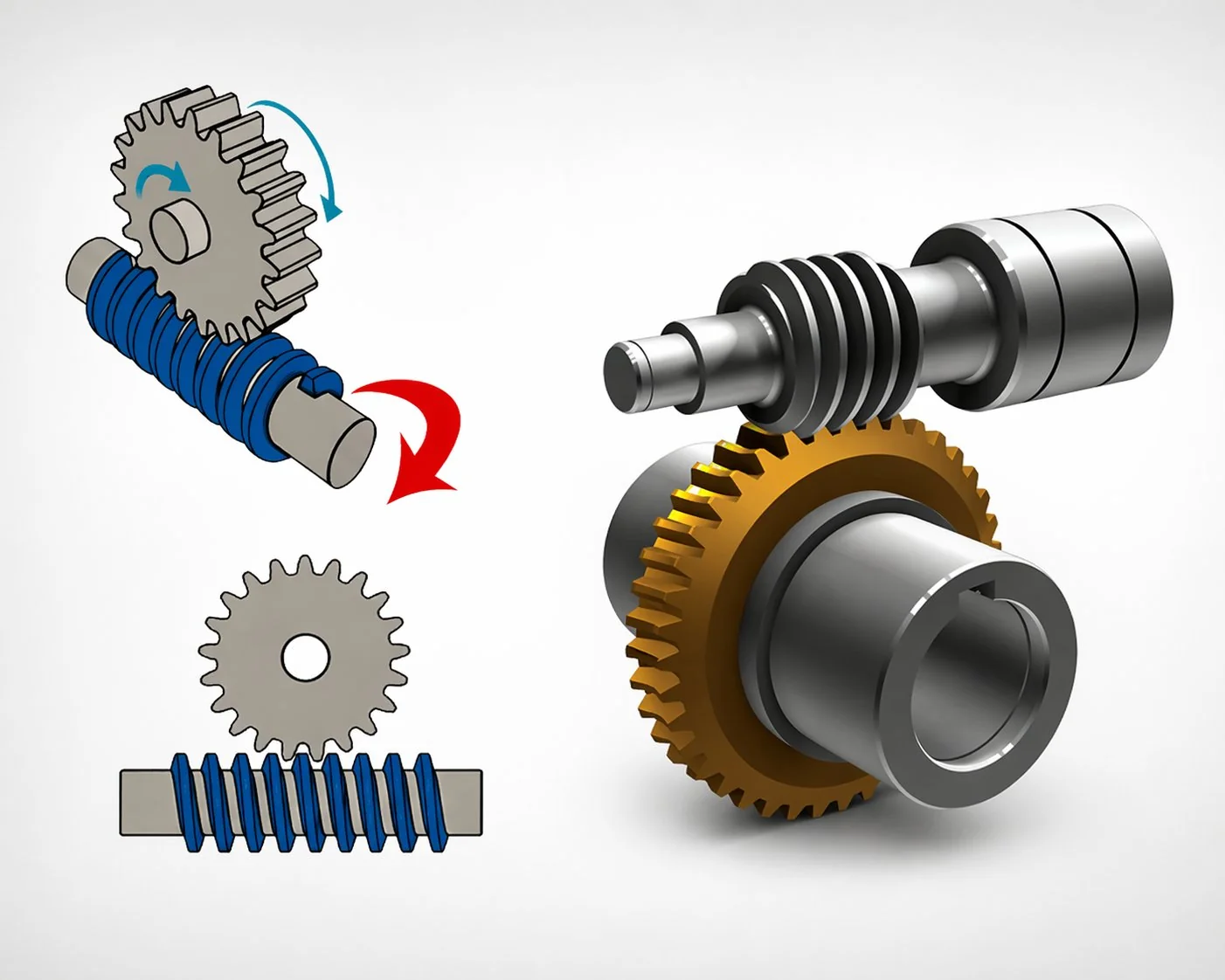
Una compuerta parcialmente abierta experimenta una presión de agua asimétrica que intenta abrirla o cerrarla por completo (según la geometría de la compuerta). El sistema de autobloqueo mantiene la compuerta en cualquier posición intermedia frente a esta presión, lo que permite un control preciso del flujo sin necesidad de un bloqueo hidráulico o un pestillo mecánico adicional.
Cuando falla el motor eléctrico (algo común durante las inundaciones, cuando la infraestructura eléctrica resulta dañada), un operario puede accionar el mismo engranaje helicoidal mediante un volante. La elevada relación de transmisión (de 40:1 a 100:1) convierte el par motor del volante en los miles de newton-metros necesarios para mover una compuerta pesada contra la presión del agua.
Algunas compuertas permanecen cerradas entre 6 y 11 meses entre temporadas de operación. El engranaje helicoidal debe sobrevivir a este periodo de inactividad —resistiendo la corrosión, la intrusión de sedimentos y la fricción estática— y funcionar de manera confiable a la primera orden cuando llega la crecida. Ningún otro tipo de engranaje se somete a pruebas de inactividad prolongada como parte de sus especificaciones de rutina.
Protocolo de inmersión y exposición a inundaciones: desde el nivel de instalación hasta la especificación de protección.
El principal desafío en la especificación de pares de engranajes helicoidales para compuertas es la exposición al agua, no solo a salpicaduras o lluvia (a la que también se enfrentan los operadores de compuertas en el Artículo A09), sino también a la inmersión parcial o total durante el funcionamiento normal o en caso de inundación. El protocolo de inmersión clasifica las instalaciones de actuadores según su exposición al agua y asigna a cada nivel la protección requerida.
El aumento de costes según el nivel de inmersión es drástico: un actuador de engranaje helicoidal para zona de salpicaduras S1 puede costar entre 400 y 800 USD; un actuador para inmersión presurizada S4 con acero inoxidable dúplex y sellos de presión compensada puede costar entre 8000 y 15 000 USD. La especificación debe coincidir con el nivel de inmersión real de la instalación: sobredimensionarla supone un derroche en el presupuesto de infraestructura; subdimensionarla provoca fallos por corrosión en un plazo de 2 a 5 años en una ubicación que puede requerir acceso de buzos o el vaciado del depósito para su sustitución.
Anulación manual de emergencia: funcionamiento mediante volante durante un fallo eléctrico.
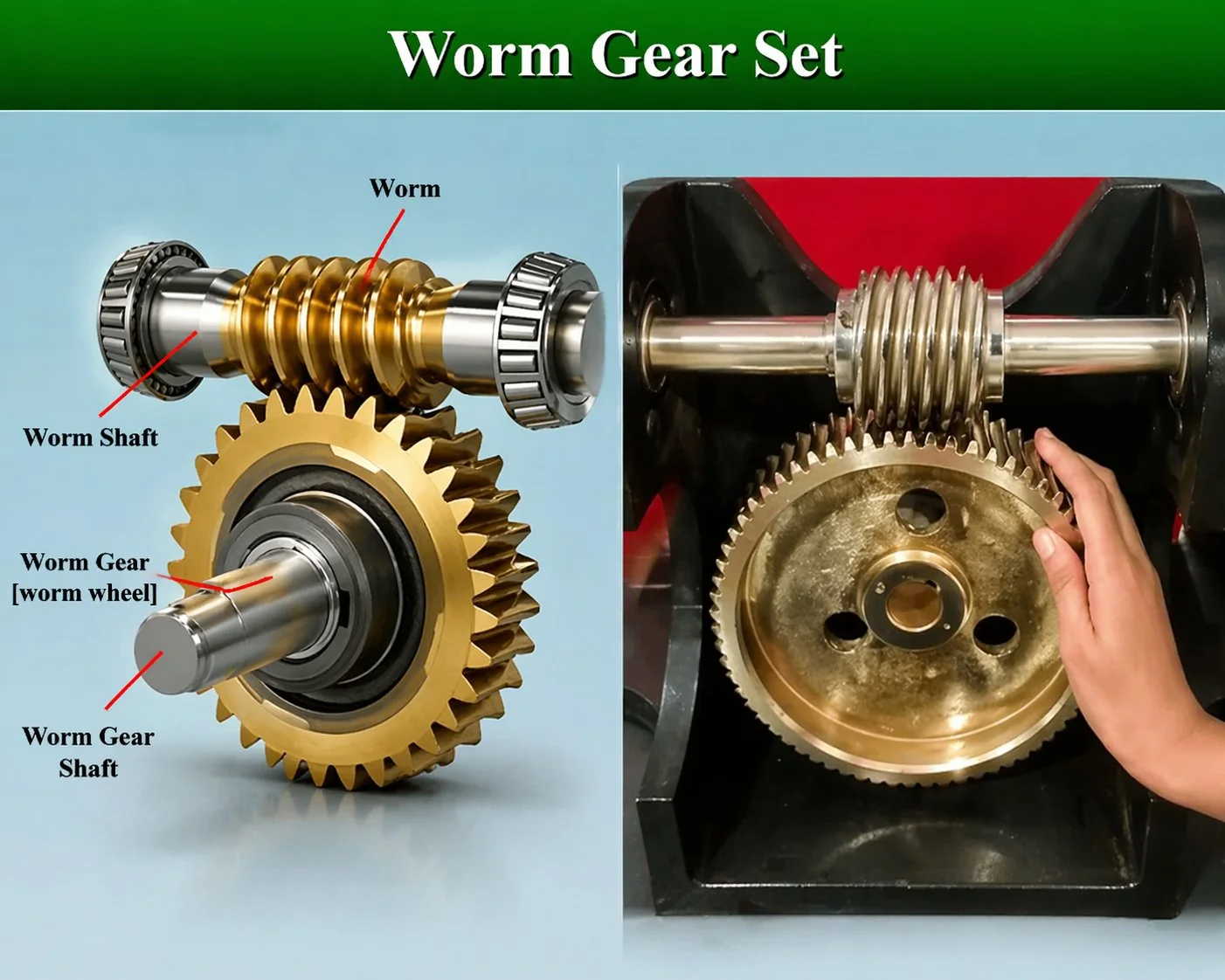
Lo más probable es que una compuerta de control de inundaciones deba operar durante una inundación. Lo más probable es que se produzca un fallo eléctrico durante una inundación, cuando el agua daña la infraestructura eléctrica aguas arriba. Por lo tanto, el control manual no es una medida de emergencia para eventos poco frecuentes, sino el modo de operación previsto durante los momentos más críticos de la vida útil de la compuerta.
Cómo funciona el control manual con el par de engranajes helicoidales. El actuador tiene dos vías de entrada al mismo eje sin fin: el motor eléctrico (funcionamiento normal) y un volante con mecanismo de desembrague (accionamiento manual). Al accionar el volante, el motor se desembraga y el operador hace girar el sinfín directamente mediante el volante. La elevada relación de transmisión del sinfín (normalmente de 60:1 a 100:1 para actuadores de compuertas) multiplica el par motor del volante: un operador que aplica una fuerza de 250 N en un volante de 400 mm (entrada de 100 N·m) a través de un par de engranajes sin fin con una relación de 80:1 genera 80 × 100 × 0,40 = 3200 N·m en el vástago de la compuerta. Esto es suficiente para mover la mayoría de las compuertas de riego y de control de inundaciones contra la presión normal del agua.
Tiempo de desplazamiento de la puerta en operación manual. Una compuerta que se abre en 2 minutos con accionamiento motorizado puede requerir de 15 a 30 minutos de accionamiento manual continuo. Para compuertas de inundación donde la apertura rápida es fundamental, algunas instalaciones ofrecen una conexión a un generador portátil (evitando el accionamiento manual) o un motor con respaldo de batería como solución intermedia entre el accionamiento manual completo y el accionamiento eléctrico completo.
Una autoridad coreana de gestión fluvial probó el accionamiento manual de 22 actuadores de compuertas durante la inspección anual previa al monzón. Las 22 compuertas habían permanecido cerradas entre 8 y 10 meses después de la temporada de monzones anterior. Resultado: 4 de los 22 actuadores no respondieron al volante; el par de engranajes helicoidales se atascó. La investigación reveló que el agua había penetrado en la carcasa con clasificación IP66 a través de los sellos labiales deteriorados durante los ciclos de congelación y descongelación invernales (la expansión del hielo dañó el borde del sello). Dentro de la carcasa, la grasa se había emulsionado y el tornillo sin fin de acero había desarrollado corrosión superficial, uniéndose a la rueda de bronce en el punto de contacto. El atasco no fue una falla catastrófica: un baño de aceite penetrante y un movimiento manual liberaron los 4 pares en 2 horas. Sin embargo, una demora de 2 horas en una compuerta durante una inundación real sería inaceptable. Acción correctiva: actualizar los 22 actuadores de IP66 a IP67 (sellos con clasificación de inmersión para el nivel de inundación intermitente S2, apropiado para actuadores que experimentan inmersión anual en inundaciones), e implementar un programa trimestral de rotación del volante (4 vueltas completas en cada dirección) para prevenir la corrosión durante los períodos de inactividad. El programa de ejercicios no tiene costo en piezas y requiere 15 minutos por compuerta por trimestre: 22 compuertas × 15 min × 4 trimestres = 22 horas de mano de obra por año para garantizar la preparación ante inundaciones de las 22 compuertas. Lección: los pares de engranajes helicoidales inactivos en la infraestructura de agua deben ejercitarse regularmente para prevenir la corrosión; la propiedad de autobloqueo que mantiene la compuerta también impide la liberación manual si las superficies de contacto se adhieren durante períodos estáticos prolongados.
Resistencia a la corrosión: agua dulce, estuario salobre y agua de mar.
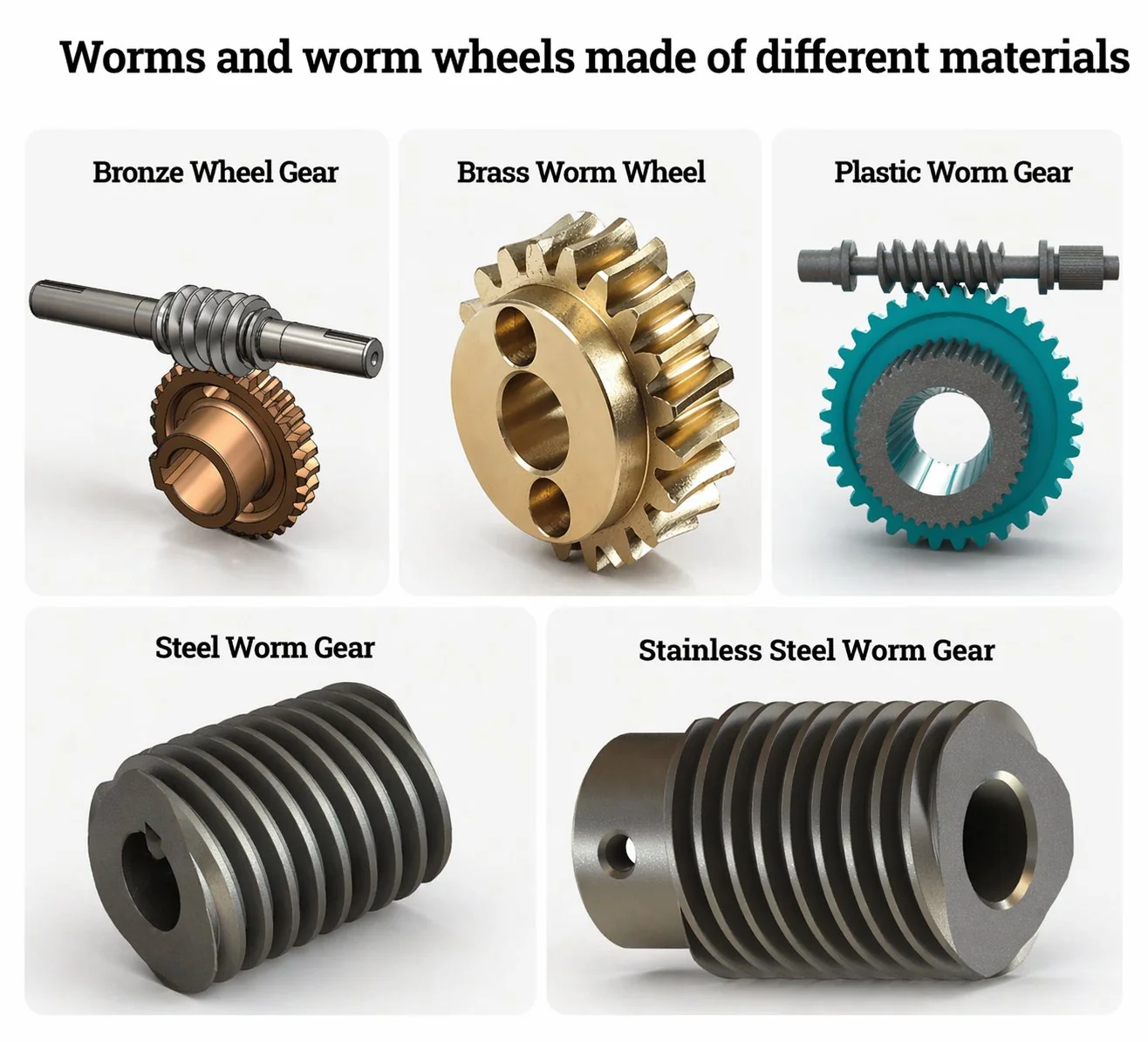
Tasa de corrosión: 0,02-0,05 mm/año en acero al carbono.
Gusano: Galvanizado en caliente o acero inoxidable 304.
Rueda: Bronce fosforoso CuSn12Ni (estándar: sin riesgo de deszincificación en agua dulce).
Vida: Entre 20 y 30 años de exposición a S1/S2.
Tasa de corrosión: 0,1-0,3 mm/año en acero al carbono.
Gusano: Acero inoxidable 316L (su contenido en molibdeno resiste la corrosión por cloruros).
Rueda: Bronce al aluminio CuAl10Fe5Ni5 (sin descincificación en agua clorurada).
Vida: 15-25 años con protección catódica.
Tasa de corrosión: 0,3-1,0 mm/año en acero al carbono.
Gusano: Acero inoxidable dúplex 2205 o Monel 400.
Rueda: Bronce de níquel y aluminio NAB (aleación marina con especificaciones militares).
Vida: 15-20 años con sistema de protección catódica por corriente impresa.
Tres cajas de engranajes helicoidales para compuertas y válvulas de presa
Caso 1 — Presa de riego coreana: compuerta de 3 m de ancho, zona de salpicaduras S1, accionamiento manual
Una autoridad coreana de gestión del agua agrícola especificó pares de engranajes helicoidales para 6 compuertas en una presa de riego que abastece a campos de arroz. Ancho de la compuerta: 3 metros. Altura de la compuerta: 2,5 metros. Altura del agua en el nivel máximo del embalse: 3,2 metros. Fuerza hidrostática sobre la compuerta: 3,0 × 2,5 × 0,5 × 9.810 × 3,2 = 117.720 N. Empuje del vástago de la compuerta: aproximadamente 85.000 N (incluida la fricción). Par de salida del actuador en la tuerca del vástago: 4.200 N·m. Par de engranajes helicoidales: arranque simple, módulo 6, distancia entre centros 160 mm, relación 60:1. Motor: trifásico de 2,2 kW. Accionamiento manual: volante de 500 mm (par de entrada 125 N·m con una fuerza manual de 250 N, salida 125 × 60 × 0,42 = 3150 N·m — suficiente para una altura de agua normal pero marginal a la altura máxima). Nivel de inmersión: S1 (actuador montado en la cresta de la presa, por encima del nivel máximo de agua). Material: tornillo sin fin galvanizado en caliente, rueda de bronce fosforoso. Sello: IP66, doble labio. Pintura: ISO 12944 C3 (atmósfera rural suave). Costo por par de engranajes de tornillo sin fin del actuador: 580 USD. Programa de ejercicio trimestral: 4 vueltas en cada dirección para evitar la unión por inactividad. Vida útil prevista: 25 años.
Caso 2 — Compuerta de inundación por tifón en Japón: 6 m de ancho, inundación intermitente S2, respaldo de batería.
Una agencia de gestión de inundaciones de una prefectura japonesa especificó pares de engranajes helicoidales para 4 compuertas de inundación en un río urbano en una ciudad costera propensa a tifones. Ancho de la compuerta: 6 metros. Altura máxima del agua durante la marejada ciclónica: 5,5 metros. Empuje del vástago de la compuerta: 220.000 N. Par de salida del actuador: 12.800 N·m. El pedestal del actuador estaba 1,2 metros por encima del nivel normal del agua pero sumergido durante los eventos de marejada ciclónica (S2 — inundación intermitente, duración de la inmersión de 6 a 24 horas por evento, 2 a 4 eventos por año). Par de engranajes helicoidales: arranque simple, módulo 8, distancia entre centros 200 mm, relación 80:1. Material: tornillo sin fin de acero inoxidable 316L, rueda de bronce de aluminio CuAl10Fe5Ni5 (agua salobre — desembocadura del río, influencia de las mareas). Sello: IP67, labio de PTFE más laberinto. Pintura: ISO 12944 C4-H (costero). Protección catódica: ánodos de sacrificio de zinc atornillados al exterior de la carcasa (se reemplazan cada 5 años). Accionamiento manual: volante de 600 mm. Adicionalmente: motor con batería de respaldo de 48 V para operación de emergencia durante fallas de energía, que proporciona 3 ciclos completos de apertura y cierre con una carga completa de la batería. Costo por par de engranajes helicoidales del actuador: 3200 USD. Sistema de respaldo de batería: 4500 USD por puerta. actuador de engranaje helicoidal Opciones para aplicaciones de compuertas y de infraestructura hídrica.
Caso 3 — Esclusa del delta del Mekong vietnamita: 2 m de ancho, agua salobre mareal S2, costo limitado
Una autoridad provincial de agua vietnamita especificó pares de engranajes helicoidales para 12 pequeñas compuertas que controlan la intrusión de agua salada en los canales agrícolas del delta del Mekong. Ancho de la compuerta: 2 metros. Altura de agua: 1,8 metros (diferencial de marea). Empuje del vástago de la compuerta: 28 000 N. Par de salida del actuador: 1400 N·m. Sumersión: S2 (sumergida por marea dos veces al día durante 2 a 4 horas durante las mareas vivas). El agua salobre (salinidad de 5 a 15 partes por mil) requería materiales resistentes a la corrosión, pero el presupuesto provincial limitó la especificación. Par de engranajes helicoidales: de un solo arranque, módulo 5, distancia entre centros 125 mm, relación 50:1. Material: tornillo sin fin de acero inoxidable 304 (menos resistente a la corrosión que el 316L pero adecuado a salinidad moderada y significativamente más barato), rueda de bronce fosforoso (aceptable para agua salobre a este nivel de salinidad; el riesgo de deszincificación es bajo por debajo de 15 ppt). Sello: IP67, labio de EPDM con laberinto. Protección catódica: ánodos de sacrificio de zinc (reemplazados anualmente debido a la alta tasa de disolución en agua salobre). Accionamiento manual: volante de 400 mm. Costo por par: 720 USD. Vida útil prevista: 15 años con reemplazo anual de ánodos (18 USD por juego de ánodos). Inspección anual: funcionamiento del volante (trimestral), estado del sello (anual), consumo de ánodos (anual). Presupuesto total de mantenimiento a 15 años por compuerta para el sistema de engranaje helicoidal: aproximadamente 540 USD (ánodos + mano de obra) — aproximadamente el 75 por ciento del costo inicial del par.
Preguntas frecuentes
P: ¿Cómo puedo evitar que se atasque un par de engranajes helicoidales de una compuerta de esclusa que se encuentran inactivos?
Implemente un programa de ejercicios trimestral: gire el volante 4 vueltas completas en cada dirección (abrir y luego cerrar) para romper cualquier unión por corrosión en las superficies de contacto de los dientes. Aplique una capa delgada de compuesto antigripante (a base de zinc para agua dulce, a base de níquel para agua salobre/marina) a la rosca del tornillo sin fin accesible después de cada ejercicio. Para las compuertas que no se pueden ejercitar (sumergidas permanentemente S3/S4), especifique un compuesto antigripante de grado marino en el llenado de grasa original y aumente la densidad de corriente de protección catódica para suprimir la corrosión electroquímica que causa la unión. El programa de ejercicios es la acción de mantenimiento preventivo más eficaz para los pares de engranajes de tornillo sin fin de las compuertas de agua, y solo cuesta tiempo de mano de obra.
P: ¿Qué par motor produce el accionamiento manual mediante volante?
T_salida = F_mano × R_rueda × i × η. Para una instalación típica: F_mano = 250 N (esfuerzo sostenido de una mano), R_rueda = 0,25 m (rueda de 500 mm de diámetro), i = 80 (relación de engranaje helicoidal), η = 0,40 (eficiencia del par helicoidal de arranque único en la dirección de accionamiento). T_salida = 250 × 0,25 × 80 × 0,40 = 2000 N·m. Para una rueda manual de dos personas (extendiendo el radio de la rueda o utilizando una extensión de mango portátil), multiplique por la relación de fuerza. La mayoría de las compuertas de riego requieren de 1500 a 5000 N·m en el vástago, lo que se puede lograr con el funcionamiento estándar de la rueda manual. Las grandes compuertas que requieren más de 10 000 N·m pueden necesitar un multiplicador de engranajes portátil (un reductor manual de 2:1 a 5:1 entre el volante y el eje sin fin) o un motor con batería de respaldo para un funcionamiento manual práctico en un tiempo razonable.
P: ¿Cuánto tiempo prolonga la protección catódica la vida útil del par de engranajes helicoidales?
La protección catódica con el mantenimiento adecuado (ánodos de sacrificio o corriente impresa) detiene eficazmente la corrosión electroquímica, extendiendo la vida útil del par de engranajes helicoidales de 5 a 10 años (sin protección en agua salobre/marina) a 15 a 25 años. La protección funciona solo mientras los ánodos tengan material restante (sacrificio) o la fuente de alimentación esté funcionando (corriente impresa). Los ánodos de zinc de sacrificio en agua salobre suelen durar de 3 a 5 años antes de su reemplazo; en agua marina, de 2 a 3 años. El costo anual de reemplazo de ánodos (de 15 a 50 USD por juego de ánodos) es insignificante en comparación con el costo de reemplazo del par de engranajes helicoidales (de 700 a 15 000 USD, según el nivel de inmersión y el material). La protección catódica es la inversión de mantenimiento con mayor retorno de la inversión para pares de engranajes helicoidales de compuertas de agua sumergidas.
P: ¿Puede un par de engranajes helicoidales de compuerta de esclusa usar un tornillo sin fin de múltiples entradas para un desplazamiento más rápido de la compuerta?
Un tornillo sin fin de arranque múltiple proporcionaría un desplazamiento más rápido de la compuerta (mayor velocidad de salida para la misma velocidad del motor), pero perdería el autobloqueo: la presión del agua impulsaría la compuerta hacia atrás, abriéndola o cerrándola, cuando el motor se detuviera. Dado que el mantenimiento de posición con autobloqueo es la razón principal para usar un par de engranajes de tornillo sin fin en los actuadores de compuertas, no se utilizan configuraciones de arranque múltiple. El desplazamiento más rápido de la compuerta se logra aumentando la velocidad del motor (usando un motor de 4 polos en lugar de uno de 6 polos, o agregando un aumento de velocidad mediante variador de frecuencia) en lugar de cambiar la geometría del tornillo sin fin. La restricción del autobloqueo implica que todos los pares de engranajes de tornillo sin fin de las compuertas son de arranque simple; esta es una regla universal sin excepciones en los estándares de infraestructura hídrica a nivel mundial.
P: ¿Qué lubricante se debe utilizar en un par de engranajes helicoidales de una compuerta sumergida?
Para instalaciones S1 y S2 (salpicaduras e inmersión intermitente): grasa de complejo de litio de grado marino con paquete de inhibidores de corrosión, NLGI 2. Reengrasar anualmente a través de una boquilla de engrase. Para instalaciones S3 y S4 (sumergimiento permanente y presurizado): la carcasa se llena de aceite en lugar de grasa; el aceite proporciona una mejor protección contra la corrosión para las superficies sumergidas y permite la ecualización de la presión sin los espacios de aire que deja el empaque de grasa. La especificación del aceite es PAG sintético ISO VG 460 o 680 con paquetes de aditivos anticorrosión y antidesgaste verificados para la química del agua específica (agua dulce, salobre o de mar). El cambio de aceite se realiza durante los períodos de mantenimiento de drenaje (normalmente cada 5 a 10 años para las compuertas de embalse, anualmente para las compuertas de marea).
Los engranajes helicoidales de las compuertas y válvulas de presas operan en el extremo más extremo del espectro de exposición ambiental, desde compuertas de riego en zonas de salpicaduras hasta salidas de embalses permanentemente sumergidas y tuberías forzadas presurizadas para centrales hidroeléctricas. El protocolo de inmersión y exposición a inundaciones clasifica las instalaciones en cuatro niveles y asigna a cada uno la clasificación IP, la protección contra la corrosión, el tipo de sello y la protección catódica que determinan tanto el costo inicial como la vida útil de varias décadas. La anulación manual de emergencia mediante volante no es una característica de conveniencia, sino el modo de operación previsto durante eventos de inundación, cuando la infraestructura eléctrica tiene mayor probabilidad de fallar. La gestión de la inactividad mediante el ejercicio trimestral del volante evita la corrosión que convierte un engranaje helicoidal funcional en un mecanismo atascado en el peor momento posible. Para los operadores de infraestructuras hídricas, el engranaje helicoidal es el corazón mecánico del actuador de la compuerta, y su especificación, protección y mantenimiento determinan si la compuerta se abre cuando llega la inundación.
Para las agencias de infraestructura hídrica y los fabricantes de actuadores de compuertas, nuestro departamento de ingeniería clasifica el nivel de inmersión y recomienda el material, el sello y el paquete de protección catódica. Catálogo estándar juegos de engranajes helicoidales de alta resistencia Tamaños de actuadores de compuerta de cubierta desde 100 a 250 mm de distancia entre centros con paquetes de protección S1 a S3. Envíe un Especificación del actuador de la compuerta de esclusa con dimensiones de la compuerta, altura de la columna de agua, tipo de agua y nivel de inmersión de la instalación.
¿Cómo especificar pares de engranajes helicoidales para compuertas o válvulas de presa?
Indique las dimensiones de la compuerta, la altura de la columna de agua, el tipo de agua (dulce, salobre o salada), el nivel de inmersión de la instalación y si se requiere control manual o batería de respaldo. Clasificaremos el protocolo de inmersión y recomendaremos el material, el sello y el paquete de protección catódica.
Editor: Cxm