Guía de ingeniería de aplicaciones de Korea Ever-Power
Tornillo sin fin y rueda helicoidal para accionamientos de compuertas de HVAC y torres de refrigeración.
El sistema de climatización de un edificio comercial ajusta 48 compuertas motorizadas cientos de veces al día; cada ajuste consiste en una rotación lenta y precisa de 30 segundos, cambiando el ángulo de las aspas. El ventilador de una torre de refrigeración en la azotea gira continuamente durante 4000 horas cada verano, con una humedad del 100 % y neblina de agua tratada químicamente. Ambas aplicaciones comparten un mismo mecanismo de accionamiento: el par de engranajes helicoidales. Sin embargo, sus perfiles de funcionamiento son completamente diferentes: una se mueve en segundos y permanece en una posición fija durante horas; la otra funciona sin parar durante meses.
Los actuadores de compuertas de HVAC y los accionamientos de ventiladores de torres de refrigeración representan dos perfiles de funcionamiento de engranajes helicoidales fundamentalmente diferentes dentro del mismo ecosistema de servicios de edificios. Los actuadores de compuertas utilizan el engranaje helicoidal como un posicionador de precisión, ajustando el ángulo de las aspas en 30 a 90 segundos y manteniendo la posición durante horas entre ajustes mediante autobloqueo. Los accionamientos de ventiladores de torres de refrigeración utilizan el engranaje helicoidal como un reductor de velocidad continuo, funcionando de 3000 a 5000 horas por temporada de verano en una atmósfera saturada y químicamente agresiva. El mapa de perfil de carga estacional cuantifica cómo varía el funcionamiento a lo largo del año: pico de verano (100 % de carga, continuo), temporadas intermedias (50 a 70 %, intermitente) y mínimo de invierno (0 a 20 % o parada total). Este perfil estacional determina las horas de funcionamiento anuales, el número de ciclos térmicos y la duración de la exposición a la corrosión, factores que afectan al dimensionamiento del engranaje helicoidal, la programación de la lubricación y la especificación de materiales de forma diferente a las aplicaciones industriales de carga constante.
Dos funciones de los accionamientos de engranajes helicoidales en sistemas HVAC: posicionamiento de la compuerta y reducción de la velocidad del ventilador.
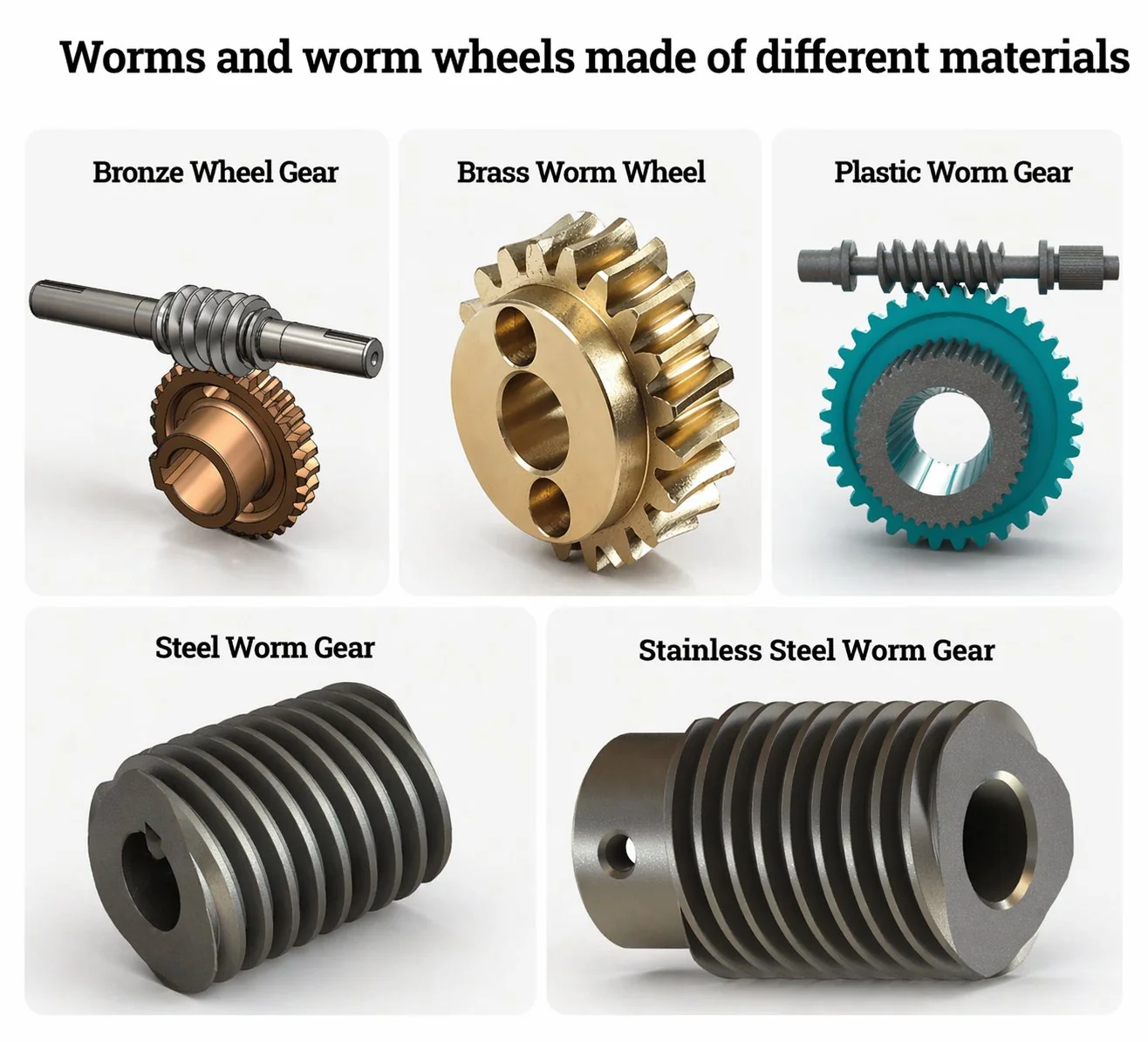
Los sistemas de climatización de edificios y la infraestructura de refrigeración industrial utilizan engranajes helicoidales en dos funciones distintas con características de funcionamiento opuestas. Comprender esta distinción es fundamental, ya que el enfoque de especificación difiere para cada función: un engranaje helicoidal de actuador de compuerta dimensionado para un funcionamiento continuo del ventilador estaría excesivamente sobredimensionado, y un engranaje helicoidal de accionamiento de ventilador especificado para posicionamiento intermitente fallaría en una sola temporada de refrigeración.
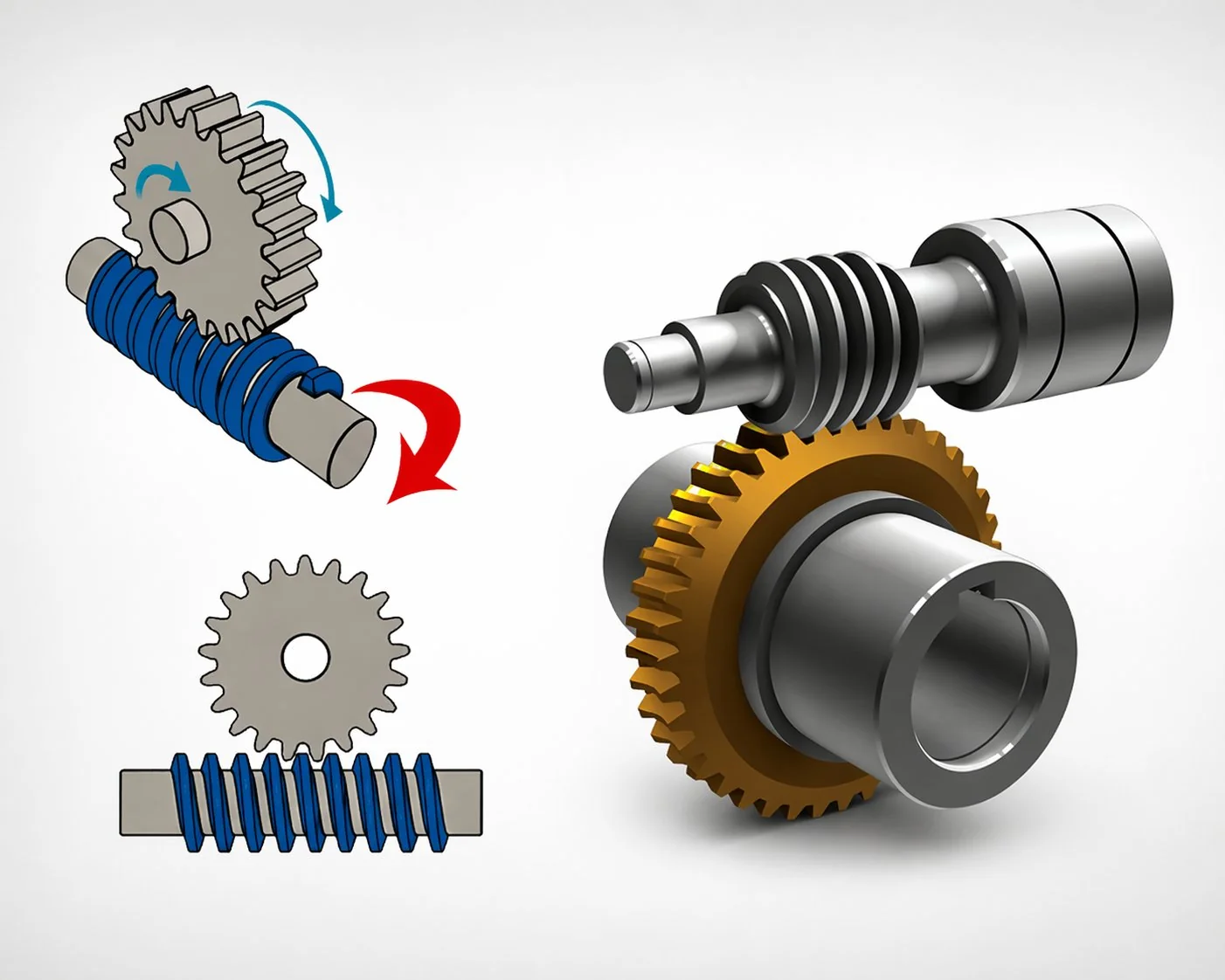
Movimiento: Gira de 0 a 90 grados en 30 a 90 segundos y luego se mantiene en esa posición.
Deber: De 50 a 500 ciclos de posicionamiento por día, tiempo total de funcionamiento de 0,5 a 5 horas/día.
Esfuerzo de torsión: De 5 a 50 N·m (ligera: presión de aire sobre las palas del amortiguador).
Autobloqueante: Esencial: mantiene el ángulo de la pala contra la presión del aire del conducto.
Ambiente: Conductos interiores (aire limpio, seco y a temperatura ambiente) hasta la entrada de aire exterior (lluvia, heladas, rayos UV).
Movimiento: Rotación continua a una velocidad de salida de 100 a 400 RPM.
Deber: De 3.000 a 5.000 horas al año (temporal y continua).
Esfuerzo de torsión: De 200 a 2000 N·m (carga aerodinámica de las palas del ventilador).
Autobloqueante: No es necesario (el ventilador gira libremente cuando el motor se detiene).
Ambiente: Azotea, 100% humedad, niebla de agua de refrigeración con productos químicos biocidas.
Mapa del perfil de carga estacional: cómo varía la carga de trabajo a lo largo del año.
A diferencia de la maquinaria de fábrica, que funciona a carga constante durante todo el año, los equipos de climatización y refrigeración se adaptan a la demanda de refrigeración del edificio o la industria, la cual varía según la estación, la zona climática y el tipo de edificio. El perfil de carga estacional determina las horas de funcionamiento anuales, el número de ciclos térmicos y la duración de la exposición a la corrosión del par de engranajes helicoidales. Estos tres parámetros afectan el dimensionamiento, la programación de la lubricación y la selección de materiales de manera diferente a las aplicaciones industriales de servicio continuo.
Implicaciones en el dimensionamiento. Un par de engranajes helicoidales para ventiladores de torres de refrigeración deben dimensionarse para el pico de demanda del verano: una carga del 100 % a la temperatura ambiente más alta (lo que reduce la disipación de calor de la carcasa). Sin embargo, las horas de funcionamiento anuales son solo de 3000 a 5000 (frente a las 8760 de una fábrica que funciona las 24 horas del día, los 7 días de la semana). Esto significa que la vida útil del desgaste mecánico se prolonga gracias al descanso estacional, pero la exposición a la corrosión por la atmósfera húmeda de la torre de refrigeración se acumula únicamente durante la temporada de funcionamiento. Un par que duraría mecánicamente 8 años a 8760 h/año puede durar de 12 a 15 años a 4000 h/año, si la protección contra la corrosión sobrevive a la condensación durante el periodo de inactividad en invierno.
Planificación del mantenimiento por temporada. Programe los cambios de aceite y las inspecciones de sellos durante la temporada baja (abril/mayo o septiembre/octubre): el ventilador funciona de forma intermitente (lo que permite breves paradas), pero la carcasa está lo suficientemente caliente como para drenar el aceite correctamente. El periodo de parada invernal no es el momento adecuado para los cambios de aceite, ya que el aceite frío no drena completamente; el pico de producción en verano tampoco, ya que el ventilador no se puede detener. El perfil estacional determina tanto el calendario de mantenimiento como las especificaciones.
Atmósfera húmeda de la torre de refrigeración: humedad, niebla química y heladas invernales.
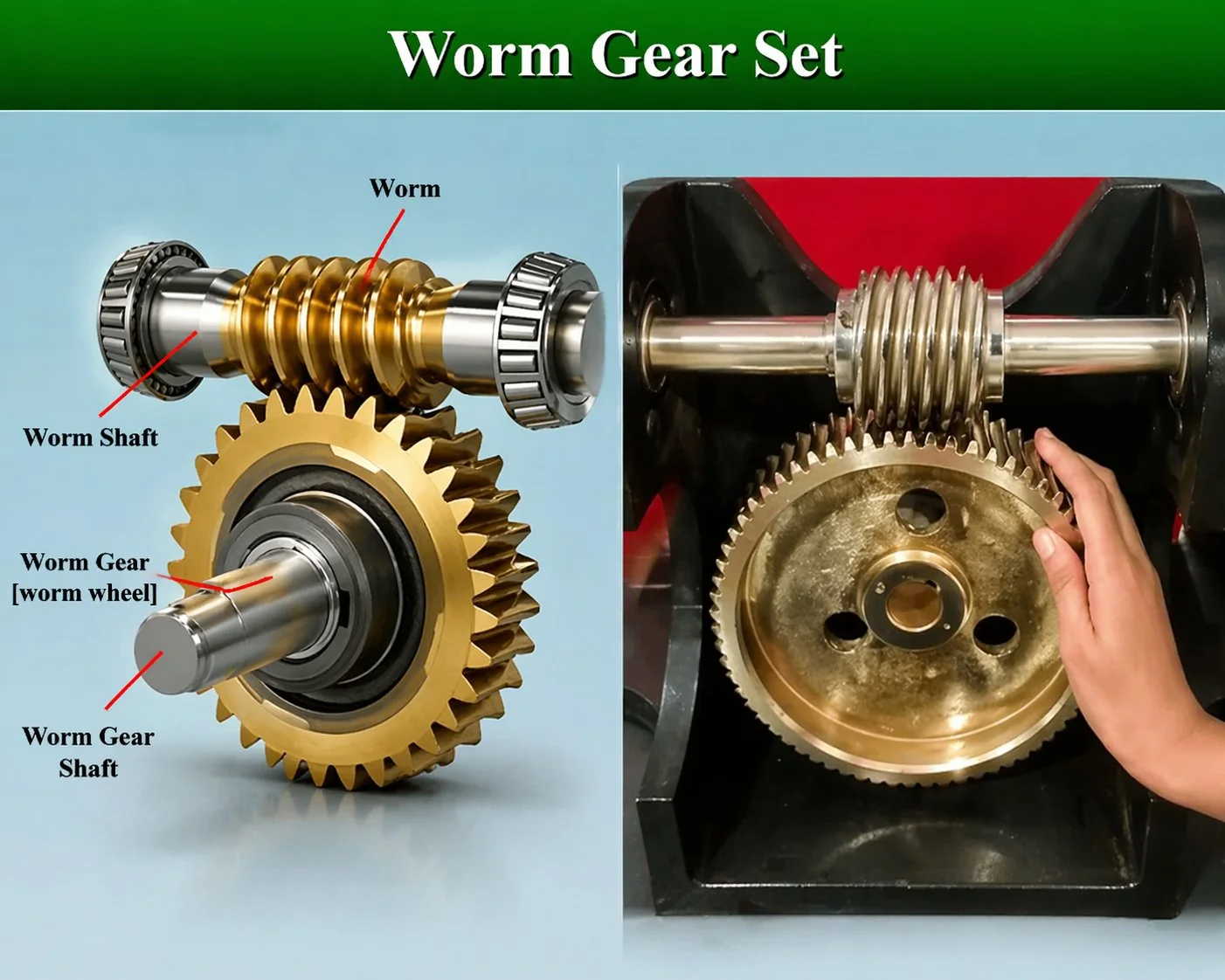
Los engranajes helicoidales de los ventiladores de las torres de refrigeración se enfrentan a uno de los entornos atmosféricos más agresivos fuera de los servicios marinos o de aguas residuales. El aire de escape de la torre está saturado al 100 % de humedad relativa y arrastra una neblina de agua procedente del sistema de refrigeración. Esta neblina contiene los productos químicos añadidos al sistema de circulación de agua de refrigeración: biocidas (para prevenir la legionela y las algas), inhibidores de incrustaciones (fosfonatos, policarboxilatos) e inhibidores de corrosión (molibdatos, azoles). La carcasa del engranaje helicoidal permanece expuesta a esta neblina química de forma continua durante la temporada de refrigeración.
El mecanismo de corrosión es diferente al ataque de H₂S en aguas residuales (Artículo A20): la niebla de la torre de refrigeración es ligeramente ácida (pH de 7,0 a 8,5 con tratamiento) pero permanece constantemente húmeda, lo que produce corrosión superficial general en acero sin protección a una tasa de 0,05 a 0,15 mm por año. Los productos químicos del tratamiento no atacan significativamente el bronce, pero pueden degradar las juntas de nitrilo estándar en un plazo de 2 a 3 años (ataque químico biocida sobre el elastómero de caucho). Las juntas de EPDM resisten la química del agua de refrigeración durante 5 a 8 años; las juntas de FKM, durante más de 10 años.
Una empresa coreana de administración de edificios comerciales operaba 6 torres de enfriamiento en azoteas con ventiladores accionados por engranajes helicoidales. Tras 5 temporadas de verano, 2 de los 6 accionamientos presentaron fugas de aceite en el sello del eje de salida; los sellos de nitrilo se habían endurecido y agrietado debido a la exposición continua a la niebla de biocida. El aceite filtrado se mezcló con el agua de enfriamiento y manchó la fachada del edificio debajo de la plataforma de la torre de enfriamiento. Costo de limpieza de la fachada: 8500 USD. Costo de reposición de aceite y reemplazo de sellos de engranajes helicoidales: 240 USD por accionamiento (480 USD en total). Costo de prevención si se hubieran especificado sellos de EPDM desde el principio: 12 USD adicionales por sello × 6 accionamientos = 72 USD en total en la instalación. La mejora de sellos de 72 USD habría evitado 8500 USD de limpieza de la fachada, además del riesgo de desgaste acelerado de los engranajes por la pérdida de aceite durante el pico de verano. Tras el incidente, los seis accionamientos se sellaron nuevamente con juntas de FKM (Viton), con un costo total de 180 USD, lo que garantiza una vida útil de más de 10 años en el entorno de la torre de refrigeración. Lección aprendida: la especificación de las juntas para los engranajes helicoidales de la torre de refrigeración no es una decisión mecánica, sino una decisión sobre el costo de mantenimiento del edificio. El material de las juntas determina si la torre de refrigeración funciona correctamente durante 10 años o si produce fugas de aceite que dañan las superficies del edificio en un plazo de 3 a 5 años.
Tres casos de especificación de pares de engranajes helicoidales para sistemas HVAC y torres de refrigeración
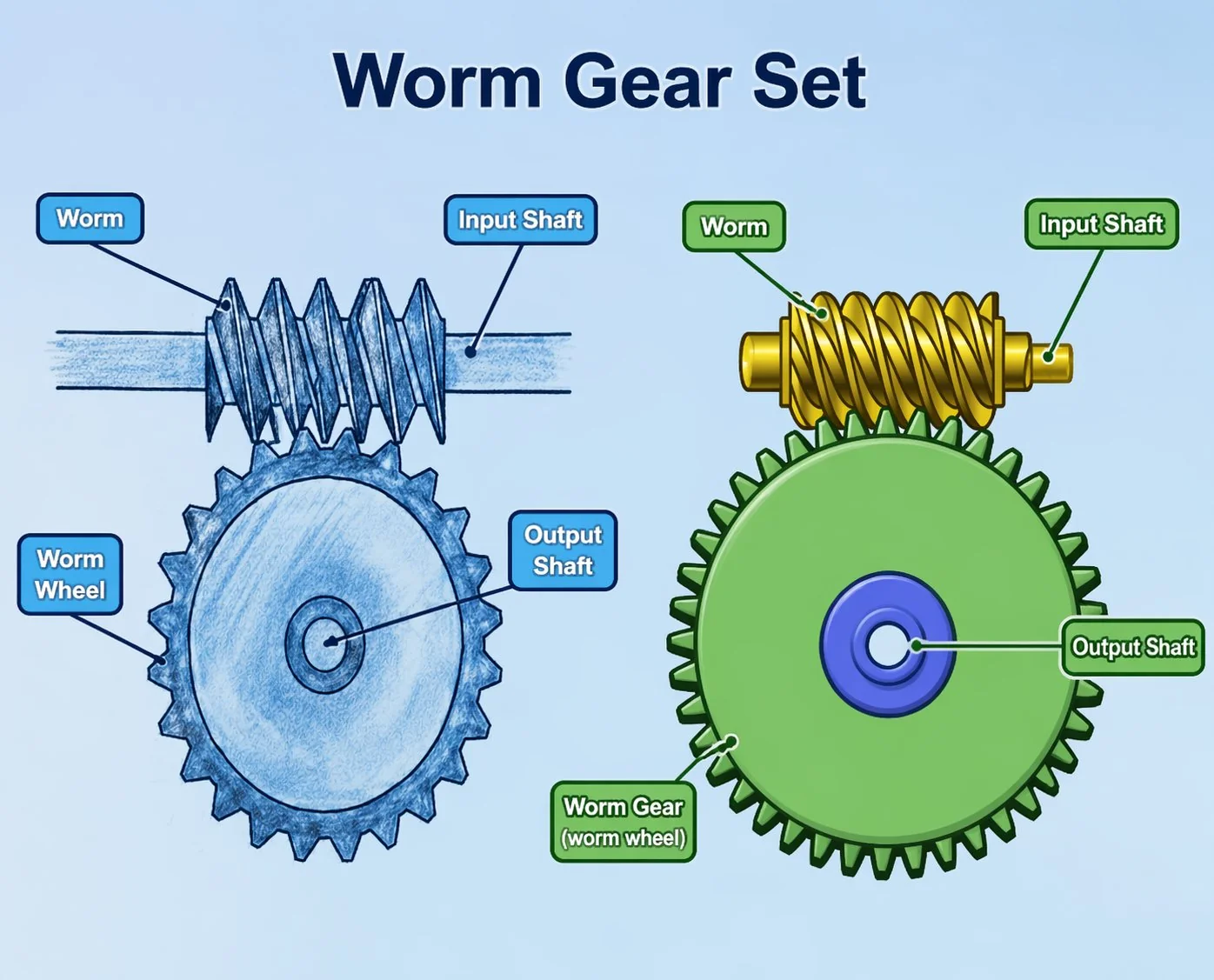
Caso 1: Edificio comercial coreano: 4 torres de refrigeración, funcionamiento estacional, control VFD.
Un edificio de oficinas comerciales coreano (40 pisos, 120 000 m² de superficie) especificó pares de engranajes helicoidales para 4 accionamientos de ventiladores de torres de refrigeración de tiro inducido. Diámetro del ventilador: 3,5 m. Velocidad del ventilador: 180 RPM. Motor: 22 kW, 4 polos, controlado por VFD. Relación: 8:1. Par de salida a plena carga: 850 N·m. Perfil anual: pico de verano (junio a agosto, 2200 horas al 80 a 100 por ciento de carga), zona intermedia (abril/mayo y septiembre/octubre, 1200 horas al 40 a 70 por ciento), parada de invierno (noviembre a marzo). Total de horas de funcionamiento anuales: 3400. Par de engranajes helicoidales: 2-arranque (autobloqueo no necesario: el ventilador gira libremente de forma segura), módulo 4, distancia entre centros 100 mm. Material: tornillo sin fin cincado, rueda de bronce fosforoso. Sello: FKM (Viton) IP55, respiradero desecante para dormancia invernal. Aceite: PAG sintético ISO VG 320, cambiado cada 3 temporadas intermedias (aproximadamente 10 000 horas de funcionamiento). Coste por par: 320 USD. Ahorro de energía del control VFD: la especificación de 2 arranques con una eficiencia del 68 % (frente al 45 % para arranque simple) ahorró aproximadamente 4,5 kW por torre a plena carga — 18 kW en total en 4 torres × 2200 horas pico = 39 600 kWh al año a 0,12 USD por kWh = 4752 USD de ahorro energético anual de la selección del par de engranajes helicoidales de 2 arranques de mayor eficiencia.
Caso 2: Centro de datos japonés: refrigeración durante todo el año, 8000 h/año, unidades redundantes.
Un centro de datos japonés especificó pares de engranajes helicoidales para 8 accionamientos de ventiladores de torres de refrigeración que proporcionan refrigeración durante todo el año para la disipación del calor de la sala de servidores. A diferencia de los edificios comerciales, los centros de datos generan calor constante 24/7/365; las torres de refrigeración funcionaban más de 8000 horas al año sin parada invernal. Esto equivalía a un funcionamiento industrial continuo en la atmósfera de una torre de refrigeración. La especificación debía abordar tanto las largas horas de funcionamiento (que requerían lubricación por baño de aceite con cambios de aceite anuales) como el requisito de redundancia (configuración N+1: 7 torres en funcionamiento, 1 en espera). Par de engranajes helicoidales: 2 arranques, módulo 5, distancia entre centros 125 mm, relación 10:1. Motor: 30 kW, VFD. Par de salida: 1200 N·m. Material: tornillo sin fin de acero inoxidable 304 (la exposición continua a la niebla durante todo el año justifica la mejora respecto al cincado), rueda de bronce fosforoso. Aceite: PAG sintético ISO VG 460 con aditivo anticorrosión, cambio anual (intervalo de 8000 horas). Sellado: FKM IP55 con laberinto presurizado. Precio por par: 680 USD. La especificación de acero inoxidable 304 añadió 180 USD por par en comparación con el galvanizado, lo cual se justifica por la exposición continua que consumiría el recubrimiento de zinc en aproximadamente 4 años. Ver Reductor de engranajes helicoidales para sistemas HVAC. Opciones para aplicaciones en torres de refrigeración y servicios de edificios.
Caso 3 — Fábrica vietnamita: 48 actuadores de compuertas de conductos, clima tropical, impulsado por el costo.
Una fábrica de electrónica vietnamita especificó pares de engranajes helicoidales para 48 compuertas de conducto motorizadas que controlan el suministro de aire a 12 zonas de sala limpia. Tamaño de la pala de la compuerta: 600 × 400 mm. Par de actuador requerido: 15 N·m (diferencial de presión de aire a través de la pala a la velocidad máxima del ventilador). Tiempo de posicionamiento: 60 segundos para un recorrido completo de 90 grados. Ciclos de posicionamiento diarios: de 100 a 200 por compuerta (control de temperatura zona por zona). El clima tropical (28 a 35 grados Celsius durante todo el año, 80 a 95 por ciento HR) eliminó el perfil estacional: las compuertas funcionaron en condiciones equivalentes al verano 12 meses al año. La especificación estuvo impulsada por el costo porque 48 unidades multiplicaron pequeñas diferencias de costo por unidad en un costo total significativo. Par de engranajes helicoidales: arranque simple, módulo 1, distancia entre centros 20 mm, relación 40:1. Material: tornillo sin fin cincado, rueda de POM (más silenciosa que el bronce con una carga ligera de 15 N·m, importante para el control del ruido en salas blancas). Grasa: complejo de litio estándar (ambiente de conducto interior, sin exposición a productos químicos). Junta: NBR IP44 (unidad de tratamiento de aire interior, sin exposición al agua). Coste por par: 14 USD. Coste para 48 unidades: 672 USD. Intervalo de sustitución de la rueda de POM en este servicio ligero y a temperatura tropical continua: estimado de 4 a 6 años (la falta de descanso estacional acelera el envejecimiento térmico continuo del POM). Mantenimiento anual: inspección visual del funcionamiento del actuador durante la recertificación de la sala blanca (no se necesita mantenimiento independiente del engranaje helicoidal en este servicio ligero).
Preguntas frecuentes
P: ¿Los pares de engranajes helicoidales de los ventiladores de las torres de refrigeración deben usar un arranque simple o dos arranques?
Casi siempre de arranque doble. Los ventiladores de las torres de refrigeración no necesitan autobloqueo: cuando el motor se detiene, el ventilador gira libremente sin causar daños. La especificación de arranque doble aumenta la eficiencia del 40-48 % (arranque simple) al 65-72 % (arranque doble), ahorrando de 3 a 8 kW de potencia continua por torre a plena carga. Durante una temporada de refrigeración de 4000 horas, este ahorro energético supera con creces el coste del propio engranaje helicoidal. La única excepción: torres con cargas de viento extremas donde el giro inverso del ventilador podría sobrepasar la velocidad del motor; algunos diseños de torres utilizan autobloqueo de arranque simple para evitar el giro inverso impulsado por el viento durante los periodos de parada.
P: ¿Cómo puedo proteger un par de engranajes helicoidales de una torre de refrigeración durante el cierre invernal?
Tres pasos: (1) Cambiar el aceite al final de la temporada de refrigeración (septiembre/octubre) para que el par permanezca inactivo en aceite nuevo en lugar de aceite de verano contaminado con ácido. (2) Instalar o verificar el respiradero desecante: los ciclos de temperatura invernales producen condensación dentro de la carcasa que emulsiona el aceite y corroe las superficies internas. (3) Hacer funcionar el ventilador durante 15 minutos una vez al mes durante el invierno para que el aceite circule por todas las superficies de los cojinetes y engranajes, evitando la corrosión localizada por la acumulación de aceite estancado. Estos tres pasos cuestan aproximadamente 200 USD por torre al año (cambio de aceite + desecante + 15 minutos de funcionamiento mensual) y extienden la vida útil del par entre un 30 y un 50 por ciento en comparación con el apagado invernal sin control.
P: ¿Puede un actuador de compuerta con engranaje helicoidal funcionar en condiciones de congelación al aire libre?
Sí, pero la grasa debe estar clasificada para la temperatura mínima esperada. La grasa estándar de complejo de litio tiene un punto de fluidez de aproximadamente -20 grados Celsius, adecuado para la mayoría de los climas templados. Para instalaciones en Corea del Norte, Japón (Hokkaido) u otras regiones donde las temperaturas exteriores alcanzan entre -30 y -40 grados Celsius, especifique grasa sintética PAO con un punto de fluidez inferior a -40 grados Celsius. A temperaturas inferiores al punto de fluidez de la grasa, esta se solidifica y el motor del actuador se bloquea; la compuerta no se mueve, lo que podría dejar la entrada de aire exterior atascada abierta (inundando el edificio con aire helado) o atascada cerrada (interrumpiendo la ventilación). Pruebe el actuador a la temperatura más baja esperada antes del primer invierno para verificar su funcionamiento.
P: ¿Cuál es la diferencia en el costo energético entre los variadores de ventiladores de torres de refrigeración de arranque simple y de arranque doble?
Para un motor de ventilador de 22 kW: el arranque simple con una eficiencia del 45 por ciento entrega 9,9 kW al ventilador y desperdicia 12,1 kW en forma de calor. El arranque doble con una eficiencia del 68 por ciento entrega 15,0 kW al ventilador y desperdicia 7,0 kW. Con la misma potencia del ventilador (9,9 kW), el par de arranque doble extrae solo 14,6 kW del motor, ahorrando 7,4 kW de potencia de entrada. Más de 4000 horas de verano a 0,12 USD por kWh: 7,4 × 4000 × 0,12 = 3552 USD por año por torre. Un par de engranajes helicoidales de arranque doble cuesta aproximadamente entre 50 y 80 USD más que uno de arranque simple; el período de recuperación de la eficiencia es inferior a una semana de funcionamiento en verano.
P: ¿Cuánto suelen durar los engranajes helicoidales de los sistemas de climatización?
Pares de engranajes helicoidales de actuadores de amortiguadores: de 10 a 20 años. El servicio ligero (15 a 50 N·m, posicionamiento intermitente) produce un desgaste mecánico mínimo. El factor limitante de la vida útil suele ser el motor del actuador o la electrónica del controlador, más que el par de engranajes. Pares de engranajes helicoidales de ventiladores de torres de refrigeración: de 8 a 15 años, dependiendo de la gestión de la corrosión. Con tornillo sin fin cincado y protección adecuada para paradas invernales: de 8 a 10 años. Con tornillo sin fin de acero inoxidable 304 y mantenimiento gestionado: de 12 a 15 años. El factor limitante de la vida útil es la rueda de bronce: la falla del sello del eje de salida (que permite la entrada de niebla de agua) puede reducir a la mitad la vida útil esperada de la rueda al introducir humedad corrosiva en las superficies de contacto de los engranajes. Los sellos FKM son la inversión con mayor retorno de la inversión para la longevidad de los pares de engranajes helicoidales de torres de refrigeración.
Los actuadores de compuertas de HVAC y los accionamientos de ventiladores de torres de enfriamiento representan dos perfiles de servicio opuestos de pares de engranajes helicoidales dentro del mismo ecosistema de edificio: posicionamiento intermitente versus rotación continua estacional. El mapa de perfil de carga estacional rige el enfoque de especificación: el pico de verano determina la clasificación térmica, las temporadas intermedias proporcionan la ventana de mantenimiento y el cierre invernal introduce requisitos de gestión de dormancia. Los accionamientos de ventiladores de torres de enfriamiento se benefician enormemente de pares de engranajes helicoidales de 2 entradas (ganancia de eficiencia de más de 20 puntos porcentuales, recuperación de energía en menos de una semana), mientras que los actuadores de compuertas requieren autobloqueo de una sola entrada para mantener la posición de la pala contra la presión del aire del conducto. El material de sellado (FKM sobre nitrilo) es la decisión de especificación de mayor impacto para los accionamientos de ventiladores de torres de enfriamiento: una mejora de 12 USD por sello evita miles de dólares en fugas de aceite, limpieza de fachadas y desgaste acelerado de engranajes.
Para fabricantes de equipos de climatización e ingenieros de edificios, nuestro departamento de ingeniería analiza el perfil estacional y recomienda la especificación correcta del par de engranajes helicoidales para aplicaciones de compuertas y ventiladores. Catálogo estándar Conjuntos compactos de engranajes helicoidales Se admiten actuadores de compuerta con distancias entre centros de 20 a 50 mm y accionamientos de ventilador de 80 a 160 mm. Envíe una especificación del accionamiento HVAC con el tipo de aplicación (compuerta o ventilador), el perfil de funcionamiento anual y el entorno de instalación.
¿Cómo especificar pares de engranajes helicoidales para equipos de climatización o torres de refrigeración?
Indique el tipo de aplicación, el tamaño del ventilador o compuerta, las horas de funcionamiento anuales y el perfil estacional, la ubicación de instalación (interior/exterior/azotea) y los productos químicos para el tratamiento del agua de refrigeración, si corresponde. Analizaremos el perfil de funcionamiento y recomendaremos la especificación adecuada.
Solicitar especificaciones del variador de frecuencia para sistemas HVAC →
Editor: Cxm