Korea Ever-Power · Guide till applikationsteknik
Snäcka och snäckhjul för parkeringsbommar, pollare och vändkors
En parkeringsbom på ett sjukhus öppnas och stängs 1 500 gånger per dag – en gång var 40:e sekund i 16 timmar i sträck. En vändkors på en tunnelbanestation roterar 4 000 gånger per dag. En säkerhetspollare som kan skjutas upp måste klara en kollision med ett fordon på 7,5 ton i 80 km/h och ändå dras in på kommando 30 sekunder senare. Dessa är de snabbast cyklande och mest slitstarka applikationerna för snäckväxelpar i alla byggnadsinfrastrukturer.
Parkeringsbommar, stigande pollare och vändkors cyklar 5 till 100 gånger snabbare än automatiska grindar (500 till 4 000 manövreringar per dag jämfört med 10 till 200 för grindar). Denna snabba driftcykel ackumulerar utmattningsskador i en takt som gör snäckväxelparet till den första slitagekomponenten – inte tätningar, inte fett, inte korrosion. Snabbutmattningskartan klassificerar installationer i fyra nivåer efter dagligt cyklantal och mappar varje nivå till servicefaktor, inspektionsintervall och förväntat hjulbytesschema. Vid 1 500 cykler per dag ackumulerar ett snäckväxelpar ungefär 550 000 cykler per år – och når utmattningströskeln på 2 miljoner cykler på under fyra år. Stigande pollare lägger till ett krav på slagtålighet som ingen annan snäckväxelapplikation möter: paret måste absorbera fordonets kollisionsenergi utan tandbrott och förbli funktionsdugligt efter kollisionen. Vändkors kräver kontinuerlig rotation med lågt vridmoment vid gånghastighet med nästan noll glapp för en smidig passagekänsla.
Varför bommar, pollare och vändkors använder snäckväxlar
Dessa tre produktfamiljer – parkeringsbommar, pollare och vändkors för gångtrafikanter – ser olika ut men delar ett gemensamt drivkrav: en kompakt mekanism som roterar en kort vinkelsträcka (90 grader för bommar, 180 grader för vändkors, linjär slaglängd för pollare via vev), håller positionen när motorn stannar och passar inuti en smal stolpe eller ett smalt hölje.
90° armrotation, 1–3 sekunders cykel, 500–2 000 operationer/dag. Självlåsande håller armen horisontellt i stängt läge mot vind.
Linjär slaglängd 500–800 mm via vev eller skruv, 3–8 sekunders cykel, 50–500 varv/dag. Självlåsande håller pollaren i upplyft läge mot fordonets tryck.
120° eller 180° rotation per passage, kontinuerligt flöde, 2 000–4 000 operationer/dag. Lågt glapp för en smidig passagekänsla.
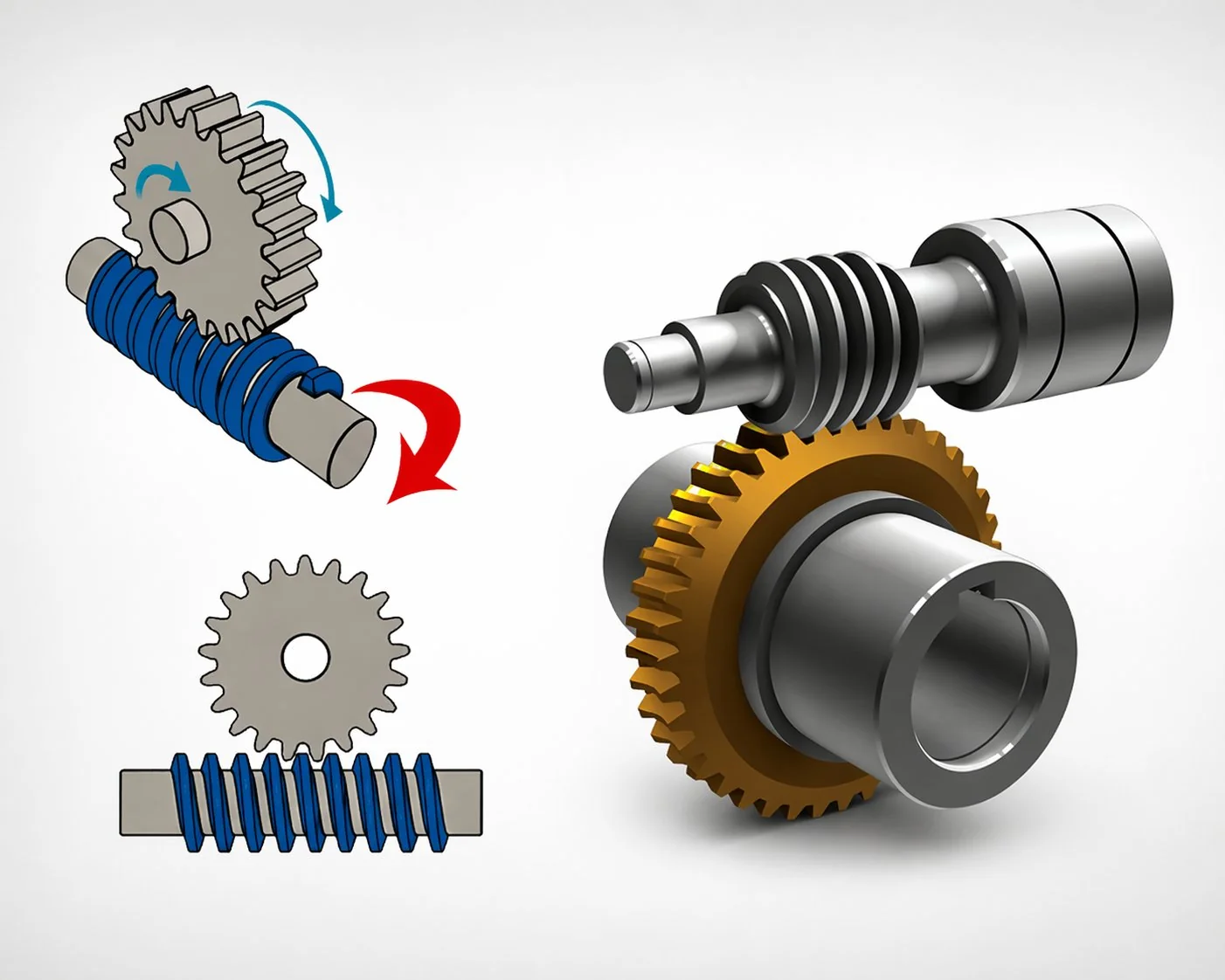
Snäckväxelparet betjänar alla tre med samma kärnegenskaper: självlåsande positionshållning (inget separat lås behövs), 90-graders motororientering (passar inuti en stolpe) och hög utväxling från en liten motor (en 100 W motor genom ett 30:1 snäckväxelpar lyfter en 4 meter lång barriärarm på 1,5 sekunder). Skillnaden mellan de tre applikationerna ligger i cykelhastigheten och toleransen för belastning – och dessa två parametrar driver snäckväxelparets specifikationer mer än något dimensions- eller vridmomentkrav.
Karta över snabbcykelutmattning — från daglig cykelräkning till servicefaktor och utbytesschema
Det definierande kännetecknet för bommar, pollare och snäckväxlar är antalet cykler. En parkeringsbom på ett välbesökt sjukhus eller köpcentrum öppnas och stängs 1 000 till 2 000 gånger per dag. Under ett år blir det 365 000 till 730 000 cykler. Under ett typiskt 5-årigt serviceavtal ackumulerar paret 1,8 till 3,6 miljoner cykler. Som jämförelse ackumulerar en bostadsgrind (artikel A09) 50 000 till 75 000 cykler under 10 år – ungefär 25 till 50 gånger färre cykler.
Utmattningskartan nedan klassificerar installationer i fyra nivåer efter dagligt cyklantal och mappar var och en till specifikation och underhållsparametrar.
Övergången från T1 till T4 fördubblar servicefaktorn (1,5 till 3,0), förkortar inspektionsintervallet från årligt till månadsvis och förkortar hjulbyteslivslängden från 5 år till under 1 år. Vid T4-drift är snäckväxelparet en förbrukningsartikel för underhåll – planerat byte var 8:e till 14:e månad är normalt och budgeterat, inte ett fel. Att specificera ett T1-par för en T3-installation är det vanligaste upphandlingsfelet i barriär- och vändkorsprojekt: paret är mekaniskt tillräckligt för vridmomentet men utmattningsmässigt underdimensionerat för cykelantalet och går sönder vid 12 till 18 månader när specifikationen förutspådde 4 till 6 år.
Slaghållfasthet — fordonskrockklassificering för stigande pollare med snäckväxelpar
Säkerhetspollare med stigande mekanismer är den enda maskväxelapplikationen där paret måste klara en fordonskrock och förbli funktionsdugliga. IWA 14-1 och PAS 68 är de internationella krockteststandarderna som klassificerar pollare efter fordonsvikt och hastighet: en typisk kommersiell säkerhetspollare måste stoppa ett fordon på 7 500 kg vid 48 till 80 km/h. Krockenergin varierar från 133 kJ (7,5 t vid 48 km/h) till 370 kJ (7,5 t vid 80 km/h).
Hur stötbelastningar når snäckhjulsparet. Pollarröret absorberar den primära stötenergin genom plastisk deformation av röret och fundamentet. Emellertid överförs en betydande del av stötkraften (vanligtvis 15 till 30 procent av toppen) genom pollarens stödstruktur till drivmekanismen. För en snäckväxeldriven pollare innebär detta en övergående stötbelastning på 5 000 till 15 000 N·m vid utgående axel – en varaktighet på 50 till 200 millisekunder. Snäckväxelparet måste absorbera denna stöt utan tandbrott (sprödhetsbrott) eller permanent tanddeformation (plastisk eftergivlighet) och förbli funktionsdugligt för nästa indragningskommando.
Materialspecifikation för slagtålighet. Standardhärdade snäckor (16MnCr5, HRC 58-62 yta) är spröda vid impulsbelastning – det hårda höljet kan splittras vid en enda kraftig stöt. Genomhärdade snäckor (42CrMo4, HRC 28-34 likformig) absorberar slagenergi utan sprödbrott eftersom den likformiga hårdheten fördelar spänningen över en större plastisk zon. Bronsskivan bör vara centrifugalgjuten (tätare mikrostruktur, 15 till 25 procent högre slagtålighet än gravitationsgjuten) och specificerad med en ramstorlek över momentkravet vid stationärt tillstånd – det extra tandtvärsnittet ger den slagenergiabsorptionskapacitet som momentvärdet ensamt inte garanterar.
Ett koreanskt lägenhetskomplex med 2 400 hushåll installerade 6 parkeringsbommar vid in- och utfartsvägarna. Fastighetsförvaltningsföretaget specificerade snäckväxelpar klassade för "industriell grinddrift" – samma specifikation som skjutgrindarna längs perimetern. Bommens cykelhastighet: 1 200 manövreringar per dag per enhet (ett fordon var 48:e sekund under morgon- och kvällsrusning, lägre hastighet utanför rusningstid). Under det första året krävde 4 av de 6 bommarna byte av snäckväxelpar vid månaderna 8, 9, 10 och 11 – långt före den 5-åriga livslängd som grindspecifikationen förutspådde. Grundorsak: grindspecifikationen antog 80 cykler per dag (T1-utmattningsnivå, SF 1,5) medan den faktiska bomdriften var 1 200 cykler per dag (T3-utmattningsnivå, som kräver SF 2,5). Paren var klassade för tillräckligt vridmoment men underdimensionerade för den kumulativa startspikutmattningen vid T3-cykelhastigheter. Ersättningsspecifikationen flyttades upp en ramstorlek (centrumavstånd 50 mm till 63 mm) och tillämpade SF 2,5 – vilket ökade kostnaden per par från 42 USD till 75 USD. De större paren har nu körts i 26 månader med samma hastighet på 1 200 cykler/dag med ett glapp fortfarande inom 1,2 gånger leveransvärdet. Förväntad hjullivslängd vid den nya specifikationen: 2,5 till 3 år – i överensstämmelse med T2-T3-intervallet i utmattningskartan. Lärdom: Snäckväxelpar för bommar och vändkors kan inte specificeras från grindmotorkataloger. Cykelhastighetsmultiplikatorn är den enskilt viktigaste specifikationsskillnaden mellan en grindmotor (10–200 cykler/dag) och en barriärmotor (500–2 000 cykler/dag).
Vandalsäkring och vädertätning för obevakad utomhusbruk
Parkeringsbommar, pollare och vändkors används utomhus utan övervakning under längre perioder – 24 timmar per dygn, 365 dagar per år. Snäckväxelparets hölje utsätts för avsiktlig vandalism (stötar, nyfikenhet, inträngning av främmande föremål), oavsiktlig fordonskontakt, dagvatten och extrema temperaturer. Tätnings- och höljesspecifikationerna måste ta hänsyn till både miljömässiga och mänskliga hot.
IP55 minimum för alla snäckväxlar för bommar och pollare. Stigande pollare installerade i planhöjd (i jämnhöjd med vägytan) bör specificera IP67 eller IP68 eftersom pollarröret fylls med regnvatten och drivmekanismen sitter i botten. Dränkbara tätningar och dräneringsanordningar är viktiga för infällda pollare.
Avspärrningshus som är exponerade för allmänheten bör använda manipuleringssäkra fästelement (Torx-stift, tri-wing eller specialutvecklade säkerhetshuvuden). Snäckväxelhuset bör vara inneslutet i avspärrningsstolpen utan synliga åtkomstpunkter. Eventuella serviceluckor bör kräva ett specialverktyg för att öppnas – vanliga sexkants- eller Phillips-huvuden inbjuder till vandalism.
Utomhushus utsätts för dagliga temperaturcykler som producerar kondens inuti huset. Ackumulerad kondens emulgerar fett och korroderar oskyddade stålytor inom några månader. Installera en andningsventil med sintrat filterelement för att utjämna trycket samtidigt som vatten och damm blockeras. För installationer i pollargropar, lägg till en liten värmepatron (5 till 10 W) som förhindrar förhållanden med låg daggpunkt.
Tre par av snäckväxel för barriär, pollare och vändkors
Fall 1 — Koreanskt lägenhetskomplex: parkeringsbom, 1 200 cykler/dag, T3-tjänst
En fastighetsförvaltare i ett koreanskt lägenhetskomplex specificerade snäckhjulspar för 6 in-/utgångsbarriärer som betjänar 2 400 hushåll. Bomarm: 4 meter, aluminium, 12 kg inklusive motvikt. Öppningstid: 1,5 sekunder. Motor: 180 W enfas 220 V. Nödvändigt utgångsmoment: 35 Nm (armens tröghet + vindmotstånd). Cykelfrekvens: 1 200 per dag (topp 6:30-8:30 utgående, 17:30-20:00 ingående, måttlig trafik under hela cyklingen). Utmattningsnivå: T3 (mycket hög). Specifikation för snäckhjulspar efter initial felaktig specifikation och korrigering (se Engineering Desk Note): enkelstart, modul 2, centrumavstånd 63 mm, förhållande 30:1, stigningsvinkel 3,0 grader. Parets nominella vridmoment: 180 Nm (SF = 180/35 = 5,1 mot driftsmoment – denna ovanligt höga SF är nödvändig för T3-utmattning, inte för statisk lastkapacitet). Material: sätthärdad 16MnCr5, centrifugalgjuten CuSn12Ni. Fett: syntetiskt litiumkomplex. Tätning: dubbelläpp IP55. Kostnad per par: 75 USD. Hjullivslängd vid T3-drift: uppskattad 2,5 till 3 år (900 000 till 1 100 000 ackumulerade cykler). Ersättningskostnad per hjul: 22 USD. Årlig budget för hjulbyte för 6 barriärer: 6 × 22 / 2,75 år i genomsnitt = 48 USD per år — en trivial underhållskostnad för infrastruktur som betjänar 2 400 hushåll.
Fall 2 — Japansk tunnelbanestations vändkors: 3 500 passager/dag, ultrasmidig rotation
En japansk tunnelbaneoperatör specificerade snäckväxelpar för 24 halvhöjdsvändkors på en centralstation i Tokyo. Passagerarflöde: 3 500 passager per vändkors per dag (morgon- och kvällstoppar på cirka 400 passager per timme). Vändkorsrotation: 120 grader per passage, kontrollerad utlösning med motorbromsad retardation i slutet av rörelsen. Motor: 90 W BLDC med pulsgivare. Erforderligt utgångsmoment: 8 Nm (lågt — belastningen är trögheten hos en 6 kg tung vändkorsarm i rostfritt stål). Specifikationsutmaningen var inte vridmomentet utan jämnheten: passagerarna känner glapp som ett "klick" eller "skår" under passagen, vilket försämrar uppfattningen av servicekvaliteten. Snäckväxelpar: enkelstart, modul 1,5, centrumavstånd 35 mm, förhållande 20:1, mark Ra 0,4 µm, duplexkonfiguration för nästan noll glapp. Utmattningsnivå: T4 (extrem — 3 500 cykler per dag = 1,28 miljoner per år). Vid T4-tjänst nådde bronshjulet glappgränsen efter 11 månader (cirka 1,15 miljoner cykler). Ersättningskostnad: 14 USD per hjul, 15 minuter per enhet. Årlig hjulbudget för 24 vändkors: 24 × 14 × 1,1 = 370 USD — försumbar jämfört med stationens årliga underhållsbudget. Bläddra kompakt snäckväxelmekanism alternativ för vändkors och barriärer med hög cyklisk applikation.
Fall 3 — Tullstation på vietnamesisk motorväg: bom, 800 cykler/dag, tropisk utomhusmiljö
En vietnamesisk motorvägsoperatör specificerade snäckväxelpar för 12 vägtullsbommar vid en motorvägskorsning. Bomarm: 5 meter (lång spännvidd, med vajer för vindavledning). Armvikt med motvikt: 18 kg. Öppning-stängningstid: 2 sekunder. Motor: 250 W enfas. Cykelfrekvens: 800 per dag (måttlig vägtullstrafik, 16 timmar per dag). Utmattningsnivå: T2 (hög). Tropisk miljö: omgivningstemperatur 28 till 42 grader Celsius året runt, monsunregn 4 månader per år, hög UV-exponering. Snäckväxelpar: enkelstart, modul 2,5, centrumavstånd 50 mm, förhållande 25:1. Material: förzinkad snäckväxel (tropiskt korrosionsskydd), fosforbronshjul. Tätning: IP55 dubbelläpp med andningsventil. Fett: syntetiskt PAG klassat för 130 grader Celsius (tropisk höljestemperatur vid 42 grader Celsius omgivningstemperatur plus intern värme når 65 till 78 grader Celsius i stationärt tillstånd under monsunsäsongen när luftflödet begränsas av regnskydd). Kostnad per par: 52 USD. Hjullivslängd vid tropisk drift T2: 2,5 år (cirka 730 000 cykler). Kostnad för utbyte av hjul: 16 USD. Total 5-årig underhållsbudget för snäckväxel för 12 bommar: 12 × 16 × 2 (två utbyten) = 384 USD – vilket motsvarar mindre än 0,1 procent av vägtullstationens årliga driftskostnad.
Vanliga frågor
F: Kan samma specifikation för snäckväxelpar användas för både grindar och bommar?
Endast om cykelantalet stämmer överens. En grind med 80 cykler per dag och en barriär med 800 cykler per dag kan ha liknande vridmomentkrav, men barriären ackumuleras 10 gånger så mycket utmattningsskador per år. Att använda ett grindspecifikationspar i en barriär resulterar i förtida fel vid 12 till 18 månader istället för de förväntade 4 till 6 åren. Rätt tillvägagångssätt är att först bestämma det dagliga cykelantalet, klassificera utmattningsnivån med hjälp av tabellen ovan och sedan tillämpa den nivålämpliga servicefaktorn. Om det resulterande erforderliga nominella vridmomentet faller inom samma ramstorlek som grindspecifikationen kan samma par användas – men inspektions- och utbytesschemat måste följa barriärnivån, inte grindnivån.
F: Hur överlever ett stigande pollars snäckväxelpar en kollision med ett fordon?
Pollarsystemet är konstruerat så att den primära stötenergin absorberas av pollarröret och dess fundamentankare (vanligtvis en betonggjuten stålhylsa), inte av snäckhjulsparet. Snäckhjulsparet får en sekundär stöt – vanligtvis 15 till 30 procent av den maximala stötkraften – som överförs via drivlänkaget. För att klara denna stöt måste snäckhjulsparet specificeras med genomhärdad stålsnäcka (inget sprött hölje som kan splittras), centrifugalgjuten bronshjul (högre slagtålighet) och en ramstorlek som är ett steg större än vad som krävs för det stationära vridmomentet (vilket ger ytterligare tandtvärsnitt för energiabsorption). Inspektion efter stöten bör kontrolleras för synlig tanddeformation, ökat glapp och jämn manuell rotation innan pollaren tas i bruk igen.
F: Vad orsakar att bomarmen studsar i slutet av färden?
Ändstuds orsakas av glapp i snäckhjulsparet i kombination med barriärarmens kinetiska energi vid retardation. När motorn bromsar retarderar armen – men glappet gör att armen kan fortsätta rotera genom glappbågen innan kuggarna återingriper på motsatt flank, vilket producerar en synlig studs eller vibration. Att minska glapp (genom snävare tillverkningstoleranser eller duplexspecifikation) minskar studsandet. Genom att lägga till en gummidämpare vid ändstoppet dämpas eventuella kvarvarande stötar. För premiumbarriärmärken eliminerar duplexa snäckhjulspar med nästan noll glapp studs helt – vilket ger ett rent, professionellt stopp som förbättrar varumärkesuppfattningen vid installationer med hög synlighet.
F: Hur bestämmer jag utmattningsnivån för en specifik installation?
Räkna eller uppskatta den dagliga driften. För bommar: multiplicera antalet fordon som trafikeras per dag med 2 (en öppen + en stängd per fordon). För vändkors: räkna de dagliga passagerarpassagerna. För pollare: räkna de dagliga höj- och sänkningshändelserna. Om installationen är ny och inga trafikdata finns, använd byggnadens beläggning som måttstock – ett parkeringsgarage med 500 platser med 1,2 svängar per dag per plats genererar cirka 1 200 bommanövreringar. Klassificera med hjälp av utmattningskartan: under 500 är T1, 500–1 500 är T2, 1 500–3 000 är T3, över 3 000 är T4. Vid tveksamhet, klassificera en nivå högre än uppskattningen – kostnaden för att överspecificera (något större ram) är betydligt lägre än kostnaden för att underspecificera (för tidigt fel och akut utbyte).
F: Skiljer sig snäckväxelpar för vändkors från snäckväxelpar för barriärer?
Ja, på tre sätt. För det första roterar vändkors vanligtvis kontinuerligt i en riktning (eller alternerande 120-graderssegment) med nästan konstant hastighet, medan bommar utför diskreta 90-graders öppnings-stängningsrörelser med start-stopp i varje ände. Detta innebär att vändkorspar upplever mindre startspik men mer kontinuerligt glidslitage. För det andra är vändkorsets vridmoment mycket lägre (5 till 15 N·m jämfört med 20 till 80 N·m för bommar) eftersom vändkorsarmen är lättare. För det tredje kräver vändkorsoperatörer mycket lågt glapp för en smidig känsla för passagerarna – passagerare uppfattar glapp som en "lös" eller "billig" mekanism. Snäckväxlar med vändkors specificeras därför med mindre modul- och centrumavstånd (modul 1 till 2, centrumavstånd 25 till 40 mm) med stramare glappkontroll (duplex eller selektiv montering).
Parkeringsbommar, stigande pollare och vändkors för fotgängare delar snäckväxelparet som sin centrala drivmekanism men arbetar med cykelfrekvenser som är 5 till 100 gånger högre än automatiska grindar. Snabbcykelutmattningskartan – från dagligt cykelantal till servicefaktor, inspektionsintervall och hjulbytesschema – är specifikationsverktyget som skiljer korrekt dimensionering för barriärkvalitet från den underspecifikation för grindkvalitet som orsakar majoriteten av förtida haverier på barriärens drivsystem. Stigande pollare har ett unikt krav på slagtålighet: genomhärdad snäckväxel med centrifugalgjuten brons, en ramstorlek över stationärt vridmoment, kan absorbera fordonskollisioner och förbli funktionella. Vändkors kräver jämn rotation med lågt glapp vid fotgängarhastighet – duplex- eller selektiv montering med korta centrumavstånd. För alla tre produktfamiljer är snäckväxelparet en planerad underhållskomponent med höga cykelfrekvenser, inte en komponent som monteras och glöms bort – och budgetering för schemalagt hjulbyte vid utmattningskartans intervall är nyckeln till pålitlig service.
För tillverkare av barriärer, pollare och vändkors klassificerar vår tekniska avdelning utmattningsnivån och rekommenderar rätt ramstorlek och driftsfaktor. Standardkatalog kompakta snäckväxlar Täck bommar och vändkors i storlekar från 25 till 80 mm centrumavstånd med standard- och duplexalternativ. Skicka in en specifikation för barriärdrift med cykelhastighet och installationsmiljö.
Specificera snäckväxelpar för bommar, pollare eller vändkors?
Skicka produkttyp, dagligt antal cykler, arm- eller pollarvikt, miljöexponeringsklass och om slagtålighet krävs. Vi klassificerar utmattningsnivån, rekommenderar rätt ramstorlek och servicefaktor och ger en offert på er årliga produktionsvolym.
Redaktör: Cxm