Korea Ever-Power · Guide till applikationsteknik
Snäcka och snäckhjul för antennpositionerare och parabolantenner
En jordstation i Ka-bandet med en 1,2-meters parabol har en strålvidd på 0,6 grader. Satelliten befinner sig 36 000 km bort i en geostationär bana. Om snäckhjulsparet som driver antennens azimutaxel har 4 bågminuters glapp, förbrukar pekfelet 11 procent av strålbredden – vilket försämrar signalen med 0,5 dB och potentiellt sänker länken under det lägsta tröskelvärdet för bärvågsbrusförhållandet. Vid Ka-bandets frekvenser är snäckhjulsparets glapp en kommunikationsparameter, inte bara en mekanisk specifikation.
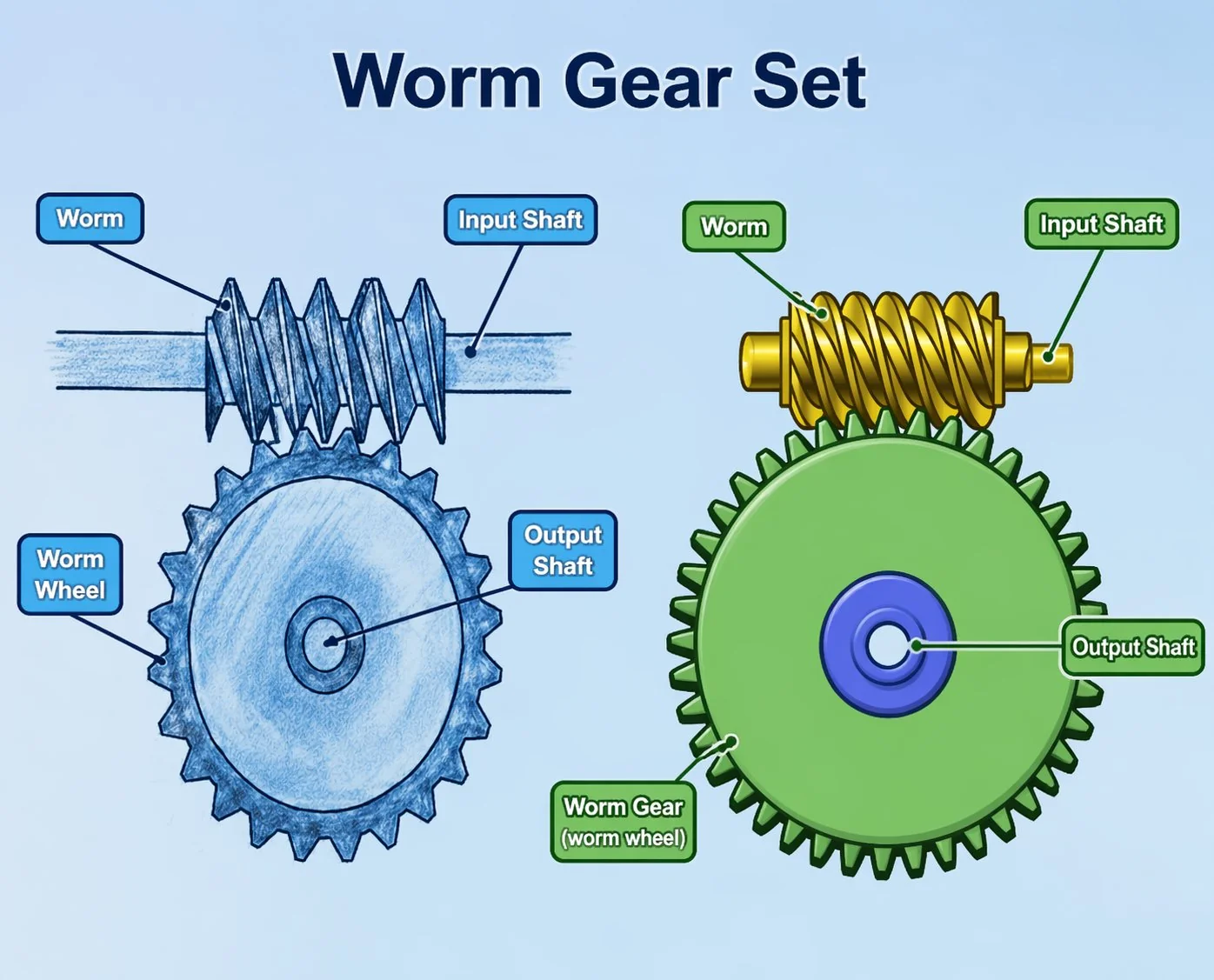
Antennpositioneringsenheter och parabolantennspårningssystem använder snäckhjulspar för azimutaxeldrivningar (horisontella) och elevationsaxeldrivningar (vertikala) eftersom självlåsningen håller antennens riktvinkel mot vind utan motorkraft, det höga förhållandet ger fin vinkelupplösning från en kompakt motor, och 90-gradersgeometrin passar in i piedestalstrukturen. Budgettabellen för riktnoggrannhet mappar frekvensband (C, Ku, Ka) och paraboldiameter till strålbredden, det maximala tillåtna riktfelet och därmed det maximala snäckhjulsparets glapp – vilket visar att C-bandssystem tolererar 6 till 10 bågminuter glapp medan Ka-bandssystem kräver mindre än 2 bågminuter. Maritimt stabiliserade antenner lägger till kontinuerlig spårningsdrift (korrigering för fartygets rullning, lutning och girning) som producerar 5 till 15 miljoner positioneringscykler per år – en utmattningsbelastningsregim som är jämförbar med vindturbiners girningsdrivningar (artikel A35) snarare än den kvasistatiska driften hos landbaserade fastpunktantenner.
Varför antennpositionerare använder snäckväxeldrift
En antennpositionerare roterar parabolen i azimut (0 till 360 grader horisontellt) och elevation (0 till 90 grader vertikalt) för att rikta antennstrålen mot en satellit eller ett kommunikationsmål. För geostationära satelliter pekar antennen en gång och håller – snäckhjulsparet är en precisionspositionerare och ett vindbeständigt lås. För LEO-satelliter (låg jordbana) spårar antennen kontinuerligt medan satelliten korsar himlen på 5 till 15 minuter – snäckhjulsparet är ett precisionsservoställdon som arbetar med variabel hastighet.
Båda lägena kräver samma egenskaper hos tre snäckhjulspar: precisionsvinkelpositionering (bågsekundnivå för högfrekvensband), självlåsning mot vindbelastning på parabolens yta och kompakt piedestalintegration.

Ett snäckhjulspar med utväxling 360:1 och en servokodare ger en vinkelupplösning under 1 bågsekund per kodningsantal – tillräckligt för Ka-bandsspårning vid 40 GHz där strålbredden är 0,4 till 0,8 grader. Det höga utväxlingsförhållandet omvandlar motorrotation till fina vinkelsteg som direktdrivna motorer inte kan matcha till samma kostnad.
En 3,7 meter stor parabol i en vindhastighet på 30 m/s genererar ungefär 4 000 N dragkraft – vilket producerar 2 000 till 3 000 Nm vridmoment vid azimutaxeln. Självlåsning håller parabolen mot denna belastning utan motorkraft – avgörande för obevakade avlägsna platser där strömmen kan vara intermittent.
90-graders snäckväxeln placerar motorn inuti piedestalröret medan utgången driver azimut- eller elevationsväxeln – vilket håller motorn borta från antennöppningen (vilket skulle blockera RF-signalen). Ingen annan växeltyp uppnår den vinkelräta axelomvandlingen inom piedestalens hölje.
Pekningsnoggrannhetsbudget — frekvensband och skålstorlek i förhållande till snäckhjulsparets glappgräns
Antennens strålbredden avgör hur exakt antennen måste peka – och därmed hur mycket glapp snäckhjulsparet kan ha. Strålbredden är omvänt proportionell mot både frekvens och paraboldiameter: högre frekvens och större parabol ger en smalare stråle som kräver en tätare pekning. Budgeten för pekningsnoggrannheten allokerar en bråkdel (vanligtvis 10 till 20 procent) av strålbredden till snäckhjulsparets glapp – och reserverar den återstående budgeten för strukturell nedböjning, termisk expansion och vindinducerad böjning.
Budgettabellen visar ett 10-faldigt intervall i tillåtet glapp från C-bandet (10 bågminuter) till V-bandet/LEO (under 1 bågminut). Ett snäckhjulspar som är helt adekvat för en VSAT-terminal i C-bandet blir helt oanvändbart för en jordstation i Ka-bandet – samma mekaniska komponent uppfyller inte kommunikationsspecifikationen innan vridmoment eller hastighet ens har beaktats. Det är därför anskaffning av antennsnäckhjulspar måste börja med RF-specifikationen (frekvensband + parabolstorlek), inte den mekaniska specifikationen (vridmoment + förhållande).
Maritim stabiliserad antenn — kontinuerlig spårning under fartygets rörelse
Landbaserade antenner pekar en gång och håller – snäckhjulsparet arbetar i minuter under den initiala inriktningen, och står sedan statiskt i månader eller år. Maritimt stabiliserade antenner är motsatsen: fartyget rullar (plus eller minus 15 till 30 grader), lutar (plus eller minus 5 till 10 grader) och girar (plus eller minus 3 till 5 grader) kontinuerligt. Antennpositioneraren måste rotera mot varandra på båda axlarna för att hålla strålen riktad mot satelliten trots fartygets rörelse – en kontinuerlig servoloop som körs med 10 till 50 korrigeringar per sekund.
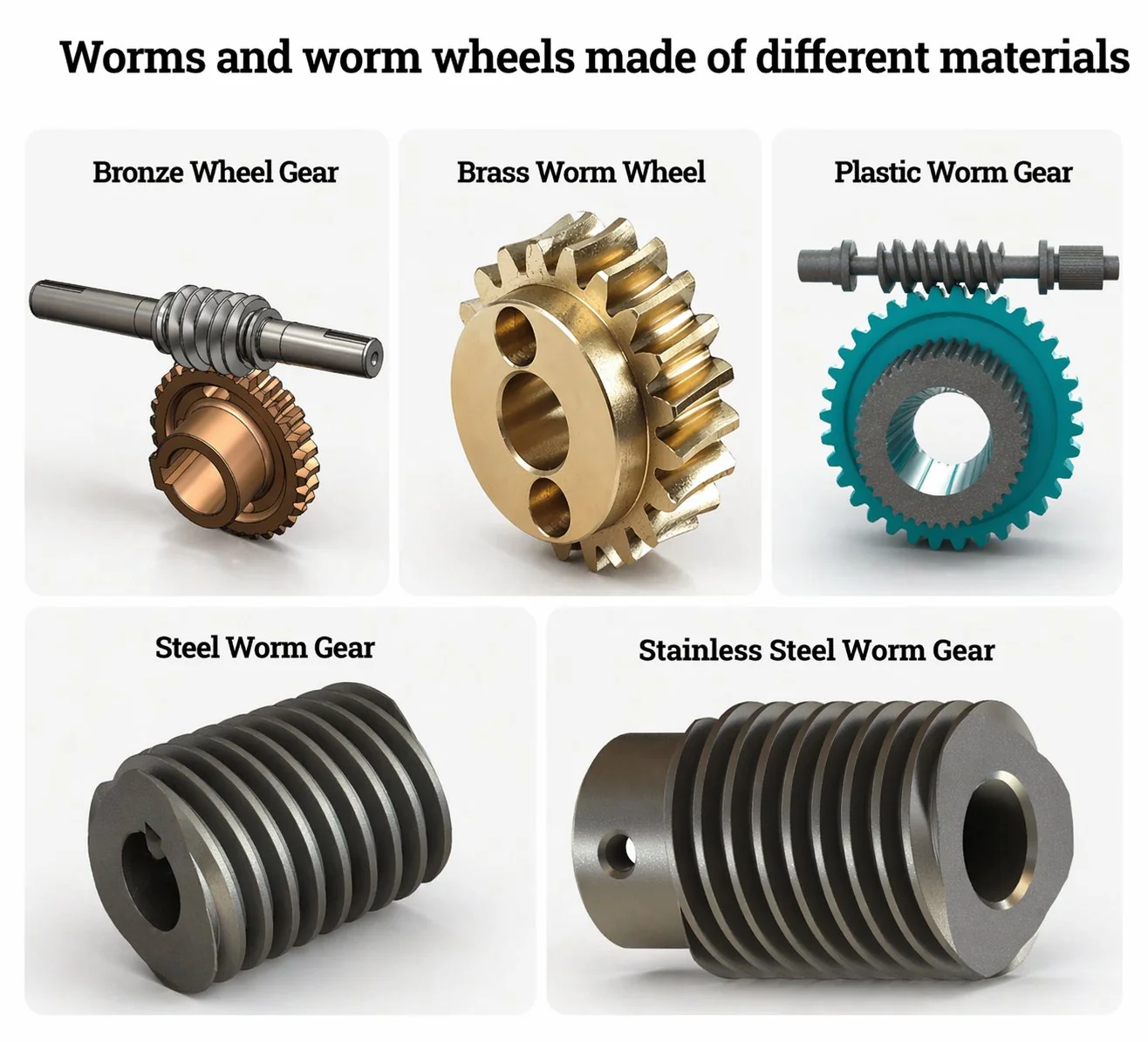
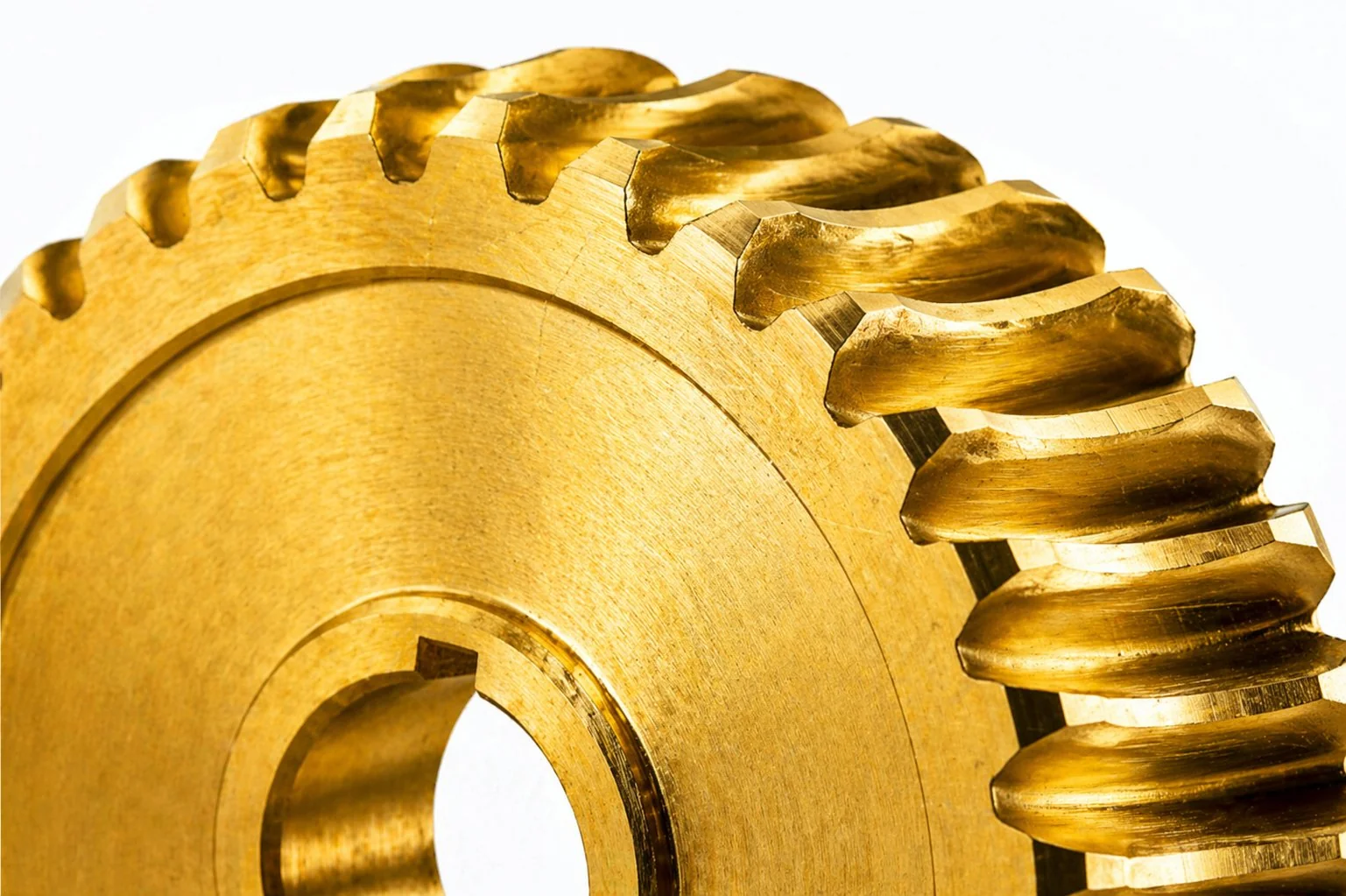
Denna kontinuerliga spårning producerar 5 till 15 miljoner positioneringscykler för snäckhjulspar per år – en utmattningsbelastningsregim som är 1 000 gånger högre än för en landbaserad geostationär antenn och jämförbar med de vindkraftverk som diskuteras i artikel A35. Materialet i snäckhjulsparet måste motstå denna utmattning: centrifugalgjutna fosforbrons- eller aluminiumbronshjul (sandgjutna hjul utvecklar utmattningssprickor vid porositetsställena inom 2 till 3 års maritim tjänst). Snäckan måste härdas till HRC 58+ och slipas till Ra 0,3 µm eller bättre – hackade snäckor producerar överdriven glapptillväxt under den kontinuerliga reverserande belastningen.
En koreansk maritim VSAT-tillverkare installerade Ku-bandsstabiliserade antennsystem på 12 containerfartyg. Varje antenn hade två snäckhjulspar (azimut och elevation). Den ursprungliga specifikationen använde standardiserade industriella snäckhjulspar – modul 1,5, centrumavstånd 35 mm, förhållande 90:1, sandgjutet fosforbronshjul, glapp 5 bågminuter. Pekningsbudgeten för Ku-bandet vid 1,0 m parabol krävde maximalt 3 bågminuter – redan marginellt vid 5 bågminuters initiala glapp. Efter 18 månaders kontinuerlig maritim spårning (cirka 7,5 miljoner reverseringscykler per axel) utvecklade 5 av de 24 elevationsaxelparen glapp över 12 bågminuter – de sandgjutna bronshjulen hade utvecklat utmattningssprickor under ytan vid gjutningsporositetsställen. Signalkvaliteten försämrades på de drabbade fartygen, vilket orsakade intermittenta länkavbrott under hårt väder (när fartygets rörelseamplitud var högst och snäckhjulsparet arbetade hårdast). Flottomfattande utbyte med centrifugalgjutna aluminiumbronshjul (porositetsfria, överlägsen utmattningslivslängd) och förspända duplexspecifikationer (glapp under 2 bågminuter). Kostnad per ersättningspar: 280 USD jämfört med 120 USD original – en premie på 160 USD. Kostnad för flottomfattande klagomål på länkkvalitet och akuta teknikerbesök på 5 fartyg över 3 kontinenter: cirka 45 000 USD. Lärdom: Maritima antennsnäckhjulspar måste specificeras för kontinuerlig reverserande utmattning, inte för industriell användning med statisk belastning. Centrifugalgjutna (inte sandgjutna) hjul och förspända (inte standardglapp) specifikationer är obligatoriska för alla antenner som spårar en satellit från en rörlig plattform.
Specifikationsfall för tre antennpositionerings-snäckväxelpar
Fall 1 — Koreansk maritim VSAT: Ku-band, 1,0 m parabol, stabiliserad, kontinuerlig spårning
En koreansk tillverkare av maritim VSAT specificerade snäckhjulspar för azimut- och elevationsaxlarna på en Ku-bandsstabiliserad antenn (1,0 m parabol, 14/12 GHz upplänk/nedlänk). Strålbredd: 1,4 grader. Maximalt pekfel: 0,14 grader (10 procent av strålbredden). Snäckhjulsparets glapptilldelning: 0,04 grader = 2,4 bågminuter. Korrigerad specifikation (efter flottans incident): förbelastad duplex, modul 1,5, centrumavstånd 35 mm, förhållande 90:1, mark-Ra 0,3 µm. Hjul: centrifugalgjuten aluminiumbrons (utmattningsklassad för 20 miljoner reverseringscykler). Effektivt glapp: 1,8 bågminuter. Motor: 24 V DC-servo med 65 536-räknings absolutkodare. Vindhållningsmoment (förvaringsläge, Beaufort 10): 450 Nm. Hus: marin epoxibelagd aluminium, IP66. Kostnad per par: 280 USD. Två per antenn: 560 USD. Årsproduktion: 800 antennsystem (1 600 snäckhjulspar). Signalkvalitet efter uppgradering: noll länkavbrott tillskrivna pekfel i hela flottan.
Fall 2 — Japansk LEO-satellitspårning: Ka-band, 3,7 m parabol, subbågsekund, markbaserad
Ett japanskt satellitkommunikationsföretag specificerade snäckhjulspar för en 3,7 meter lång jordstation i Ka-band som spårar LEO-satelliter för bredbandsinternetgatewaytjänster. Strålbredd: 0,2 grader. Maximalt pekfel: 0,02 grader = 72 bågsekunder. Tilldelning av snäckhjulsparets glapp: 15 bågsekunder (20 procent av den totala pekbudgeten). Detta var under den förbelastade duplexgränsen (vanligtvis 1 till 2 bågminuter = 60 till 120 bågsekunder) – vilket krävde en ytterligare korrigeringsslinga för kodare och återkoppling som mätte antennens faktiska position via en precisionskodare monterad direkt på antennens axel (och kringgick snäckhjulsparets glapp i styrslingan). Snäckhjulspar: förbelastad duplex, modul 2, centrumavstånd 50 mm, förhållande 360:1, överlappad Ra 0,2 µm, DIN-klass 3. Effektivt mekaniskt glapp: 45 bågsekunder – men kodare-återkopplingsslingan minskade det effektiva pekfelet till under 10 bågsekunder genom att kompensera för glappet i programvaran. Hjul: centrifugalgjuten tennbrons med nickeltillsats. Kostnad per par: 850 USD. Två per antenn: 1 700 USD. Bläddra precisionsmaskväxlar för antenn alternativ för satellitspårning och jordstationstillämpningar.
Fall 3 — Vietnamesisk sändningsupplänk: C-band, 4,5 m parabol, fast geostationär, kostnadsoptimerad
En vietnamesisk tv-sändare specificerade snäckhjulspar för azimut- och elevationsdrifterna på en 4,5 meter lång C-bandsantenn riktad mot en geostationär satellit. Strålbredd: 0,8 grader. Maximalt pekfel: 0,08 grader = 4,8 bågminuter. Den generösa C-bandsbudgeten tillät ett standardiserat (icke-förspänt) snäckhjulspar med 6 bågminuters glapp – väl inom tilldelningen på 4,8 bågminuter med marginal. Antennen pekade en gång vid installationen och justerades endast under årligt underhåll – i princip noll driftscykler per år (den ultimata lågbelastningsapplikationen). Snäckhjulspar: enkelstart, modul 3, centrumavstånd 80 mm, förhållande 72:1, slipad Ra 0,4 µm. Standard fosforbronshjul (inget utmattningskrav – noll cykler). Vindhållningsmoment vid 4,5 m parabolen: 3 200 N·m (designvind 35 m/s). Hölje: varmförzinkat, IP55. Kostnad per par: 145 USD. Två per antenn: 290 USD. Specifikationen visar att C-bandsantenner med fast punkt är bland de minst krävande snäckväxelparapplikationerna i alla branscher – lägre precision, lägre driftbelastning och lägre kostnad än en indexeringsdrivning för förpackningsmaskiner (artikel A16).
Vanliga frågor
F: Hur beräknar jag glappbudgeten för snäckväxelparet för min antenn?
Börja med strålbredden på 3 dB: BW = 70 × λ / D (grader), där λ är våglängden (m) och D är skåldiametern (m). Det maximala tillåtna totala pekfelet är vanligtvis 10 till 20 procent av strålbredden (beroende på länkens budgetmarginal). Allokera 20 till 30 procent av den totala pekbudgeten till snäckhjulsparets glapp (reservera 70 till 80 procent för strukturell nedböjning, termisk expansion och vindböjning). Exempel: Ka-bandet vid 30 GHz (λ = 0,01 m), D = 2,4 m: BW = 70 × 0,01 / 2,4 = 0,29 grader. Total felbudget vid 15 procent: 0,044 grader = 2,6 bågminuter. Snäckhjulsparallokering vid 25 procent: 0,65 bågminuter = 39 bågsekunder. Detta kräver ett förladdat duplexpar – standardpar kan inte uppnå under 1 bågminut.
F: Varför slits snäckväxlar snabbare ut på maritim antennspårning än på landbaserade antennspårningar?
En landbaserad geostationär antenn justerar positionen en gång (under installationen) och håller den – snäckhjulsparet kan utföra färre än 100 positioneringscykler per år. En maritim stabiliserad antenn korrigerar kontinuerligt för fartygets rullning, lutning och girning – och utför 10 till 50 korrigeringar per sekund, 24 timmar per dag, vilket producerar 5 till 15 miljoner reverseringscykler per år. Denna kontinuerliga reverseringsbelastning producerar kontaktutmattning på hjulens kuggflanker som vanliga industriella snäckhjulspar inte är konstruerade för. Sandgjutna bronshjul (som innehåller mikroporositet från gjutprocessen) utvecklar utmattningssprickor under marken på dessa porositetsställen inom 2 till 3 år. Centrifugalgjutna eller smidda hjul (porositetsfria) håller i 8 till 12 år under samma maritima spårningstjänst.
F: Kan kodningsåterkoppling kompensera för glapp mellan snäckhjulspar och antennspårning?
Ja — genom att montera en precisionspulsgivare direkt på antennens axel (efter snäckhjulsparet) snarare än på motoraxeln (före paret). Den axelmonterade pulsgivaren mäter den faktiska antennens vinkel inklusive glapp, och servostyrenheten kompenserar genom att justera motorpositionen. Denna teknik kan minska det effektiva pekfelet till 10 till 20 procent av det mekaniska glappet — vilket gör det möjligt för ett par med 3 bågminuter mekaniskt glapp att uppnå effektiv pekning under bågminuter. Nackdelen: axelmonterade pulsgivare kostar 800 till 3 000 USD (jämfört med 50 till 200 USD för motoraxelpulsgivare) och kräver precisionsmontering som ökar monteringskomplexiteten. Denna metod är standard för Ka-band- och LEO-spårningssystem där pekkravet överstiger det mekaniska glapp som kan uppnås med vilket snäckhjulspar som helst.
F: Vilket korrosionsskydd behöver snäckväxlar för utomhusantenner?
De flesta landbaserade antenner används i vanliga utomhusmiljöer (ISO 12944 C2 till C3) där varmförzinkade höljen och standardtätningar ger 15+ års drifttid. Maritima antenner används enligt C5-M (samma marina klassificering som vinschdrev i artikel A29) och kräver hölje i rostfritt stål 316L eller marint belagt med FKM-tätningar. Kustnära landbaserade antenner inom 1 km från havet kan uppleva C4-förhållanden som kräver epoxibelagt hölje och EPDM-tätningar. Korrosionsspecifikationen är oberoende av specifikationen för peknoggrannhet – en C-bandsantenn med avslappnat glapp behöver fortfarande C5-M korrosionsskydd om den är monterad på ett fartyg.
F: Vad är den typiska livslängden för ett snäckväxelpar för antennpositionering?
Landbaserad geostationär: 15 till 25 år (i princip noll cykler — korrosion och tätningsnedbrytning är de livslängdsbegränsande faktorerna). Landbaserad LEO-spårning: 8 till 15 år (måttlig cykling vid 500 till 2 000 spår per dag). Maritim stabilisering: 5 till 10 år (kontinuerlig högcyklisk utmattning — centrifugalgjutna hjul förlängs till 8 till 12 år). Själva masken håller antennens livslängd i samtliga fall (härdat stål, slipad yta, låg kontaktspänning). Hjulet är det förbrukningsbara elementet — planera utbyte med samma intervall som renoveringen av antennens elektronik.
Snäckhjulspar i antennpositioneringsregulatorer överbryggar klyftan mellan maskinteknik och RF-kommunikation – glappet i kugghjulsparet avgör direkt antennens peknoggrannhet, vilket i sin tur avgör signalkvaliteten vid satellitlänken. Budgettabellen för peknoggrannhet mappar frekvensband och paraboldiameter till det maximalt tillåtna glappet – vilket visar att Ka-bands- och LEO-spårning kräver förbelastade duplexpar med ett glapp under bågminut, medan C-bands system med fast punkt tolererar standard industriella par vid 6 till 10 bågminuter. Maritimt stabiliserade antenner adderar kontinuerlig reverserande utmattning vid 5 till 15 miljoner cykler per år – vilket kräver centrifugalgjutna hjul och förbelastade specifikationer som sandgjutna standardpar inte kan överleva. För antenntillverkare börjar specifikationen för snäckhjulsparet med RF-länkens budget, inte den mekaniska vridmomentberäkningen.
För antenntillverkare och satellitkommunikationsföretag beräknar vår teknikavdelning pekbudgeten utifrån er RF-specifikation och rekommenderar snäckväxelparets glappklass. Standardkatalog precisionssnäckhjulssatser Täck antennpositioneringsstorlekar från 25 till 100 mm centrumavstånd med standard och förinstallerade duplexalternativ. Skicka in en antenndrivningsspecifikation med frekvensband, paraboldiameter, spårningstyp (fast/LEO/maritim) och vindhastighet.
Specificera snäckväxelpar för antennpositioneringsregulatorer?
Sändfrekvensband, paraboldiameter, spårningstyp (geostationär, LEO, maritim), vindhastighet och om antennen är landbaserad eller fartygsmonterad. Vi beräknar pekbudgeten och rekommenderar glappklass, förspänningsmetod och korrosionsspecifikation.
Redaktör: Cxm