Korea Ever-Power · Giya sa Inhenyeriya sa Aplikasyon
Worm ug Worm Wheel para sa Belt Conveyor Drives — Giya sa Paglikay sa Pagbaliktad
Ang usa ka horizontal conveyor nagkinahanglan og efficiency. Ang usa ka inclined conveyor nagkinahanglan og anti-rollback. Ang tipping point anaa sa mga 10 degrees nga incline — sa ubos niini, ang multi-start worm gear pair makadaginot og enerhiya; sa ibabaw niini, ang single-start pair makapugong sa loaded belt sa pagdagan paatras ubos sa gravity kung mohunong ang motor. Ang sayop nga paggamit sa threshold moresulta sa pag-usik sa kuryente o usa ka belt nga puno sa materyal nga gilabay sa salog sa pabrika.
Ang mga belt conveyor mao ang pinakadako nga bahin sa aplikasyon para sa mga pares sa worm gear sa tibuok kalibutan, nga nagkantidad og gibana-bana nga 25 ngadto sa 30 porsyento sa tanang panginahanglan sa industrial worm gear. Ang desisyon sa espesipikasyon nabahin sa anggulo sa incline: ang pinahigda ug gamay nga incline (0 ngadto sa 10 degrees) pabor sa 2-start o 3-start nga mga pares para sa mas taas nga efficiency (75 ngadto sa 88 porsyento); ang kasarangan nga incline (10 ngadto sa 25 degrees) nagkinahanglan og single-start nga mga pares para sa anti-rollback self-locking (efficiency 40 ngadto sa 65 porsyento); ang titip nga mga incline nga labaw sa 25 degrees nagkinahanglan og single-start nga mga pares dugang usa ka lahi nga mechanical brake bisan unsa pa ang self-locking status. Ang startup torque sa usa ka loaded belt kasagaran moabot sa 1.5 ngadto sa 2.5 ka pilo sa steady-state running torque, ug ang pagkapakyas sa pag-apply niini nga startup factor mao ang labing komon nga sizing error para sa mga pares sa conveyor worm gear. Ang standard nga pagpares sa materyal mao ang case-hardened steel worm batok sa phosphor bronze wheel; ang basa o corrosive nga mga conveyor kinahanglan nga motino sa mga alternatibo nga aluminum bronze o stainless steel.
Ngano nga ang mga belt conveyor mao ang pinakadako nga merkado alang sa mga pares sa worm gear
Tulo ka kinaiya sa worm ug worm wheel ang naghimo kanila nga default nga kapilian alang sa mga belt conveyor drive sa mga industriya gikan sa mga sentro sa logistics hangtod sa mga operasyon sa pagmina.
Ang motor mo-mount nga perpendikular sa conveyor roller shaft. Kini makatangtang sa pagkakomplikado sa coupling ug alignment sa usa ka inline drive ug makadaginot og 30 ngadto sa 50 porsyento sa axial length sa likod sa drive roller — kritikal nga espasyo sa mga conveyor head-end frame.
Ang mga belt conveyor kasagarang modagan sa 0.3 ngadto sa 1.5 m/s nga belt speed, nga nagkinahanglan og output shaft speeds nga 20 ngadto sa 80 rpm gikan sa motor speeds nga 1,400 ngadto sa 1,800 rpm. Ang ratios nga 20:1 ngadto sa 60:1 sa usa ka single worm gear stage nagwagtang sa panginahanglan alang sa usa ka two-stage helical o planetary arrangement.
Sa mga inclined conveyor, ang gravity component sa loaded belt mopaatras sa belt kon mohunong ang motor. Ang self-locking worm ug worm wheel pair makapugong niini nga dili kinahanglan og lahi nga preno — nga makapakunhod sa gidaghanon sa mga piyesa, gasto, ug maintenance.
Kining tulo ka mga kabtangan nagpatin-aw nganong ang mga pares sa worm gear mas maayo kay sa ubang mga tipo sa gear sa mga aplikasyon sa conveyor. Ang mga pares sa helical gear nagtanyag og mas taas nga efficiency apan dili maka-self-lock. Ang mga planetary gear set nagtanyag og compactness apan mas taas ang gasto ug walay 90-degree nga layout. Ang worm ug worm wheel nag-okupar sa sentro sa Venn diagram — madawat nga efficiency, self-locking capability, compact right-angle design, ug kasarangan nga gasto.
Ang desisyon sa anggulo sa pag-ikid — kung ang anti-rollback mag-usab sa espesipikasyon
Ang kritikal nga pangutana sa inhenyeriya alang sa matag espesipikasyon sa conveyor worm gear mao kung ang aplikasyon nanginahanglan ba og anti-rollback. Ang tubag nagdepende sa anggulo sa incline sa belt ug sa materyal nga gidala. Ang usa ka horizontal conveyor nga nagdala og mga piyesa sa awto walay risgo sa rollback sa gravity. Ang usa ka 20-degree inclined conveyor nga nagdala og limestone adunay seryoso nga risgo sa rollback — ang usa ka loaded belt sa 20 degrees nagtipig og dakong gravitational potential energy nga moduso sa belt paatras sa higayon nga makuha ang gahum.
Ang talaan sa ubos nagpakita sa anggulo sa pag-iklin ngadto sa resulta nga espesipikasyon sa pares sa worm gear. Kini ang labing importante nga himan sa pagpili alang sa pagpalit og conveyor worm gear.
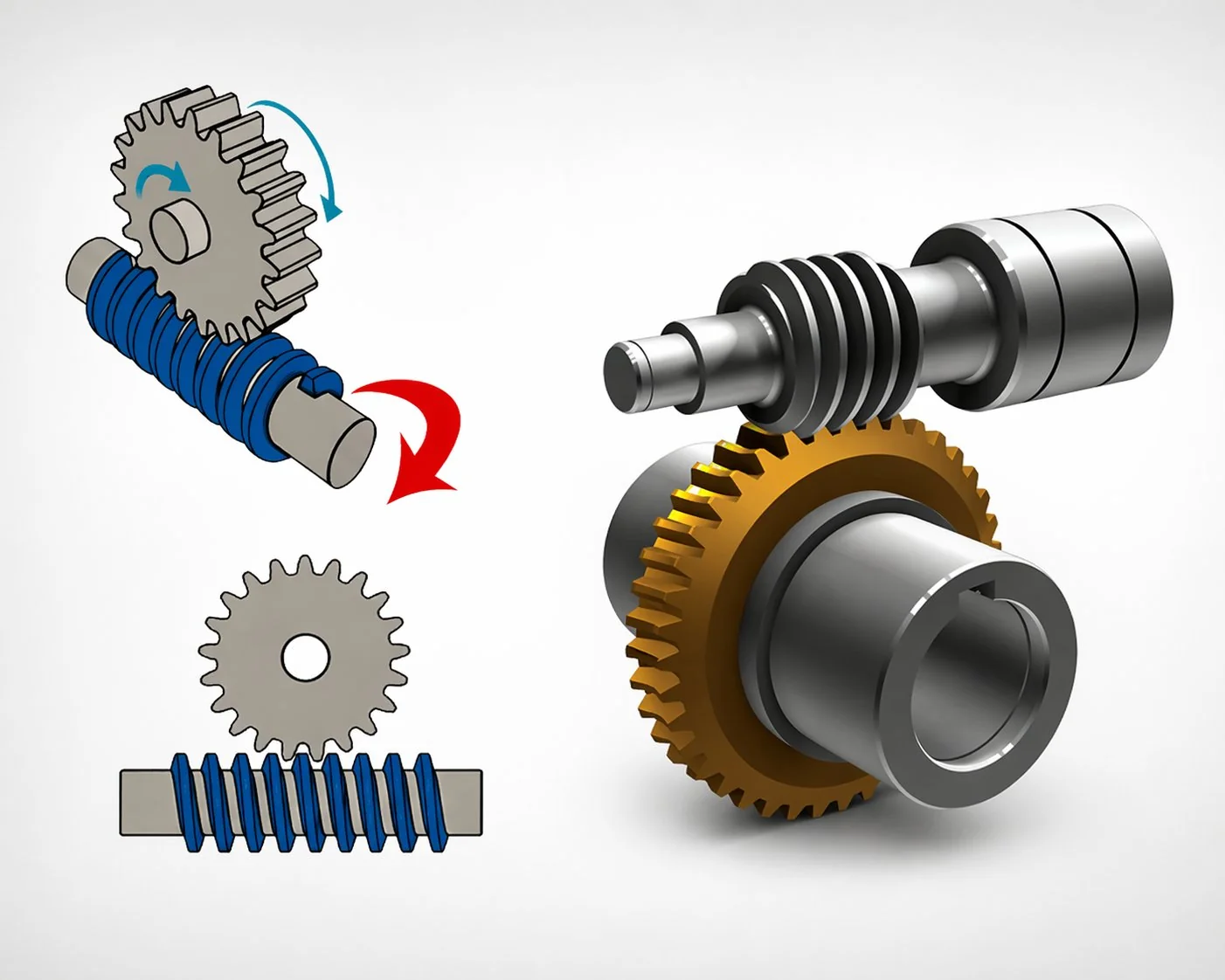
Ang transition band tali sa 8 ug 12 degrees nga incline mao ang labing gikuwestiyon nga desisyon sa espesipikasyon. Ubos sa 8 degrees, ang efficiency ang modominar ug ang multi-start pairs klaro nga mas maayo. Labaw sa 12 degrees, ang anti-rollback ang modominar ug ang single-start pairs ang mandatory. Tali sa 8 ug 12 degrees, ang tubag nagdepende sa materyal nga gidala — ang bug-at nga bulk solids (graba, ore, lugas) nagtipig og dugang gravitational energy kada metro sa belt ug nagduso sa threshold nga mas ubos; ang gaan nga mga butang (mga parsela, karton, plastik nga mga piyesa) nagtipig og gamay nga enerhiya ug nagtugot sa threshold nga molingkod nga mas taas.
Dako ang silot sa kahusayan sa pagpili og single-start pair sa usa ka horizontal conveyor. Ang 3-start pair nga adunay 85 porsyento nga kahusayan batok sa single-start pair nga adunay 50 porsyento nga kahusayan sa parehas nga 5.5 kW conveyor motor nag-usik og gibana-bana nga 1.9 kW nga padayon — 14,000 kWh kada tuig sa 7,500 ka oras sa operasyon. Sa mga rate sa kuryente sa industriya sa Korea, kana gibana-bana nga 1,800 USD kada tuig sa nausik nga enerhiya kada drive. Ang pagtino sa husto nga gidaghanon sa mga pagsugod alang sa tinuud nga pag-incline dili usa ka gamay nga pag-optimize; kini usa ka hinungdanon nga desisyon sa gasto sa operasyon.
Pagsukod sa pares sa worm gear para sa padayon nga conveyor duty
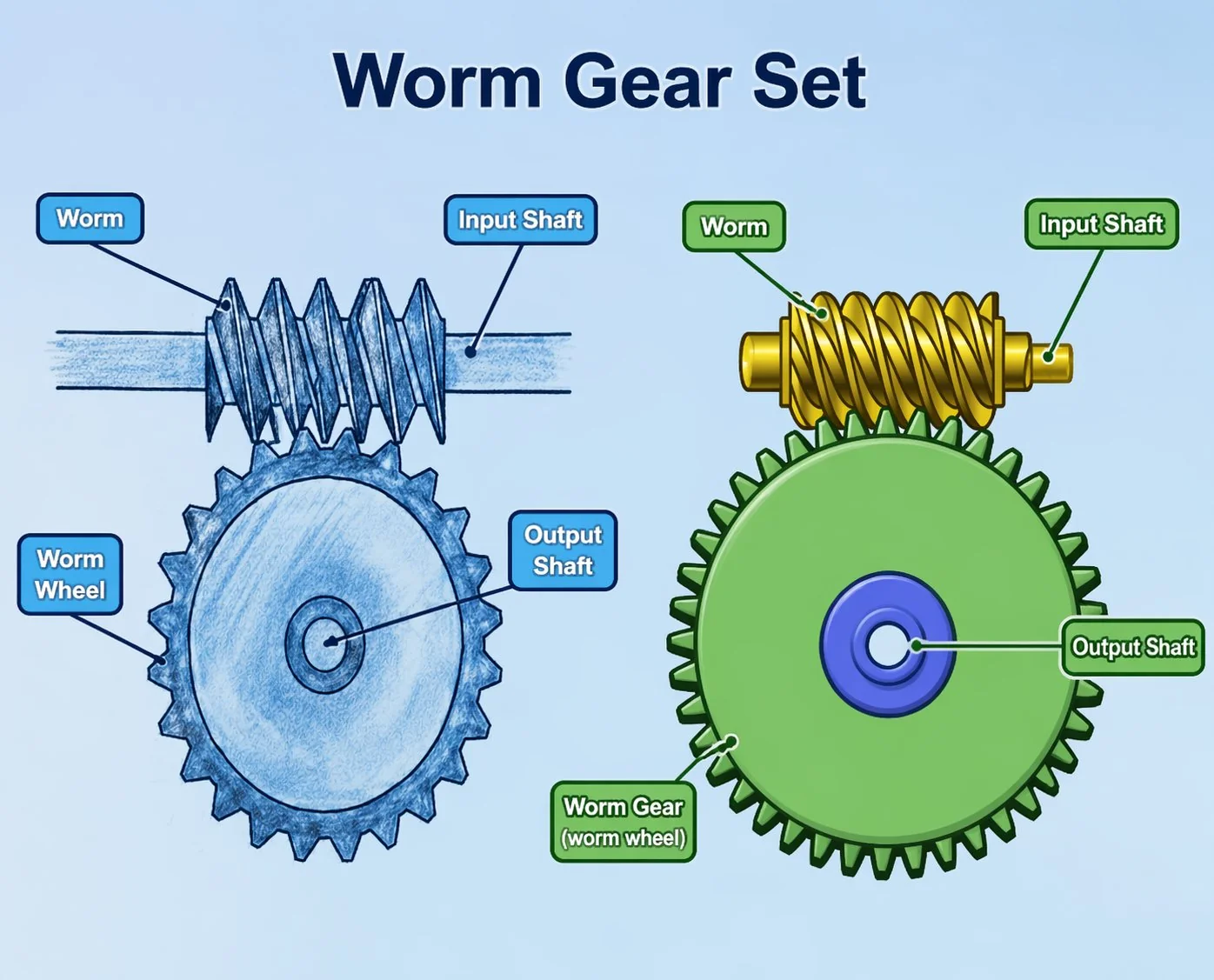
Ang pagsukod sa conveyor worm gear nanginahanglan og duha ka kalkulasyon nga kanunay nga masipyat sa inisyal nga espesipikasyon: ang startup torque multiplier ug ang thermal check para sa padayon nga operasyon.
Startup torque sa usa ka loaded belt. Ang usa ka belt conveyor nga mohunong ubos sa karga ug magsugod pag-usab nga ang materyal anaa sa belt makakita og mas taas nga torque sa pagsugod kay sa panahon sa steady-state running. Ang static friction sa belt, ang material settling atol sa stop period, ug ang acceleration ramp tanan nakatampo. Ang kasagarang startup torque multiplier para sa usa ka loaded belt restart gikan sa 1.5 ka beses (light load, short stop) ngadto sa 2.5 ka beses (heavy bulk material, prolonged stop with material compaction). Ang worm gear pair rated torque kinahanglan nga molapas sa startup torque — dili lang sa steady-state running torque — pinaagi sa service factor margin.
Pagsusi sa kainit para sa padayon nga pagtrabaho. Ang mga belt conveyor kasagarang modagan og 16 ngadto sa 24 oras kada adlaw, ug ang pares sa worm gear mopagawas og gibana-bana nga 15 ngadto sa 50 porsyento sa input power isip kainit (depende sa efficiency). Ang 5.5 kW drive nga adunay single-start pair sa 50 porsyento nga efficiency makamugna og 2.75 kW nga waste heat nga padayon. Kung walay igong pagpabugnaw — natural convection, fan, o sirkulasyon sa lana — ang temperatura sa housing mahimong molapas sa lubricant thermal limit (kasagaran 90 ngadto sa 100 degrees Celsius para sa synthetic grease), hinungdan sa paspas nga pagkaguba. Ang matag 10 degrees nga labaw sa lubricant reference temperature mokatunga sa kinabuhi sa serbisyo sa grease. Ipiho ang finned housings o fan cooling sa bisan unsang continuous-duty conveyor worm gear drive nga labaw sa 3 kW input power nga adunay single-start pairs.
Usa ka Korean logistics center ang nagtino sa 2-start worm gear pairs nga adunay 80 mm center distance para sa bag-ong parcel sorting line. Ang tanang 24 ka conveyor kay horizontal. Paglabay sa unom ka bulan, ang pasilidad midugang og mezzanine level nga adunay upat ka inclined transfer conveyors nga adunay 15 degrees — ug ang procurement team nag-order sa samang 2-start pairs nga gigamit sa horizontal conveyors. Sulod sa duha ka semana, ang mga operator nagtaho sa parcel rollback atol sa shift-change motor stops: ang mga kahon na-slide paatras og 0.5 ngadto sa 1.5 metros sa matag shutdown. Ang 2-start pair sa 15 degrees adunay lead angle nga gibana-bana nga 11 degrees — mas taas kay sa friction angle nga mga 5 degrees uban sa na-install nga PAG synthetic oil. Ang mga pares geometrically non-locking. Ang pag-ilis sa single-start pairs sa samang center distance ug module nagkantidad og 480 USD kada drive × 4 ka drive = 1,920 USD total, dugang 2 ka adlaw nga installation labor sa 1,600 USD. Ang mga replacement pairs, sa lead angle nga 5.7 degrees, kay borderline self-locking ubos sa samang lubricant conditions. Ang engineering midugang og simpleng backstop sa matag drive isip dugang nga insurance — 120 USD matag unit. Ang kinatibuk-ang gasto sa pagtul-id sa sayop sa espesipikasyon kay 2,400 USD dugang 2 ka adlaw nga nalangan nga mezzanine commissioning. Ang orihinal nga sayop mapugngan unta pinaagi sa pagsusi sa incline angle decision table sa dili pa mag-order. Ang 4 ka inclined conveyors nanginahanglan og lain-laing pares sa worm gear gikan sa 24 ka horizontal — parehas nga center distance, parehas nga module, lain-laing gidaghanon sa pagsugod.
Pagpili sa materyal para sa mga pares sa gear sa conveyor worm pinaagi sa palibot
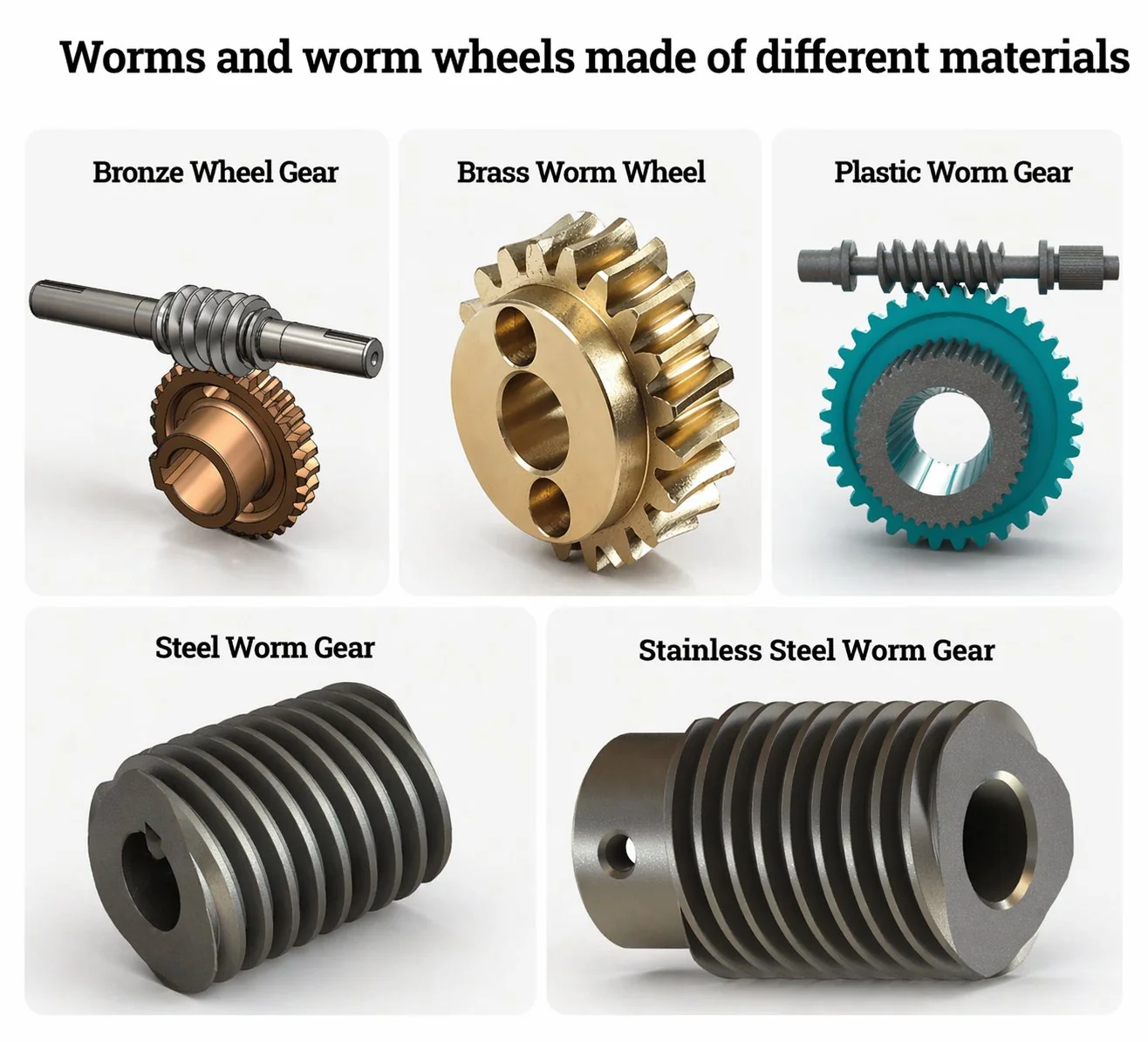
Ang mga palibot sa conveyor gikan sa limpyo nga mga sentro sa logistik sa sulod sa balay ngadto sa basa nga mga food processing hall ngadto sa abogon nga mga open-air mining site. Ang pagpares sa materyal sa worm ug worm wheel kinahanglan nga mohaum sa palibot — ang standard nga phosphor bronze maayo nga mogana sa sulod sa balay, apan ang usa ka fish-processing conveyor o quarry belt nanginahanglan og lahi nga metalurhiya ug proteksyon sa nawong.
Tulo ka kategorya sa palibot ang naglangkob sa praktikal nga sakup sa mga desisyon sa materyal sa conveyor worm gear.
Ulod: Gipagahi sa kaso nga 16MnCr5 nga asero, HRC 58-62, gigaling nga Ra 0.4-0.8 µm.
Ligid: Bronse nga pospor CuSn12Ni, giluto sa hob nga Ra 1.6 µm.
Lubricant: PAG sintetiko o mineral nga EP gear oil.
Aplikasyon: Conveyor sa mga piyesa sa sakyanan, pag-sort sa parsela, pagpakaon sa linya sa pagputos.
Ulod: AISI 304 o 316L stainless, o zinc-plated carbon steel.
Ligid: Bronse nga aluminyo CuAl10Fe5Ni5 (mas maayong resistensya sa taya kon itandi sa bronse nga phosphor).
Lubricant: NSF H1 sintetikong grasa nga food-grade, selyado nga balay.
Aplikasyon: Pagproseso sa mga pagkaong gikan sa dagat, mga produkto gikan sa gatas, mga ilimnon, mga tambal.
Ulod: Pinatig-a pag-ayo nga 42CrMo4, HRC 28-34, gigaling nga Ra 0.8 µm (makasugakod sa epekto).
Ligid: Centrifugal-cast phosphor bronze (mas dasok, mas gamay nga porosity defects kaysa gravity-cast).
Lubricant: Selyado nga tibuok kinabuhi nga grasa nga adunay mga labyrinth seal, breather filter.
Aplikasyon: Quarry, semento, pagdumala sa karbon, aggregate.
Ang desisyon sa materyal halos kanunay nga gimaneho sa palibot imbes nga karga. Ang 200 N·m nga indoor conveyor ug ang 200 N·m nga fish-processing conveyor nanginahanglan sa parehas nga kapasidad sa torque apan lahi kaayo ang metalurhiya ug pagsilyo. Ang pagtino sa standard nga phosphor bronze sa usa ka wet-washdown nga palibot mosangpot sa dezincification corrosion sa ligid — dili makita hangtod nga ang gibag-on sa ngipon mawad-an og 10 hangtod 15 porsyento sa orihinal nga dimensyon niini ug kalit nga motubo ang backlash.
Tulo ka mga kaso sa espesipikasyon sa pares sa conveyor worm gear
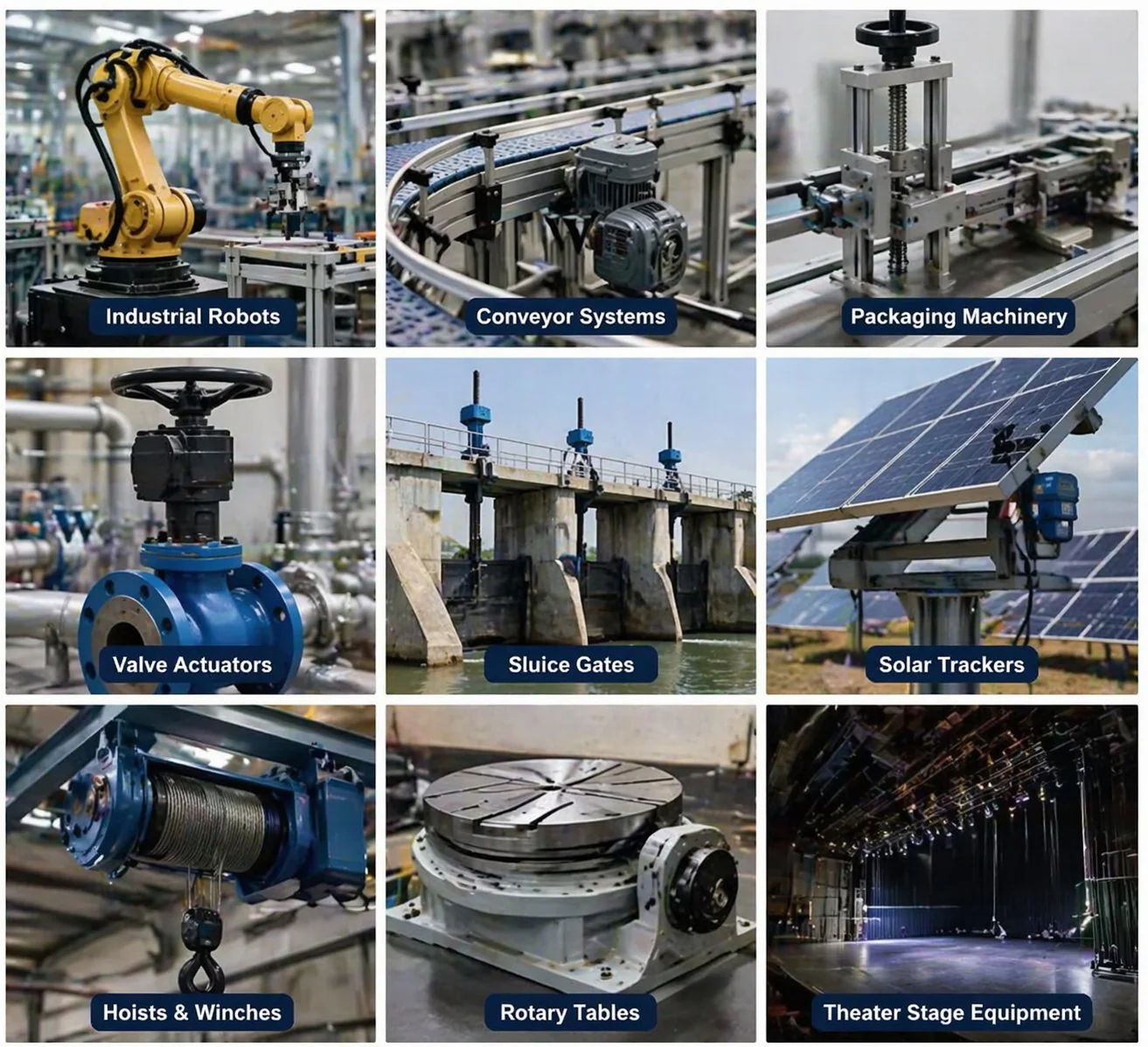
Kaso 1 — Koreano nga conveyor sa mga piyesa sa awto: pinahigda, prayoridad sa kahusayan
Usa ka Korean Tier 1 automotive supplier ang nagtino og mga pares sa worm gear para sa 12 ka horizontal conveyor nga nagdala og stamped body panels taliwala sa mga press lines. Katulin sa belt 0.8 m/s, diametro sa drive drum 320 mm, tension sa belt 2,200 N. Gikalkulo nga output torque: T_belt = 2,200 × 0.32 / 2 = 352 N·m. Startup multiplier para sa light-load horizontal restart: K_start = 1.3. Service factor para sa moderate shock (press timing variation): SF = 1.5. Gikinahanglan nga rated torque: 352 × 1.3 × 1.5 = 686 N·m. Incline: 0 degrees — walay rollback risk. Espesipikasyon: 3-start worm gear pair, module 5, center distance 125 mm, q = 10, lead angle 16.7 degrees, ratio 40:1. Efficiency sa rated conditions: 86 porsyento. Tinuiig nga pagdaginot sa kuryente batok sa single-start nga espesipikasyon sa 48 porsyento nga kahusayan: 16,200 kWh kada drive × 12 ka drive = 194,400 kWh = gibana-bana nga 24,000 USD kada tuig. Leksyon: sa mga horizontal conveyor, ang pagtino sa multi-start pairs para sa kahusayan dili usa ka pag-optimize — kini usa ka desisyon sa gasto sa operasyon nga adunay lima ka digit nga tinuig nga epekto sa usa ka tipikal nga production floor.
Kaso 2 — Hapones nga food-grade nga inclined conveyor: 18 degrees, anti-rollback + washdown
Usa ka Hapones nga frozen seafood processor ang nagtino og mga pares sa worm gear para sa 6 ka inclined transfer conveyor nga nagdala og frozen shrimp trays gikan sa ground-level washing station ngadto sa mezzanine packaging hall. Incline: 18 degrees. Belt tension ubos sa full load: 1,800 N. Drive drum: 250 mm. T_belt = 225 N·m. K_start = 2.0 (ang mga frozen tray motapot sa belt atol sa restart). SF = 1.5 (kasarangan nga shock gikan sa tray weight variation). T_required = 225 × 2.0 × 1.5 = 675 N·m. Rollback risk sa 18 degrees: taas — ang gravity component sa loaded belt mopaatras sa belt sa gibana-bana nga 0.3 m/s. Espisipikasyon: single-start worm gear pair, module 5, center distance 160 mm, ratio 50:1, lead angle 3.6 degrees (kusog nga self-locking). Materyal: AISI 316L stainless worm, aluminum bronze CuAl10Fe5Ni5 wheel. Katapusan sa nawong: Ra 0.4 µm nga gigaling (gikinahanglan sa food-zone). Lubricant: NSF H1 nga rehistrado nga sintetikong grasa. IP65 selyado nga housing. Epektibo: 42 porsyento — nagpasabot nga ang 3 kW nga motor makahatag lang og 1.26 kW nga mapuslanong output. Ang silot sa epektibo mao ang gasto sa parehong anti-rollback ug food-grade nga espesipikasyon. Leksyon: sa mga aplikasyon sa food-grade inclined conveyor, ang epektibo mao ang katapusang prayoridad — ang pagsunod sa anti-rollback ug materyal dili mausab. Browse pangpamenos sa katulin sa worm gear mga opsyon nga mohaom sa mga espesipikasyon sa food-grade ug washdown para sa mga inclined conveyor drive.
Kaso 3 — Vietnamese mining conveyor: 30 degrees, single-start + band brake
Usa ka Vietnamese quarry sa anapog ang nagtino sa mga pares sa worm gear para sa usa ka 30-degree inclined belt conveyor nga nagdala sa dinugmok nga bato gikan sa usa ka primary jaw crusher ngadto sa usa ka secondary screening station. Ang tensyon sa belt ubos sa bug-os nga karga: 6,500 N. Ang drive drum: 400 mm. Ang T_belt = 1,300 N·m. Ang K_start = 2.5 (gisiksik nga bato sa belt atol sa dugay nga paghunong). Ang SF = 2.0 (bug-at nga shock gikan sa dili regular nga gidak-on sa bato). Ang T_required = 1,300 × 2.5 × 2.0 = 6,500 N·m. Ang risgo sa rollback sa 30 degrees: kritikal — ang usa ka bug-os nga kargado nga 30-degree belt nagtipig og igong enerhiya aron kusog nga mopaspas paatras ug hinungdan sa pagkapakyas sa belt splice. Espisipikasyon: single-start worm gear pair, module 10, center distance 250 mm, q = 14, lead angle 2.0 degrees (kusog nga self-locking). Worm: through-hardened 42CrMo4, HRC 30. Ligid: centrifugal-cast phosphor bronze CuSn12Ni. Dugang: band brake sa high-speed input shaft isip redundant holding. Awtomatikong mo-engage ang preno kon moabli ang motor contactor ug mohatag og secondary holding nga independente sa worm gear self-locking. Seal: triple labyrinth nga adunay breather filter (limestone dust). Pagpabugnaw: forced-air fan sa housing (padayon nga duty sa 38-degree ambient, single-start sa 38 porsyento nga efficiency makamugna og gibana-bana nga 5.6 kW nga waste heat). Leksyon: ang mga steep mining conveyor naglihok sa intersection sa maximum rollback risk, maximum startup torque, maximum thermal load, ug maximum contamination exposure. Ang matag parameter giduso ngadto sa limit niini — ug ang worm gear pair kinahanglan nga modumala sa tanang upat sa samang higayon.
Mga Kanunayng Gipangutana nga Pangutana
P: Mahimo ba nako gamiton ang parehas nga pares sa worm gear para sa parehas nga horizontal ug inclined conveyors sa parehas nga linya sa produksiyon?
Lamang kon ang duha ka conveyor makadawat sa parehas nga gidaghanon sa mga pagsugod. Kon ang ubang mga conveyor pinahigda ug ang uban naka-hilig nga labaw sa 10 degrees, ang mga pinahigda kinahanglan mogamit og multi-start pairs para sa efficiency samtang ang mga naka-hilig kinahanglan mogamit og single-start pairs para sa anti-rollback. Ang paggamit og single-start pairs sa horizontal conveyors makausik og 30 ngadto sa 40 porsyento sa input power. Ang paggamit og multi-start pairs sa inclined conveyors nameligro sa rollback. Ang pag-standardize sa usa ka single pair specification sa lain-laing mga incline usa ka komon nga pagpasimple sa pagpamalit nga mas mahal sa pag-usik sa enerhiya o risgo sa rollback kaysa pagmentinar sa duha ka specifications.
P: Unsay mahitabo sa self-locking reliability sa tibuok kinabuhi sa usa ka conveyor worm gear pair?
Samtang nagkaguba ang bronse nga ligid, ang epektibong friction coefficient sa contact mausab — ug ang pagbag-o mahimong moadto sa bisan asa nga direksyon. Ang run-in sa unang 100 ngadto sa 300 ka oras kasagarang mopahapsay sa bronse nga nawong ug gamay nga mokunhod sa friction, nga mahimong magduso sa borderline self-locking pair ngadto sa non-locking. Human sa run-in, ang friction coefficient mo-stabilize ug magpabilin nga makanunayon sulod sa liboan ka oras. Para sa mga kritikal nga inclined conveyor, ipiho ang lead angle labing menos 1 ngadto sa 2 degrees nga ubos sa gilauman nga friction angle human sa run-in (gamita ang dynamic friction angle, dili static). Kini nga margin nagsiguro nga ang self-locking mapadayon sa tibuok kinabuhi sa serbisyo. Kung ang pares nag-operate sulod sa 1 degree sa locking threshold, pagdugang og lahi nga preno isip insurance.
P: Giunsa makaapekto ang katulin sa sinturon sa espesipikasyon sa pares sa worm gear para sa mga conveyor?
Ang gikusgon sa sinturon ang nagtino sa gikinahanglan nga output shaft RPM ug busa ang gear ratio nga gikinahanglan gikan sa gihatag nga gikusgon sa motor. Ang kasagarang mga belt conveyor modagan sa 0.3 ngadto sa 2.0 m/s. Para sa 300 mm drive drum, ang 1.0 m/s katumbas sa gibana-bana nga 64 RPM output. Gikan sa 1,450 RPM motor, ang gikinahanglan nga ratio mga 23:1 — makab-ot sa usa ka single worm gear stage. Ang mas paspas nga mga sinturon (labaw sa 2 m/s) mahimong magkinahanglan og mas ubos nga ratio nga moduso padulong sa 2 o 3 ka pagsugod. Ang mas hinay nga mga sinturon (ubos sa 0.3 m/s) nanginahanglan og mas taas nga ratio nga pabor sa single-start pairs nga adunay dugang nga kontribusyon sa ratio. Ang gikusgon sa sinturon dili direktang makausab sa desisyon sa anti-rollback (nga nagdepende sa incline), apan kini makaimpluwensya kung ang gikinahanglan nga ratio natural nga mahulog sa self-locking o non-locking range sa mga pagsugod.
P: Kinahanglan ba nako nga mopili og backstop dugang sa worm gear self-locking para sa mga inclined conveyor?
Para sa mga bakilid nga labaw sa 15 degrees nga nagdala og bug-at nga bulk material, oo. Ang backstop (gitawag usab nga anti-runback device o holdback) usa ka lahi nga mechanical device nga gibutang sa drive shaft nga nagtugot sa pagtuyok sa unahan apan maka-lock sa reverse. Ang gasto kasagaran 80 ngadto sa 200 USD kada unit. Ang backstop naghatag og dugang nga proteksyon batok sa rollback bisan kung ang worm gear self-locking maapektuhan sa vibration, lubrication change, o wear-induced friction coefficient shift. Para sa mga conveyor nga ma-access sa tawo (mga operator nga nagtindog duol sa belt), ang backstop kanunay nga gimando sa mga regulasyon sa kaluwasan bisan unsa pa ang status sa worm gear locking. Para sa mga remote o unmanned conveyor, ang backstop usa ka desisyon base sa sangputanan sa usa ka rollback event — material spillage, kadaot sa belt, o safety hazard.
P: Unsaon nako pagkalkulo sa tensyon sa sinturon para sa pagsukod sa pares sa worm gear?
Ang tensyon sa sinturon para sa worm gear sizing mao ang epektibong tensyon sa drive drum — ang kalainan tali sa tight side ug slack side tensions, nga gipadaghan sa friction coefficient sa drum surface. Para sa first-pass estimate: F_eff = (mass per meter × belt length × g × (µ_r × cos θ + sin θ)) + (F_material × belt speed), diin ang µ_r mao ang roller friction coefficient (0.02 ngadto sa 0.05 para sa standard rollers), θ mao ang incline angle, ug ang F_material mao ang material-specific resistance. Para sa tukmang kalkulasyon, gamita ang DIN 22101 (belt conveyor standard) o CEMA (Conveyor Equipment Manufacturers Association) methodology. Ang mga kasaligang supplier sa worm gear mo-verify sa imong kalkulasyon sa belt tension isip kabahin sa gear pair sizing service kon mohatag ka og belt length, speed, incline, ug material density.
P: Unsa ang kasagarang gidugayon sa serbisyo sa usa ka pares sa worm gear sa usa ka conveyor nga nagdagan og duha ka shift kada adlaw?
Para sa usa ka hustong gitino nga pares (saktong torque rating nga adunay service factor, saktong gidaghanon sa pagsugod para sa incline, saktong materyal para sa palibot), ang kasagarang kinabuhi sa serbisyo kay 4 ngadto sa 8 ka tuig sa two-shift (5,000 ngadto sa 6,000 ka oras kada tuig) nga iskedyul. Ang pangunang elemento sa pagkaguba mao ang bronze wheel — ang steel worm kasagaran molungtad og mas dugay kay sa 2 ngadto sa 3 ka pag-ilis sa ligid. Monitora ang backlash kada tuig; kung ang backlash moabot og doble sa kantidad sa delivery certificate, planoha ang pag-ilis sa ligid sa sunod nga maintenance window. Para sa three-shift o padayon nga 24/7 nga operasyon, pakunhuran ang gilauman nga kinabuhi ngadto sa 2.5 ngadto sa 5 ka tuig tungod sa natipon nga thermal ug wear loading. Ang pagtino sa ground surface finish (Ra 0.4 µm) sa worm nagpalugway sa kinabuhi sa ligid og halos 30 ngadto sa 50 porsyento kon itandi sa hobbed-only finish (Ra 1.6 µm) pinaagi sa gipauswag nga lubrication film formation.
Ang mga belt conveyor mao ang dugokan sa industrial material handling, ug ang worm gear pair mao ang drive component nga nagpaandar sa kadaghanan niini. Ang incline angle decision table nagbulag sa espesipikasyon ngadto sa duha ka klaro nga agianan: ang horizontal ug slight inclines naggamit og multi-start pairs para sa efficiency; ang moderate ug steep inclines naggamit og single-start pairs para sa anti-rollback self-locking. Tali sa 8 ug 12 degrees, ang desisyon nagdepende sa gibug-aton sa materyal ug rollback consequence. Ang startup torque sa usa ka loaded belt moabot sa 1.5 ngadto sa 2.5 ka pilo sa steady-state running torque — ang labing kasagarang wala mamatikdi nga sizing factor sa conveyor worm gear procurement. Ang material pairing nagsunod sa environment: standard phosphor bronze para sa limpyo nga indoor, aluminum bronze o stainless para sa wet ug washdown, through-hardened steel worm nga adunay centrifugal-cast bronze para sa dusty mining applications. Ang kalainan sa gasto tali sa pagkuha niining mga desisyon nga husto ug sa pagkuha niini nga sayop gisukod sa energy waste, rollback incidents, o premature failure — nga tanan milabaw sa gasto sa mga gear pairs mismo sulod sa unang tuig sa operasyon.
Para sa mga tiggama og conveyor sa Korea ug Hapon nga nagtino sa mga pares sa worm gear para sa bag-ong mga linya sa produksiyon o mga programa sa pag-ilis, ang among engineering desk nagpadagan sa incline angle decision table ug pagkalkula sa startup torque batok sa imong piho nga mga parameter sa belt. Standard nga katalogo mga set sa gear sa phosphor bronze worm motabon sa mga distansya sa sentro gikan sa 50 ngadto sa 250 mm sa single-start ngadto sa 4-start nga mga configuration. Ang custom nga mga pares sa materyal (stainless, aluminum bronze, through-hardened) anaa sa 4 ngadto sa 6 ka semana nga lead time — pagsumite og espesipikasyon sa conveyor drive hangyoa uban ang imong mga parametro sa bakus ug ang among team mohatag og kompletong rekomendasyon sa pares sa worm gear sulod sa usa ka adlaw sa trabaho sa Korea.
Pagsukod sa usa ka pares sa worm gear para sa bag-o o kasamtangang belt conveyor?
Ipadala ang gikusgon sa sinturon, tensyon sa sinturon (o gahum ug ratio sa motor), anggulo sa pagkahilig, ug deskripsyon sa palibot. Among susihon ang talaan sa anggulo sa pagkahilig, kuwentahon ang torque sa pagsugod, irekomendar ang saktong gidaghanon sa pagsugod, ug i-quote ang standard ug custom nga mga opsyon sa materyal — kasagaran sulod sa usa ka adlaw sa trabaho sa Korea.
gi-edit ni cxm