Korea Ever-Power · Application Engineering Guide
手动绞车和链式起重机驱动用蜗杆和蜗轮
A manual chain hoist has no motor, no electrical brake, and no control system. When the operator releases the hand chain, the only thing holding a 2-tonne steel beam 4 metres in the air is the friction geometry of a single worm gear pair. This is the purest self-locking application in engineering — the gear pair is the entire safety system.
Manual winches and chain hoists are the purest self-locking worm gear application because the gear pair is the sole load-holding mechanism — no motor brake, no backstop, no electrical redundancy. All manual hoists use single-start worm gear pairs with lead angles of 2 to 4 degrees and self-locking margin of at least 2 degrees below the friction angle. The design constraint is operator effort: the hand chain pull force or crank handle force must stay below 20 to 25 kg (200 to 250 N) for sustained operation — this sets the minimum gear ratio. The hand-crank effort formula F = (W × r_drum) / (i × η × L_arm) translates the rated load, drum radius, gear ratio, and handle arm length into the force an operator must apply. For a 2-tonne hoist with 50:1 ratio and 350 mm handle arm, the pull force is approximately 23 kg — near the ergonomic limit. Outdoor and marine manual winches add corrosion resistance requirements: zinc-plated or stainless worm, aluminium bronze wheel, and sealed grease pack.
Why manual hoists are the purest worm gear self-locking application
In a powered crane, the worm gear pair provides the primary holding mechanism and a separate mechanical brake provides redundancy. In a manual hoist, there is no brake at all. The worm gear pair is the only component preventing the load from falling. If the self-locking fails — because the lead angle is too close to the friction angle, because the lubricant has changed the friction coefficient, or because wear has altered the tooth geometry — the load accelerates downward with nothing to stop it.
This single-layer safety architecture means the self-locking margin must be more conservative than in any powered application. The lead angle must sit well below the friction angle — typically 2 degrees or more below — under the worst-case lubrication and temperature conditions the hoist might encounter in its service life.
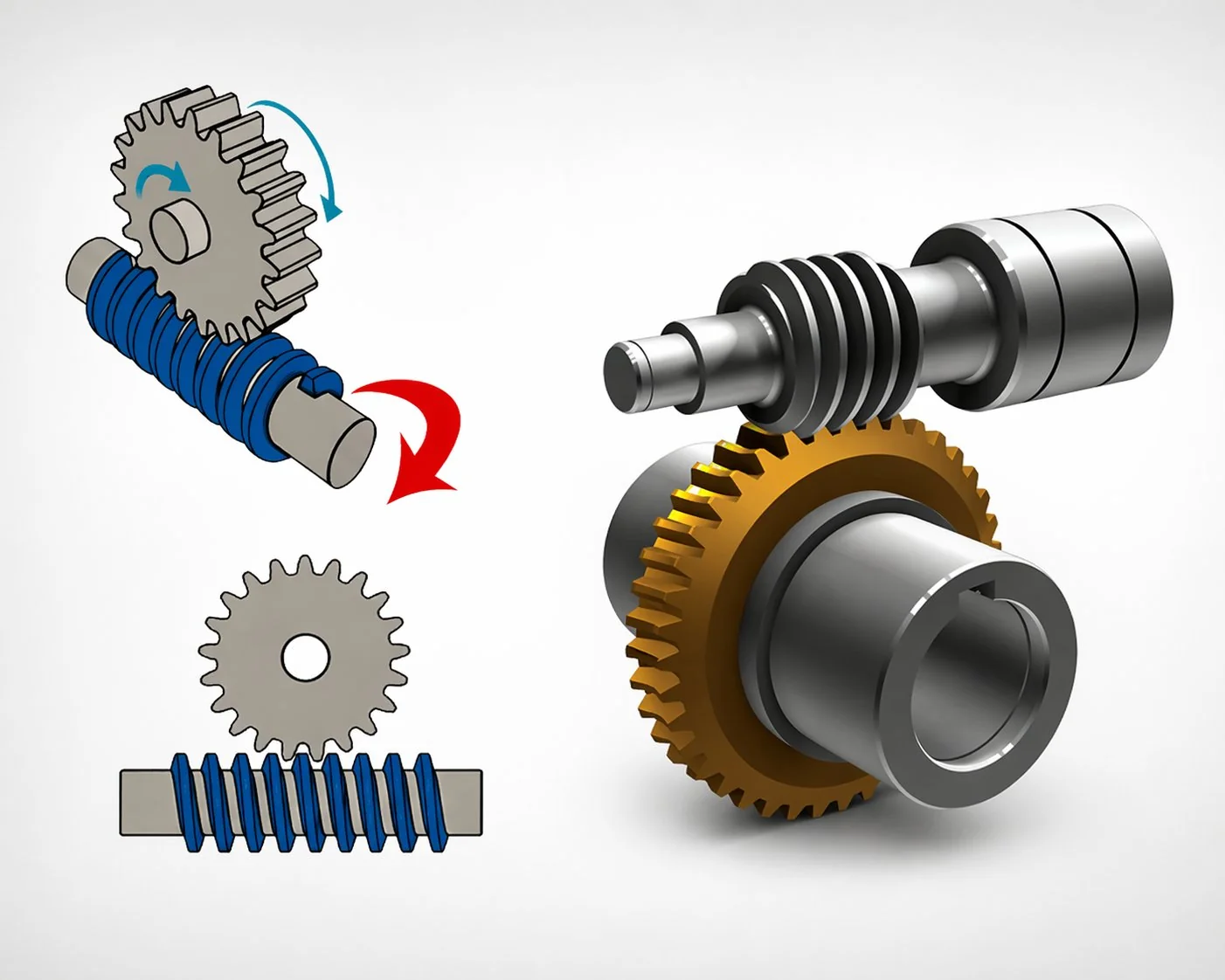
Manual chain hoists and hand winches are governed by EN 13157 (manually controlled cranes) and ASME B30.16 (overhead hoists), both of which require self-sustaining load holding without reliance on any brake. The standards do not specify the lead angle directly but require the manufacturer to demonstrate that the hoist holds 125 percent of the rated load indefinitely under static conditions — which in practice mandates a worm gear pair with a strong self-locking margin. Any pair that passes this test with comfortable margin at new condition may fail it after 5 years of wear if the original margin was too thin.
Hand-crank effort calculator — from rated load to operator pull force
The fundamental design equation for a manual hoist or winch worm gear pair translates the rated load into the force the operator must apply at the hand chain or crank handle. This calculation determines whether the hoist is ergonomically usable — a hoist that requires 40 kg of pull force per stroke is technically functional but physically exhausting and non-compliant with most workplace ergonomic standards.
The table below gives operator pull force at typical load, ratio, and arm-length combinations. This is the selection reference for matching worm gear pair ratio to load capacity while staying within ergonomic limits.
The table reveals a critical boundary: above approximately 3 tonnes WLL, a single-reduction worm gear hand hoist pushes the operator pull force beyond 25 kg even at high ratio and long arm length. This is why manual chain hoists above 3 tonnes commonly use compound worm gear pairs (two worm stages in series) or planetary-worm combinations — the second stage multiplies the ratio further while keeping operator effort within the ergonomic envelope. A 5-tonne hoist with a 2-stage worm compound (total ratio 160:1) brings operator force back to approximately 16 kg — comfortable for sustained use.
For manual winches (cable drum rather than chain), the same formula applies but the drum radius grows as cable accumulates on the drum during winding. The first-layer torque is the design condition (smallest radius); the last-layer torque is the highest (largest radius). The worm gear pair must handle the last-layer torque, while operator effort must be checked at the last layer — where effort is highest — not just at the first layer.
Self-locking margin without brake backup — the critical difference
In powered crane hoists (Article A03), the worm gear self-locking operates alongside a mechanical brake. If the self-locking margin erodes due to wear, lubrication change, or temperature, the brake catches the load. In manual hoists, there is no such backup. The self-locking must hold under every condition the hoist will ever encounter — new, worn, cold, hot, greased, dry, vibrating, static.
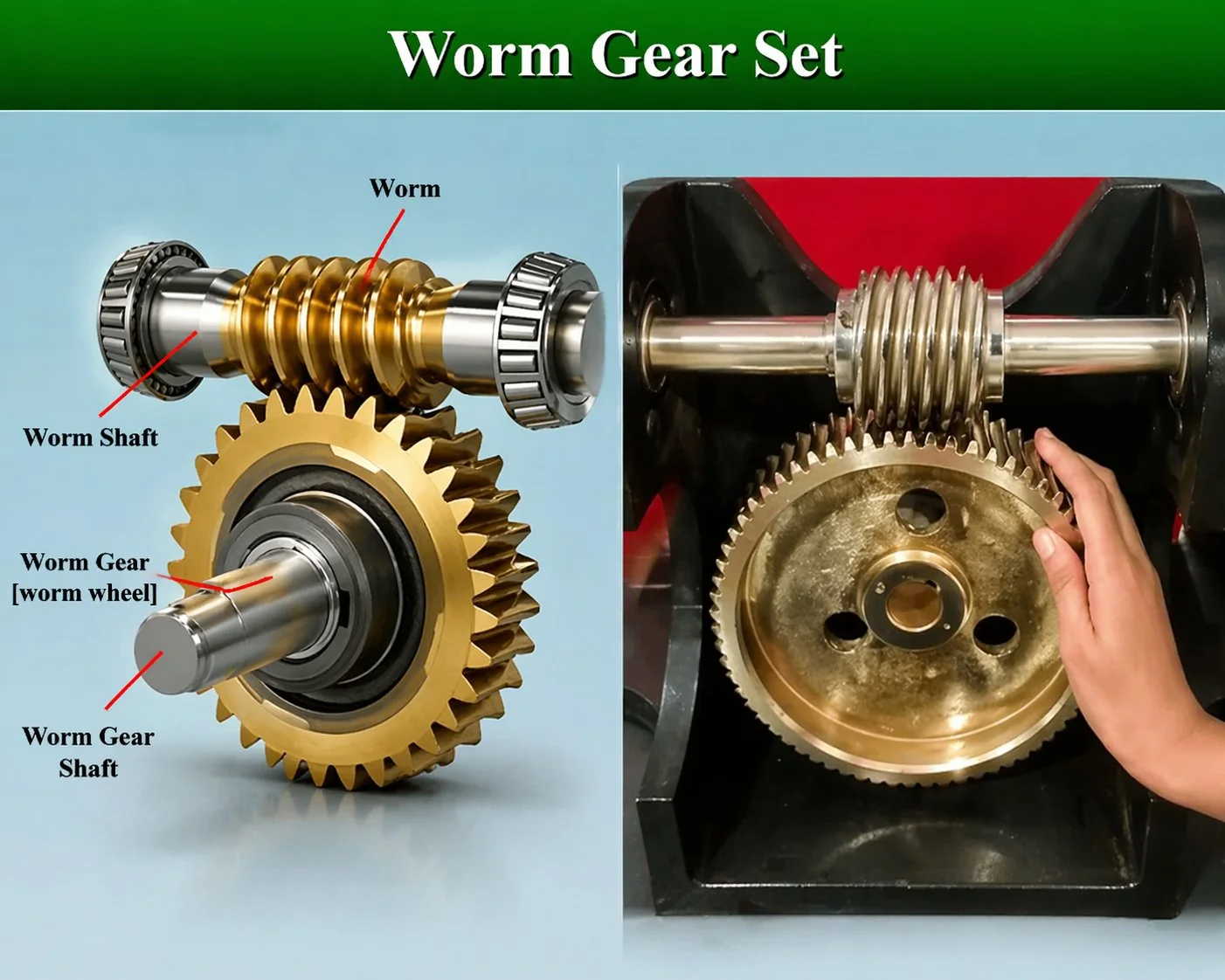
The margin requirement in practice. If the friction angle under worst-case conditions (fully run-in, synthetic grease at elevated temperature) is 4.5 degrees, the lead angle must be no more than 2.5 degrees — a margin of at least 2 degrees. This margin absorbs three sources of uncertainty: wear-induced friction change over service life (typically plus or minus 0.5 degrees), lubricant temperature variation (plus or minus 1.0 degree between cold startup and sustained operation), and manufacturing tolerance on the worm lead angle (plus or minus 0.3 degrees). The 2-degree margin covers these uncertainties with a small residual safety band.
Manual hoist worm gear pairs therefore sit at the extreme low end of the lead angle range — typically 2 to 3.5 degrees with diameter quotient q values of 12 to 16 (producing a relatively fat worm that keeps the lead angle low). The efficiency penalty is severe: 30 to 45 percent typical. But efficiency is secondary in a device that trades operator energy for load safety. A manual hoist that requires 50 percent more hand-chain pulls but never releases its load is always preferable to one that saves the operator effort but has a 1-in-10,000 chance of load release under worn conditions.
A Korean steel fabrication workshop received a batch of 10 unbranded 2-tonne manual chain hoists from an online marketplace at 35 percent below the price of the certified Korean-market brand. Visual inspection appeared normal. The workshop safety officer tested one hoist at 125 percent rated load (2,500 kg) per EN 13157 requirements. The hoist held the static load for 4 hours without creep — pass. Six months later, after daily use with mineral oil re-lubrication by maintenance staff (the original grease had dried in the un-airconditioned workshop), a hoist holding 1,800 kg at 3 metres began creeping downward at approximately 5 mm per minute during a lunch-break hold. The operator noticed and lowered the load safely. Investigation: the worm lead angle was 4.8 degrees — within the self-locking range with the original grease (friction angle approximately 6 degrees with heavy grease) but outside the self-locking range with the thinner mineral oil applied during maintenance (friction angle approximately 4.2 degrees with oil). The lead angle had only 1.2 degrees of margin with grease and negative 0.6 degrees (non-locking) with oil. A proper 2-degree margin at worst-case lubrication would have required a lead angle below 2.2 degrees. The hoist manufacturer had optimised for lower hand-pull effort (higher lead angle means higher efficiency and easier pulling) at the expense of self-locking margin. All 10 hoists were retired from service. Lesson: self-locking margin must be verified against the worst lubricant the hoist may encounter in its service life — not just the factory-fill grease.
Corrosion protection for outdoor and marine manual winches
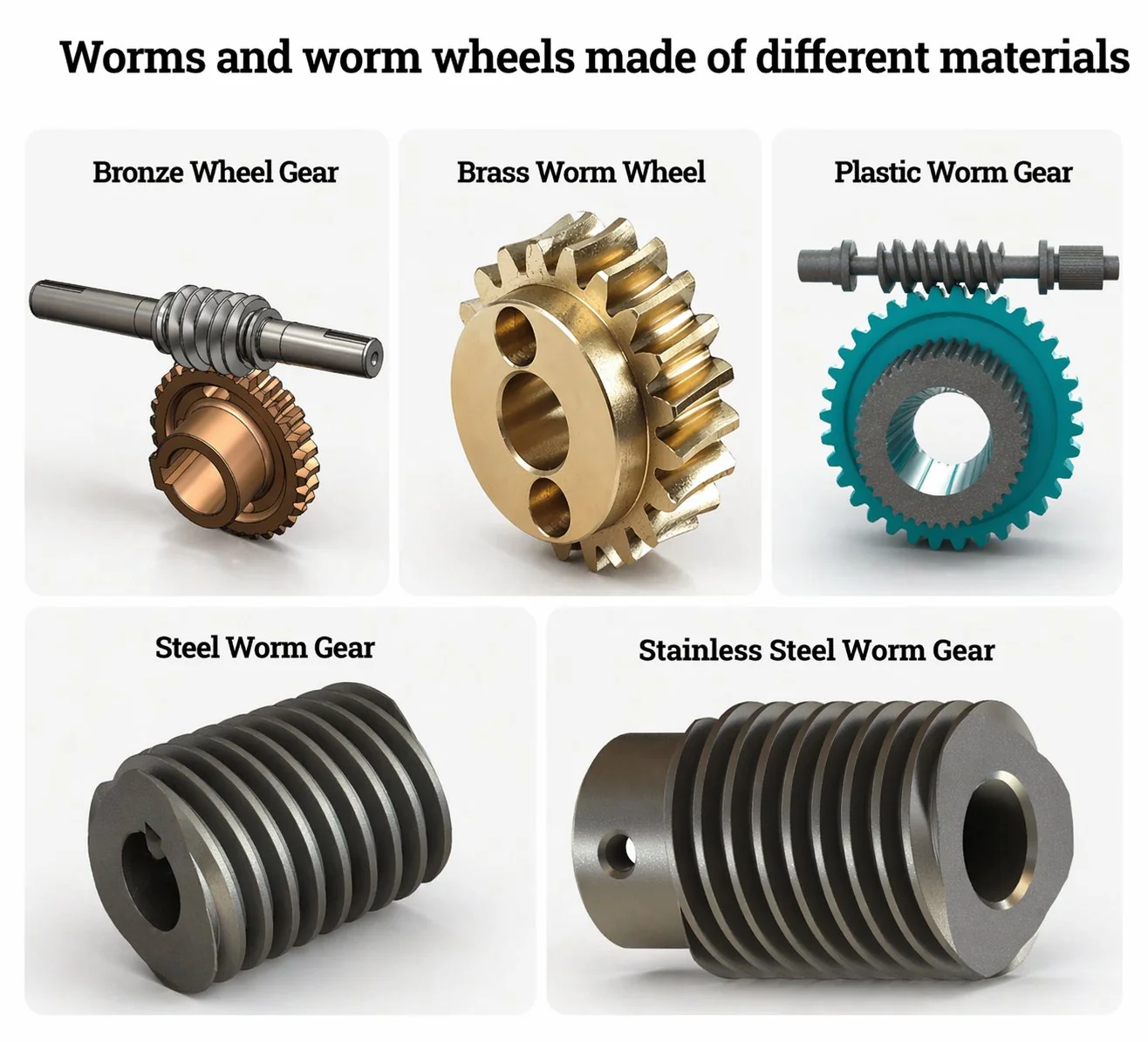
Manual winches are frequently installed outdoors — boat trailer winches, scaffold hoists, gate operators, agricultural equipment. The worm gear pair is exposed to rain, humidity, salt spray (coastal installations), and temperature cycling that produces condensation inside the housing. Without adequate corrosion protection, the worm surface develops rust pitting within 6 to 12 months, the bronze wheel absorbs moisture into surface porosity, and the grease pack emulsifies and loses its lubricating film strength.
Standard carbon steel worm with black oxide or phosphate coating. Standard phosphor bronze wheel. Mineral grease pack. Housing painted or powder-coated. Expected service: 8 to 15 years with annual grease top-up.
Zinc-plated or hot-dip galvanised worm (per ISO 1461). Phosphor bronze or aluminium bronze wheel. Sealed housing with IP54 gaskets. Marine-grade lithium grease. Expected service: 6 to 10 years.
AISI 316L stainless steel worm. Aluminium bronze CuAl10Fe5Ni5 wheel. A4 stainless fasteners. Housing per ISO 12944 C5-M paint specification. Sealed with PTFE lip seals. Expected service: 8 to 12 years in coastal environment.
The corrosion protection cost premium is significant for marine-grade manual winches — typically 2 to 3 times the standard indoor price. However, the cost of a corroded worm gear pair failure on a boat trailer winch (vehicle and boat sliding off trailer on a boat ramp, potential submersion, possible injury) far exceeds the winch replacement cost. Marine-grade specification is non-negotiable for any manual winch installed within 5 km of a coastline or used on vessels.
Three manual hoist and winch worm gear pair cases
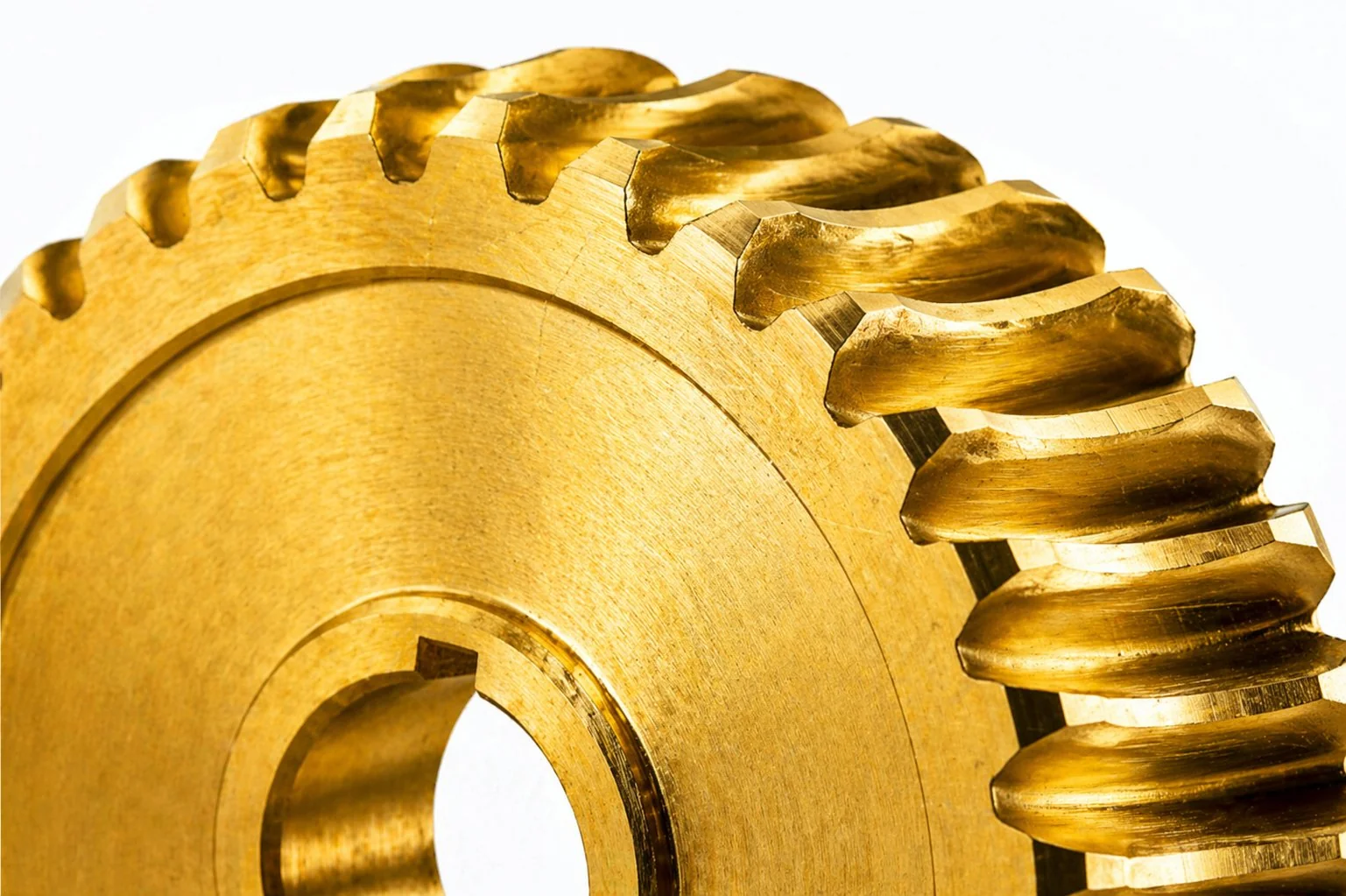
The three cases span the range from a standard workshop chain hoist to a marine trailer winch to a construction scaffold hoist — demonstrating how the same worm gear self-locking principle adapts to different load capacities, environments, and duty cycles.
Each case uses the hand-crank effort formula to verify that the operator force stays within the ergonomic limit for the specified load and ratio.
Case 1 — Korean steel workshop: 2-tonne chain hoist, daily indoor use
A Korean structural steel fabrication shop specified 8 manual chain hoists rated at 2 tonnes WLL for beam handling across two workshop bays. Usage: 10 to 15 lifts per day, average load 1.2 to 1.8 tonnes, maximum lift height 5 metres. Worm gear specification: single-start, module 3, centre distance 63 mm, ratio 50:1, q = 14, lead angle 2.6 degrees. Worm: case-hardened 16MnCr5, ground Ra 0.8 µm. Wheel: gravity-cast phosphor bronze CuSn12Ni. Operator effort calculation: T_load = 2,000 × 9.81 × 0.055 (pocket wheel radius) = 1,079 N·m. T_input = 1,079 / (50 × 0.40) = 54 N·m. F_operator = 54 / 0.165 (hand chain effective radius) = 327 N (33 kg) — above the 25 kg sustained limit. Resolution: the 2-tonne model uses a compound reduction — worm pair 30:1 plus a 2:1 hand-chain-to-load-chain ratio, giving effective ratio 60:1. Revised F_operator = 1,079 / (60 × 0.40 × 0.165) = 273 N (28 kg) — marginally acceptable for intermittent use. For sustained daily use, the shop specified the 2.5-tonne model which had ratio 72:1 effective, bringing effort to 23 kg. Cost per hoist: 380 USD. Service life achieved: 7 years before wheel replacement on the most heavily used unit; remaining 7 hoists still in service at 5 years.
Case 2 — Japanese boat trailer winch: 1.2-tonne, marine corrosion, intermittent use
A Japanese boat accessory manufacturer specified worm gear pairs for a manual trailer winch rated at 1,200 kg cable pull capacity for small fishing boat retrieval. Usage: 2 to 4 operations per week, coastal salt-spray environment, stored outdoors year-round. Worm gear specification: single-start, module 2, centre distance 40 mm, ratio 24:1, q = 12, lead angle 3.2 degrees. Worm: AISI 316L stainless steel. Wheel: aluminium bronze CuAl10Fe5Ni5. All fasteners A4 stainless. Housing per ISO 12944 C4-H (high durability coastal). Sealed with Viton lip seals and marine-grade lithium complex grease. Cable drum radius: 35 mm first layer, 52 mm last layer. Operator effort at last layer (worst case): T_load = 1,200 × 9.81 × 0.052 = 612 N·m. T_input = 612 / (24 × 0.38) = 67 N·m. F_operator = 67 / 0.40 (crank handle length) = 168 N (17 kg) — well within the intermittent limit. Cost per winch: 220 USD (standard indoor version 85 USD — the marine premium is 159 percent). Field service: 9 years average in Okinawa coastal environment before first replacement, meeting the 8-year minimum design target. Browse worm gear reducer mechanism options designed for marine and outdoor manual winch applications.
Case 3 — Vietnamese construction scaffold hoist: 500 kg, high-cycle outdoor
A Vietnamese construction equipment supplier specified worm gear pairs for a 500 kg scaffold hoist used for lifting bricks, mortar bags, and tools on residential building sites. Usage intensity was high: 30 to 50 lifts per day across a 6-month construction project, then the hoist transferred to the next site. Outdoor exposure without shelter, rain and tropical humidity. Worm gear specification: single-start, module 2.5, centre distance 50 mm, ratio 30:1, q = 12, lead angle 2.8 degrees. Worm: zinc-plated carbon steel (cost-effective corrosion protection). Wheel: phosphor bronze CuSn12Ni. Housing: powder-coated cast iron with IP43 gasket (dust and rain from above, not splash-proof). Sealed grease pack — no maintenance re-greasing in the field. Operator effort: T_load = 500 × 9.81 × 0.040 = 196 N·m. T_input = 196 / (30 × 0.38) = 17.2 N·m. F_operator = 17.2 / 0.30 (hand chain radius) = 57 N (5.8 kg) — very light effort, allowing rapid cycling by the operator. Cost per unit: 65 USD. Design life: 2 years (approximately 15,000 lift cycles at 30 lifts per day, 250 days per year). Actual service: 2.3 years average before worm zinc coating loss required replacement. The 65 USD price point made the hoist effectively a consumable item — replaced at the end of each major project.
常见问题解答
Q: How can I tell if a manual hoist has adequate self-locking margin?
The EN 13157 load test is the definitive check: suspend 125 percent of the rated load and monitor for any creep over a minimum 4-hour period. If the load descends by any measurable amount, the hoist fails. For ongoing monitoring, check the hoist monthly by suspending rated load and observing for 15 minutes — any perceptible downward creep indicates the self-locking margin is eroding, likely from lubrication change or wear. The hoist should be removed from service for inspection of the worm gear pair lead angle and the lubricant condition. A properly margined hoist will show zero creep for its entire service life — if creep appears, it is an alarm signal, not a normal wear condition.
Q: Why do manual chain hoists above 3 tonnes use compound worm gear pairs?
Because single-stage worm ratios above 60:1 require either very small worm pitch diameters (thin, deflection-prone worms) or very large wheel diameters (heavy, expensive). At 5-tonne WLL, a single-stage ratio of 80:1 keeps operator effort around 30 kg — at the ergonomic maximum. A 2-stage compound with two worm pairs in series (e.g. 20:1 first stage × 8:1 second stage = 160:1 total) achieves the same ratio in a more compact and mechanically sound arrangement, bringing 5-tonne operator effort down to approximately 16 kg. Both stages must be self-locking independently — if either stage were non-locking, the load could back-drive through that stage.
Q: Can I re-grease a manual hoist worm gear pair in the field?
For indoor workshop hoists, yes — and it is recommended annually. Use the grease type specified by the hoist manufacturer (typically lithium complex EP grease, NLGI Grade 2). Do not substitute a different grease type without verifying that the friction coefficient with the new grease still maintains self-locking margin — this is the lesson of the Engineering Desk Note above. For sealed outdoor and marine winches, the housing is designed to be maintenance-free for the grease pack lifetime (typically 5 to 10 years). Opening the housing for re-greasing breaks the seal integrity and may admit moisture or contaminants. Replace the entire hoist or the sealed gear module at the end of the grease life rather than field-servicing the grease in a sealed unit.
Q: What is the difference between a worm gear winch and a worm gear chain hoist?
Both use the same worm gear pair mechanism for self-locking speed reduction. The difference is in the load-carrying element and the application geometry. A chain hoist uses a calibrated load chain passing over a pocket wheel, with a separate hand chain for operator input — designed for vertical lifting. A winch uses a cable drum that winds a wire rope or synthetic cable — designed for both lifting and pulling (horizontal or inclined). The worm gear pair specifications are identical in principle: single-start, self-locking, rated for the maximum load. The practical difference is that the winch drum introduces variable-radius torque (cable layers change the effective drum radius), while the chain hoist pocket wheel has a constant effective radius. Winch worm gear pairs must therefore be rated for the worst-case (last-layer) torque, not the first-layer torque.
Q: Is there a certification or marking I should look for on a manual hoist worm gear pair?
The hoist as a complete product should carry CE marking (in the EU/EEA) with reference to EN 13157, or meet ASME B30.16 (North America), or the equivalent Korean KOSHA standard. The worm gear pair itself is not individually certified — the certification applies to the complete hoist assembly including the gear pair, chain or cable, hook, housing, and hand chain. However, reputable hoist manufacturers should be able to provide documentation showing the worm gear pair lead angle, friction angle verification, and 125 percent load test result. If this documentation is not available, the self-locking margin is unknown, and the hoist should not be trusted for critical lifts. The unbranded marketplace hoists in the Engineering Desk Note failed precisely because the worm gear pair margin data was unavailable and untested against realistic worst-case conditions.
Manual winches and chain hoists are the purest expression of worm gear self-locking — no motor brake, no electrical redundancy, no control system. The worm and worm wheel alone hold the load against gravity. The hand-crank effort formula F = (W × g × r) / (i × η × L) links the rated load capacity directly to the force an operator must sustain, setting the minimum ratio for ergonomic compliance. Above 3-tonne WLL, compound worm gear stages become necessary to keep operator effort below the 25 kg sustained limit. Self-locking margin must be at least 2 degrees below the friction angle under worst-case lubrication — because there is no backup when the margin fails. Outdoor and marine manual winches add corrosion protection (zinc, stainless, aluminium bronze) at 2 to 3 times the indoor price, justified by the consequences of corrosion-induced self-locking failure in exposed environments.
For manufacturers of manual hoists, winches, and scaffold lifts specifying worm gear pairs, our engineering desk runs the effort calculation and self-locking margin verification against your rated load and environmental conditions. Standard catalogue phosphor bronze worm gear sets cover centre distances from 40 to 125 mm in single-start configurations suitable for manual hoist applications. Marine-grade stainless and aluminium bronze pairings available on 4 to 6 week lead times — submit a manual hoist drive specification with your WLL and environment for a recommendation within one working day.
Specifying worm gear pairs for manual hoists or winches?
Send rated load (WLL), lift height, duty cycle, environment (indoor, outdoor, marine), and crank arm length or hand chain configuration. We will calculate operator effort, verify self-locking margin against worst-case lubrication, and recommend the correct material pairing.
edit by cxm