Merchandise Description
roller skate protective gear hydraulic equipment pump elements from CZPT box for motorcycle bicycle rock climbing motocross diving equipment gear protecting
How to Choose a Worm Shaft and Equipment For Your Project
You will understand about axial pitch PX and tooth parameters for a Worm Shaft 20 and Equipment 22. Detailed data on these two factors will help you choose a ideal Worm Shaft. Read through on to find out a lot more….and get your arms on the most innovative gearbox ever developed! Right here are some tips for choosing a Worm Shaft and Gear for your venture!…and a couple of issues to hold in head.
Gear 22
The tooth profile of Gear 22 on Worm Shaft 20 differs from that of a conventional equipment. This is due to the fact the enamel of Equipment 22 are concave, enabling for better conversation with the threads of the worm shaft twenty. The worm’s guide angle leads to the worm to self-lock, protecting against reverse motion. Even so, this self-locking mechanism is not totally dependable. Worm gears are used in many industrial purposes, from elevators to fishing reels and automotive energy steering.
The new gear is put in on a shaft that is secured in an oil seal. To put in a new gear, you first need to have to eliminate the aged gear. Next, you require to unscrew the two bolts that keep the gear on to the shaft. Following, you ought to remove the bearing provider from the output shaft. As soon as the worm gear is eliminated, you require to unscrew the retaining ring. After that, install the bearing cones and the shaft spacer. Make sure that the shaft is tightened appropriately, but do not over-tighten the plug.
To stop untimely failures, use the right lubricant for the sort of worm equipment. A high viscosity oil is needed for the sliding motion of worm gears. In two-thirds of applications, lubricants had been inadequate. If the worm is frivolously loaded, a minimal-viscosity oil may possibly be adequate. Otherwise, a large-viscosity oil is necessary to keep the worm gears in great situation.
Another selection is to vary the quantity of teeth about the equipment 22 to lessen the output shaft’s speed. This can be done by environment a certain ratio (for instance, five or ten instances the motor’s velocity) and modifying the worm’s dedendum appropriately. This procedure will reduce the output shaft’s velocity to the wanted level. The worm’s dedendum need to be adapted to the wanted axial pitch.
Worm Shaft 20
When selecting a worm equipment, consider the pursuing items to take into account. These are substantial-efficiency, lower-noise gears. They are sturdy, lower-temperature, and extended-lasting. Worm gears are broadly used in numerous industries and have many benefits. Shown beneath are just some of their rewards. Read on for much more data. Worm gears can be hard to sustain, but with proper servicing, they can be really reputable.
The worm shaft is configured to be supported in a frame 24. The dimension of the body 24 is determined by the center distance between the worm shaft twenty and the output shaft 16. The worm shaft and gear 22 may not come in contact or interfere with a single yet another if they are not configured properly. For these causes, suitable assembly is crucial. Nonetheless, if the worm shaft twenty is not effectively installed, the assembly will not function.
One more critical thought is the worm substance. Some worm gears have brass wheels, which may possibly result in corrosion in the worm. In addition, sulfur-phosphorous EP gear oil activates on the brass wheel. These components can trigger important reduction of load area. Worm gears need to be put in with high-good quality lubricant to prevent these issues. There is also a want to choose a materials that is large-viscosity and has reduced friction.
Velocity reducers can consist of several various worm shafts, and every speed reducer will call for different ratios. In this situation, the pace reducer maker can give diverse worm shafts with distinct thread styles. The distinct thread styles will correspond to different equipment ratios. No matter of the equipment ratio, each worm shaft is made from a blank with the preferred thread. It will not be tough to discover 1 that suits your needs.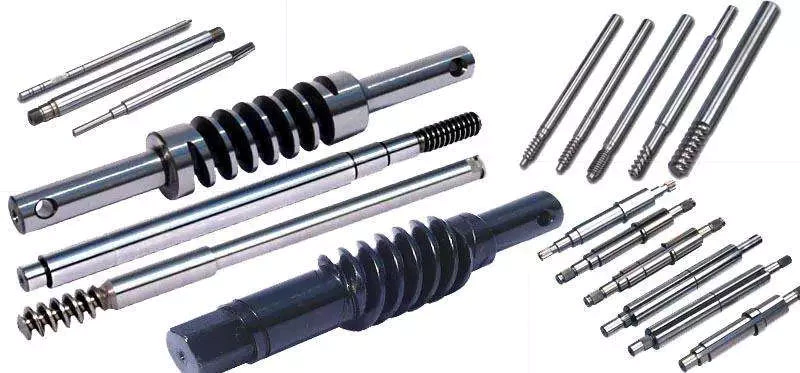
Equipment 22’s axial pitch PX
The axial pitch of a worm equipment is calculated by using the nominal heart distance and the Addendum Element, a continual. The Heart Length is the distance from the centre of the equipment to the worm wheel. The worm wheel pitch is also referred to as the worm pitch. Both the dimension and the pitch diameter are taken into thing to consider when calculating the axial pitch PX for a Equipment 22.
The axial pitch, or guide angle, of a worm gear establishes how effective it is. The greater the direct angle, the considerably less productive the equipment. Direct angles are immediately related to the worm gear’s load capability. In particular, the angle of the lead is proportional to the duration of the anxiety location on the worm wheel teeth. A worm gear’s load potential is immediately proportional to the sum of root bending anxiety released by cantilever action. A worm with a lead angle of g is virtually equivalent to a helical gear with a helix angle of ninety deg.
In the present invention, an enhanced strategy of producing worm shafts is described. The approach entails deciding the wanted axial pitch PX for each and every reduction ratio and frame measurement. The axial pitch is proven by a technique of manufacturing a worm shaft that has a thread that corresponds to the desired gear ratio. A equipment is a rotating assembly of elements that are produced up of tooth and a worm.
In addition to the axial pitch, a worm gear’s shaft can also be created from diverse supplies. The materials utilized for the gear’s worms is an essential thing to consider in its choice. Worm gears are normally produced of steel, which is stronger and corrosion-resistant than other materials. They also demand lubrication and may have ground tooth to lessen friction. In addition, worm gears are typically quieter than other gears.
Equipment 22’s tooth parameters
A review of Gear 22’s tooth parameters uncovered that the worm shaft’s deflection depends on various elements. The parameters of the worm gear have been different to account for the worm gear dimensions, pressure angle, and dimension issue. In addition, the number of worm threads was altered. These parameters are varied based mostly on the ISO/TS 14521 reference gear. This examine validates the designed numerical calculation design employing experimental final results from Lutz and FEM calculations of worm gear shafts.
Utilizing the final results from the Lutz examination, we can receive the deflection of the worm shaft making use of the calculation technique of ISO/TS 14521 and DIN 3996. The calculation of the bending diameter of a worm shaft in accordance to the formulas given in AGMA 6022 and DIN 3996 present a good correlation with test final results. Even so, the calculation of the worm shaft utilizing the root diameter of the worm uses a diverse parameter to estimate the equivalent bending diameter.
The bending stiffness of a worm shaft is calculated by means of a finite aspect design (FEM). Utilizing a FEM simulation, the deflection of a worm shaft can be calculated from its toothing parameters. The deflection can be regarded as for a comprehensive gearbox technique as stiffness of the worm toothing is regarded as. And ultimately, based on this research, a correction factor is developed.
For an perfect worm gear, the number of thread starts off is proportional to the dimension of the worm. The worm’s diameter and toothing issue are calculated from Equation 9, which is a system for the worm gear’s root inertia. The length amongst the major axes and the worm shaft is identified by Equation 14.
Gear 22’s deflection
To review the effect of toothing parameters on the deflection of a worm shaft, we employed a finite element technique. The parameters deemed are tooth height, force angle, size aspect, and number of worm threads. Every of these parameters has a distinct impact on worm shaft bending. Table 1 displays the parameter versions for a reference equipment (Gear 22) and a various toothing product. The worm equipment measurement and variety of threads establish the deflection of the worm shaft.
The calculation method of ISO/TS 14521 is dependent on the boundary situations of the Lutz check setup. This strategy calculates the deflection of the worm shaft using the finite factor strategy. The experimentally measured shafts have been compared to the simulation outcomes. The test final results and the correction aspect have been when compared to confirm that the calculated deflection is comparable to the measured deflection.
The FEM examination signifies the influence of tooth parameters on worm shaft bending. Equipment 22’s deflection on Worm Shaft can be explained by the ratio of tooth power to mass. The ratio of worm tooth drive to mass decides the torque. The ratio in between the two parameters is the rotational pace. The ratio of worm gear tooth forces to worm shaft mass determines the deflection of worm gears. The deflection of a worm equipment has an influence on worm shaft bending capability, efficiency, and NVH. The steady improvement of electrical power density has been reached by means of improvements in bronze materials, lubricants, and manufacturing high quality.
The principal axes of instant of inertia are indicated with the letters A-N. The a few-dimensional graphs are similar for the seven-threaded and one-threaded worms. The diagrams also present the axial profiles of every single gear. In addition, the main axes of minute of inertia are indicated by a white cross.