Leverandører af snekkegear i Korea og Japan — En indkøbshåndbog
Standards mapping, lead-time realities, documentation expectations, supplier evaluation, and INCOTERMS for OEM buyers sourcing worm gear sets across the Korea and Japan industrial corridor.
Korean and Japanese OEM buyers can source worm gear sets from three supplier tiers: domestic Japanese manufacturers (KHK, Tsubaki, Sumitomo — premium price, JIS native, 4-8 week lead times), Korean manufacturers including locally based suppliers in Ansan, Incheon, and Busan (mid price, KS+JIS dual standard, 4-6 weeks), and offshore suppliers in China and Vietnam shipping into Korea and Japan (lower price, ISO/JIS compliant on certified production lines, 6-10 weeks including ocean transit). Standard catalogue items at module M1 to M8 are stocked across all three tiers. Custom geometries and specialised material pairs typically come from domestic or Korean manufacturers because lead time matters more than price at low order volumes. Documentation requirements (material certificates, hardness reports, JIS standard references) are stricter in Korean and Japanese OEM supply chains than in European or American practice — specify upfront in the request for quotation.
Standards mapping — JIS, KS, ISO, DIN
Korean and Japanese OEM specifications usually reference JIS standards directly. Some Korean buyers prefer KS (Korean Standards) where they exist, but for worm gear geometry the common practice is to write the specification in JIS terms because the JIS standard is more comprehensive. Both KS and JIS are harmonised with ISO standards in nearly all cases, and most reputable suppliers globally produce to ISO/JIS dual compliance.
The standards that matter most for worm gear specifications cover three areas: gear geometry and tolerance, key and keyway dimensions, and material properties. The cross-reference table below shows the practical equivalents that experienced procurement teams use without needing to dig into the specification text.
For Korean buyers, KS B 1421 is the gear accuracy standard equivalent to JIS B 1702 and ISO 1328. For most procurement purposes, citing either standard returns the same supplier response.
A specification written for Korean or Japanese OEM use should typically reference both the JIS standard and the equivalent ISO standard — for example “phosphor bronze CuSn12 per JIS H 5111 BC6 / ISO 1338.” The dual reference makes the specification unambiguous for any reputable supplier worldwide and simplifies the inspection and quality control process at incoming acceptance.
Three supplier tiers and what each one is good for
Tier 1 — Premium Japanese domestic manufacturers
Japanese domestic manufacturers like KHK, Tsubaki, Sumitomo, and Nidec all produce worm gear sets and complete reducers to JIS standards as factory native. The advantage is documentation completeness, quality consistency, and strong technical support inside Japan — JIS-certified factory audits, traceable material certificates, and engineering staff fluent in OEM design conventions are baseline expectations. The disadvantage is price (often 1.5 to 2.5 times offshore equivalents) and lead time on custom geometries (8 to 12 weeks for non-catalogue items). For mission-critical applications where parts failure is unacceptable, Tier 1 is the safe choice. For high-volume cost-driven applications, Tier 1 is harder to justify economically.
Tier 2 — Korean and regional manufacturers
Korea has a substantial domestic worm gear and worm wheel manufacturing base concentrated in the Gyeonggi industrial corridor (Ansan, Incheon, Suwon) and Busan. Worm gear manufacturers in this tier produce to KS+JIS dual compliance, with material sourcing typically from Korean steel mills and Korean or Chinese bronze foundries. Worm gear capital cost runs 60 to 80 percent of Tier 1 equivalents, lead times on standard catalogue items run 4 to 6 weeks, and lead times on custom geometries run 5 to 8 weeks. Korean worm gear manufacturers typically offer English-language documentation and engineering support, which simplifies cross-border procurement to other Asia-Pacific buyers (Vietnam, Thailand, Indonesia). For most OEM applications in the Korean industrial corridor, Tier 2 is the cost-effective choice with no measurable quality compromise relative to Tier 1.
Tier 3 — Offshore (China, Vietnam, Taiwan)
Offshore worm gear suppliers in China, Vietnam, and Taiwan compete on price for catalogue items and high-volume orders. The quality range within Tier 3 is wider than within Tier 1 or Tier 2 — top-tier Chinese worm gear manufacturers produce to ISO/JIS standard with full documentation, while bottom-tier suppliers cut corners on material specification and inspection. For OEM buyers entering Tier 3, the supplier evaluation process matters more than for Tier 1 or Tier 2 — worm gear factory audit, material sample testing, and first-article inspection are essential before committing to a production order. Typical lead time on catalogue items is 6 to 8 weeks plus ocean shipping (1 to 2 weeks to Korean and Japanese ports), giving a total 7 to 10 week order-to-delivery cycle. Capital cost can be 40 to 60 percent of Tier 1 equivalents on the right items, with the savings typically larger on high-volume standard catalogue parts than on custom geometries.
Lead-time realities — what to expect

Worm gear lead time is the single procurement variable that surprises first-time buyers most often. Marketing materials show standard catalogue items as “in stock for immediate shipment,” but the practical reality is that even stocked items go through quality inspection, documentation preparation, packaging, and outbound logistics — typically 2 to 5 working days from order to ship even for true off-the-shelf inventory.
Worm gear first-article inspection adds 1 to 2 weeks to any first-time custom production order regardless of tier. Special documentation (third-party material verification, factory audit reports, regulatory certifications) adds another 1 to 3 weeks beyond the production lead time. Plan procurement schedules with these realities in mind, particularly when the worm gear set is on the critical path for a larger machine assembly.
Documentation expectations in Korean and Japanese OEM supply chains
Worm gear documentation thoroughness is the procurement attribute where Korean and Japanese OEM supply chains differ most from European or American norms. Korean Tier-1 automotive buyers expect every batch of incoming worm gear sets to arrive with material certificates, hardness reports, dimensional inspection records, and traceability to the production run — as standard, not as upgrades. Pricing usually includes this documentation; what is variable is whether the supplier produces it well or treats it as an afterthought.
Standard documentation package for OEM-grade orders:
- Dimensional inspection record (key dimensions verified against drawing tolerance).
- Material certificates for both worm and worm wheel — chemical composition test report against the specified standard (JIS H 5111 BC6 for phosphor bronze, etc.).
- Hardness reports — Brinell or Rockwell readings with location and number of test points specified.
- Heat treatment record for case-hardened worms — process temperature, soak time, hardness depth.
- Tooth contact pattern check — gear-bluing test result confirming contact area location and percentage.
- Backlash measurement record at specified positions around the wheel.
- Lubricant fill record (for complete reducer orders) — oil type, fill volume, fill temperature.
- Serial number traceability linking each unit to a production batch and inspection record.
For regulated applications (automotive Tier-1, medical, food, pharmaceutical, marine), additional certifications stack on top: PPAP submission for automotive (Tier-1 supplier qualification), NSF H1 lubricant compliance for food, EHEDG construction certificates for hygiene-critical applications, DNV or ABS marine type approval for shipboard installations. Specify the regulatory framework in the request for quotation — adding it after the order is placed often delays delivery and may require re-running inspection tests.
A common procurement mistake on first-time OEM orders is asking for a “complete documentation package” without specifying what that means. Different suppliers interpret the phrase differently — one will deliver a one-page certificate of conformity, another will deliver a 30-page traceability dossier. Both are technically “complete documentation” by their own definition. Specify the eight items in the list above explicitly in the purchase order, and ask the supplier to confirm in writing which items are included before production starts. Five minutes of clarity at order entry saves three days of email exchange at delivery acceptance.
Supplier evaluation — what to verify before the first order
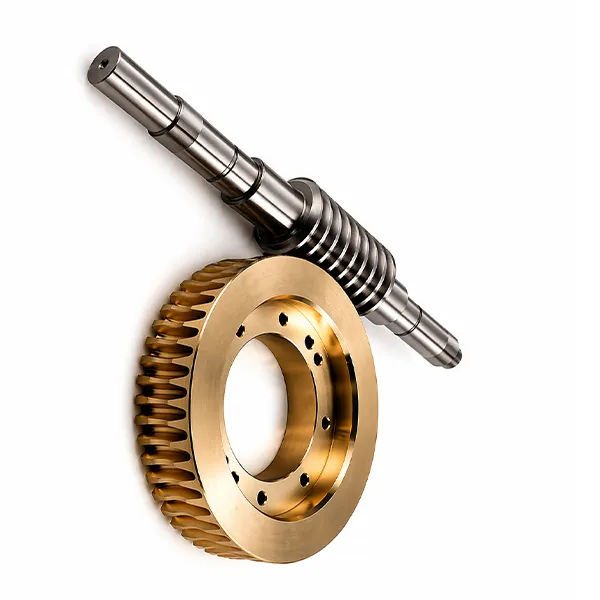
Choosing a new worm gear supplier carries setup cost. The first order from a new worm gear supplier should be treated as a qualification cycle, not just as a procurement transaction. The questions below cover what experienced procurement teams verify before committing volume orders. None of them require expensive evaluation — most are answerable from documentation and a 30-minute supplier conversation.
Manufacturing capability: Does the supplier hob and grind in-house, or subcontract grinding? In-house grinding capability is the marker of a serious worm and worm wheel manufacturer — the surface finish on a ground worm thread is a leading quality indicator. Confirm hobbing module range, wheel diameter capacity, and whether ground (DIN 5/6) and hobbed-only (DIN 7/8) accuracy classes are both available.
Material sourcing: Where does the bronze come from? Reputable worm gear suppliers use centrifugally cast or sand-cast bronze from named foundries with documented chemical composition. Be cautious of suppliers who cannot name their material source — this is often a sign that the bronze grade varies between batches.
Quality system: ISO 9001 certification is baseline; IATF 16949 (automotive) is required for Tier-1 automotive supply. Ask for the latest external audit report — most suppliers will share a redacted version on request.
Engineering support: Is there an engineering contact who can answer technical questions in English (or Korean/Japanese) within one working day? Worm gear suppliers who respond only through sales channels typically struggle with non-catalogue specifications.
Reference customers: Can the supplier name three or four similar OEM customers in similar industries? A supplier serving automotive Tier-1 in Korea has different operational rhythms than one serving general industrial in Vietnam — confirm the supplier has experience with customers like yours.
Logistics and INCOTERMS: What INCOTERMS does the supplier prefer? FOB (port of export) places the customer in control of ocean shipping; CIF (cost, insurance, freight) places it on the supplier; DAP (delivered at place) extends supplier responsibility to the customer’s facility door. The right choice depends on the customer’s import expertise and the supplier’s logistics capability.
When local sourcing wins and when offshore wins
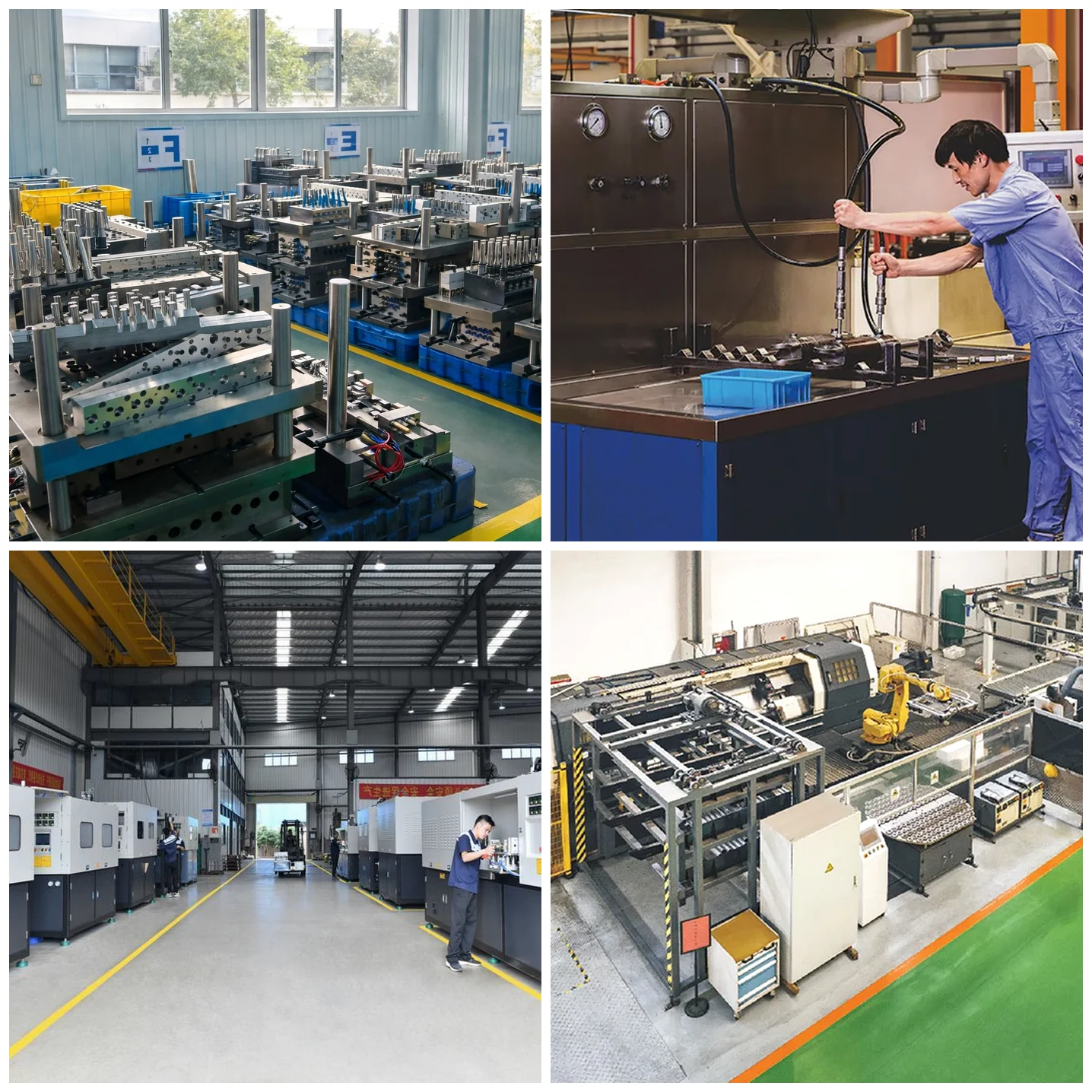
The local-versus-offshore sourcing decision is rarely binary. Many worm gear OEM buyers run a dual-source strategy where catalogue items come from offshore for cost and custom geometries come from local suppliers for lead-time and engineering support.
The decision hinges on order volume, customisation depth, lead-time sensitivity, and the customer’s import infrastructure.
Local Korea/Japan sourcing wins when: order volume is low (under 500 units annually), custom geometry is involved, lead time matters more than capital cost, the customer lacks an import logistics infrastructure, or the application is regulatory-sensitive and supplier audits would be impractical offshore.
Offshore sourcing wins when: order volume is high (above 2,000 units annually), the part is a standard catalogue item with no custom features, lead time can absorb 8 to 12 weeks total cycle, the customer has established import procedures, and capital cost is a meaningful fraction of total bill of materials.
Both work in the middle band (500 to 2,000 units annually, mostly catalogue with occasional customisation) — the choice often comes down to existing supplier relationships and procurement department preference rather than pure economic optimisation. Browse snekkegearreduktion options when comparing complete-unit alternatives across supplier tiers — frame size standards (IEC, NEMA, JIS) are mostly compatible across tiers, which simplifies cross-tier substitution if needed.
Ofte stillede spørgsmål
Q: Should I specify JIS or ISO standards in my drawings?
Specify both. Modern engineering drawings for Korean and Japanese OEM use typically reference the JIS standard with the ISO equivalent in parentheses, for example “phosphor bronze JIS H 5111 BC6 (ISO 1338 CuSn12).” This dual reference covers domestic suppliers (who think in JIS terms), regional suppliers (who reference ISO), and offshore suppliers (who recognize ISO immediately). Skipping the dual reference adds clarification rounds with each new supplier; including it eliminates that delay.
Q: What is the minimum order quantity for catalogue items?
Tier 1 Japanese stock distributors will sell single units from catalogue inventory; Tier 2 Korean manufacturers typically have a 5-10 unit minimum on stock items and 25-50 unit minimum on production-to-order items; Tier 3 offshore suppliers usually require 50-100 unit minimum on catalogue and 100-500 on production-to-order. Below the minimum, expect either a no-bid or a price premium that erases the offshore cost advantage. For prototype or pilot quantities under the supplier’s MOQ, working through a regional distributor with stocking agreements is often the only practical option.
Q: What is the typical payment term for new OEM customers?
For first orders from a new customer, most worm gear suppliers expect 30 percent deposit at order placement and 70 percent against bill of lading or pre-shipment. After three or four successful orders, payment terms typically loosen to net 30 or net 60 against shipment. For Korean and Japanese established OEM customers with strong credit ratings, suppliers may extend net 60 to net 90 terms from the first order. Negotiate payment terms during the supplier qualification phase, not at the moment of placing the first purchase order — the conversation goes more easily before the buyer has commitment pressure.
Q: How long do PPAP and first-article inspection processes take?
First-article inspection on a new custom worm gear typically runs 2 to 3 weeks: production of the first units, dimensional and material inspection, sample shipment to the customer, customer review, and either approval or correction. PPAP (Production Part Approval Process, automotive Tier-1) adds another 2 to 4 weeks of documentation review on top of FAI, with formal sign-off through PSW (Part Submission Warrant) before production volume can ship. For a fully PPAP-compliant first-time custom order, allow 8 to 12 weeks total from order placement to production volume shipment.
Q: Are Korean suppliers competitive against Japanese on quality, or only on price?
For mainstream industrial worm gear specifications — modules M1 through M8, phosphor bronze on case-hardened steel, JIS standard accuracy classes — Korean and Japanese worm gear manufacturers are largely equivalent on quality. The differences appear in the highest end of the specification space: ground accuracy class (DIN 5), specialised material pairs (aluminium bronze, stainless steel), and very large frame sizes (above 200 millimetre centre distance). For these specifications, top-tier Japanese worm gear suppliers retain a measurable advantage that justifies the price premium. For everything below that boundary, Korean suppliers compete on quality as well as price, and price often becomes the deciding factor.
Q: How do I handle import duties for offshore worm gear orders into Korea or Japan?
Worm gear and worm wheel sets under HS code 8483.40 (transmission shafts and cranks; gearings and gearing) are typically subject to 0 to 8 percent import duty depending on country of origin and applicable trade agreements. Korea-China and Japan-China FTAs reduce most worm gear tariffs to 0 to 4 percent for qualifying products. Vietnam-Korea and Vietnam-Japan EPAs offer similar tariff preferences for Vietnam-origin shipments. Confirm HS code classification with a customs broker before the first import — minor differences in classification (8483.40 versus 8483.50 versus 8483.90) can change the applicable duty rate. For volume imports, the duty saving from correct classification often pays for the broker’s service fee several times over.
Q: What should I expect when visiting a supplier factory for audit?
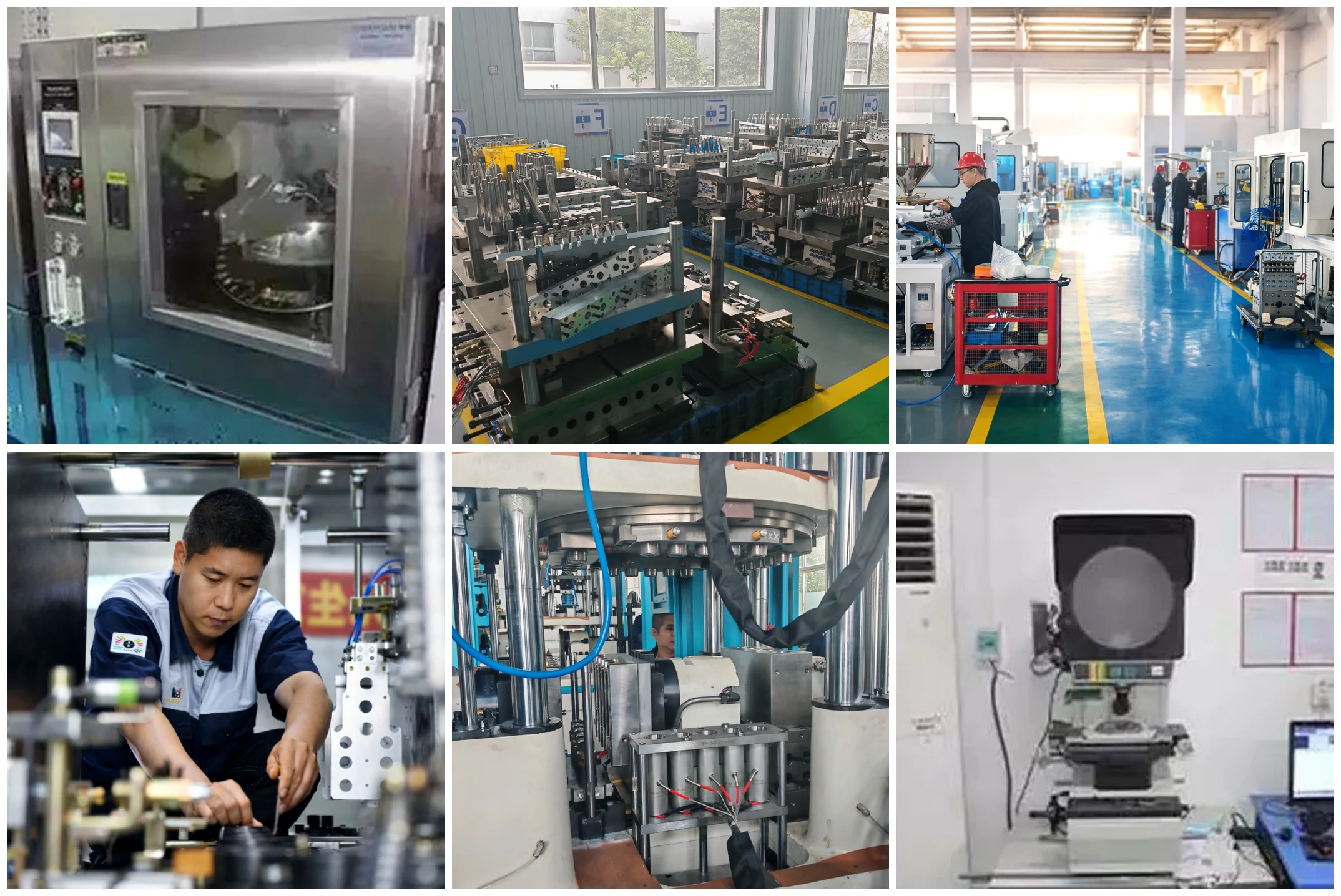
A factory audit on a worm gear supplier typically covers: worm and worm wheel hobbing and grinding machine inventory and condition, material handling and traceability from raw bronze through finished wheel, heat treatment process and quality control, dimensional inspection equipment (CMM, gear analyser), surface finish measurement, and quality system documentation. Expect a half-day to full-day visit depending on scope. Most reputable suppliers welcome customer audits; reluctance to allow factory visits is itself a quality signal worth weighing. Plan to bring an independent quality engineer on critical first-time audits — the additional perspective catches issues that the procurement team may miss.
Procurement of worm gear and worm wheel sets in the Korea-Japan industrial corridor is a more deliberate exercise than catalogue specification suggests. Standards mapping, lead-time realities, documentation expectations, and supplier evaluation each contribute to the difference between a successful first-time supplier qualification and a procurement headache that lingers across multiple production runs. The framework above, applied at the request-for-quotation stage rather than at the delivery stage, eliminates most of the common surprises and shortens the qualification cycle from typical industry norms to closer to the supplier’s promised lead time.
For Korean and Japanese OEM design and procurement teams sourcing worm gear specifications across the industrial corridor, our engineering desk supplies catalogue and custom Snekkegearsæt i fosforbronze og rustfrit stål at Tier 2 pricing with documentation packages aligned to JIS, KS, and ISO references. Located in Ansan, Gyeonggi-do, with delivery typically 4 to 8 weeks against drawing — request a supplier qualification package and our team will return technical specifications, documentation samples, and pricing within one Korean working day.
Qualifying a new worm gear supplier?
Send your application requirements, expected annual volume, regulatory framework, and preferred INCOTERMS. We will return technical specifications, lead-time estimates, documentation samples, and pricing — typically within one Korean working day for standard catalogue specifications.
Redaktør: Cxm